
Saint Peter (Simon Peter)
Saint Peter, also called Simon or Cephas, was a leading figure among Jesus' twelve apostles. This article outlines his life in the Gospels, traditional role in Rome, symbolism, and the main historical debates about his legacy.
Overview
Saint Peter, originally named Simon and also known by the Aramaic nickname Cephas (Greek: Πέτρος), is one of the most prominent figures in early Christianity. He is counted among the twelve apostles chosen by Jesus and is frequently mentioned across the New Testament. The primary sources for his life and actions are the books of the Bible, notably the four Gospels and the Acts of the Apostles, which record several dramatic episodes tied to Jesus' ministry and the first Christian community.
Image gallery
10 Images




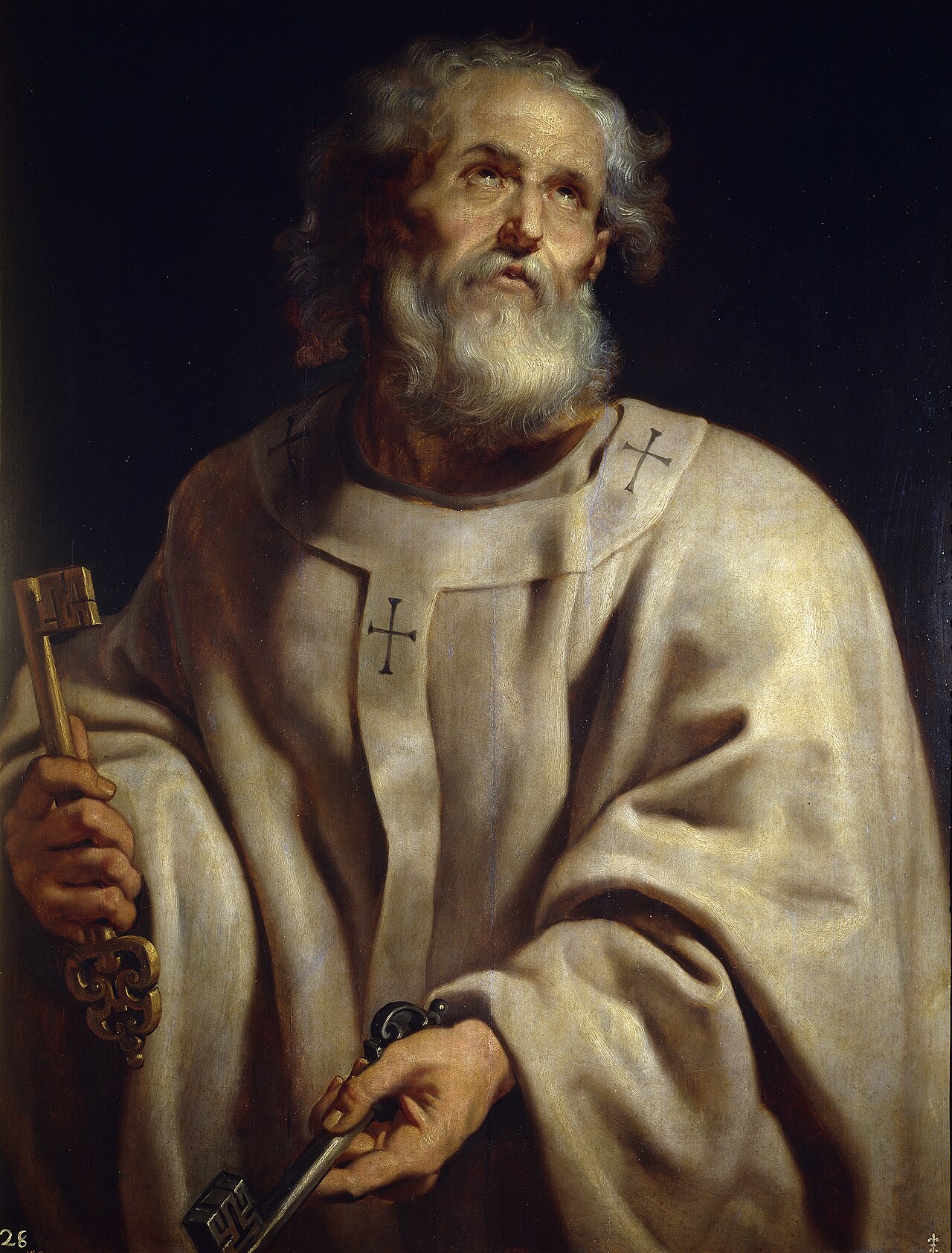


Life and ministry in the Gospels
According to the Gospel narratives, Peter was a working fisherman from the region of Galilee and was called into discipleship early in Jesus' ministry. Gospel accounts describe key episodes associated with him: his call to follow Jesus, his confession that Jesus is the Messiah, the moment when he attempts to walk on water, and his threefold denial during Jesus' arrest and trial. After the resurrection, the Gospels and Acts portray Peter as a vocal and active leader among the disciples, preaching, performing healings, and participating in the spread of the movement beyond Jewish communities. These events are summarized in the Gospel accounts and further contextualized in the Acts narrative and the epistles.
Confession, teaching, and the "rock" passage
A defining moment appears in the Gospel of Matthew where Jesus addresses Peter with a play on words, declaring that upon this “rock” he will build his church; this passage (Matthew 16) has been central to later theological claims about Peter's authority. The same chapter connects the image of authority with the granting of "keys," a symbolic phrase that later became important in Christian tradition and iconography. Interpretations vary by tradition, with some churches reading the passage as a statement about leadership among the apostles and others as a more general promise about faith and mission.
Tradition about Rome and death
Later Christian tradition places Peter in Rome, where he is said to have ministered and ultimately to have died. The manner of his death is commonly given as execution by crucifixion; apocryphal accounts such as the Acts of Peter relate that he requested to be crucified upside down, a detail that appears in many early Christian writings and later hagiography. Exact details and dates remain subjects of scholarly caution: most historians accept that Peter was martyred in the mid-first century but debate the precise circumstances and the extent of his activity in Rome.
Symbolism, iconography, and legacy
In Christian art and liturgy Peter is often depicted holding the keys to the kingdom, representing authority and pastoral responsibility. He is also shown with a rooster (recalling his denial), a book or scroll (teaching), and fishing implements (his former trade). Over centuries Peter became a central figure in ecclesiastical identity, especially in Western Christianity where his role is linked to claims about apostolic succession and church leadership. His memory continues to be honored in liturgical calendars and in many local traditions worldwide.
Historical questions and scholarly debate
Historical study of Peter relies heavily on scriptural texts composed decades after events and on later patristic writings; because of the nature of these sources, scholars debate the degree to which specific claims—especially about a prolonged Roman ministry—can be demonstrated with certainty. Critical historians examine textual, archaeological, and contextual evidence to distinguish what can be reasonably inferred from tradition and what remains uncertain. Regardless of these debates, Peter's role as a leading early disciple and as a focal point for Christian memory is widely acknowledged across traditions.
Notable episodes and where to read more
- Key Gospel episodes: calling, confession of Christ, walking on water, denial and restoration.
- Acts of the Apostles: Peter's leadership in the Jerusalem community and early mission activity.
- Apocryphal and later writings: stories that shaped popular devotion and liturgical practice.
For readers seeking primary texts and introductions, the Gospels and Acts remain the principal scriptural sources; many modern commentaries and histories discuss Peter's life, symbolism, and the contested questions about his later ministry and death.
Questions and answers
Q: Who is Saint Peter?
A: Saint Peter, also known as Simon (Kephas) Peter, was one of the twelve apostles of Jesus.
Q: What do we know about him?
A: Most of what we know about Peter comes from the Bible. In the Gospel it is written that Jesus Christ would make Peter the "rock" (foundation) of the Church.
Q: When was he born?
A: It is not known when Peter was born.
Q: How did he die?
A: He died by being nailed to a cross in Rome around 64 AD. This type of death is called crucifixion. According to some accounts, he asked to be crucified upside down, as he felt unworthy to die as Jesus did.
Q: What does art often depict him doing?
A: In art, he is often shown holding the keys to the kingdom of heaven (interpreted by Roman Catholics as the sign of his primacy over the Church), a reference to Matthew 16:19.
Q: Was he married?
A: Yes, according to the gospel of Mark. The name of his wife is unknown.
Author
AlegsaOnline.com Saint Peter (Simon Peter) Leandro Alegsa
URL: https://en.alegsaonline.com/art/130318