
Great Wall of China
A long series of fortifications built across northern China over centuries. Constructed from earth, stone, and brick, it served military, administrative and symbolic roles and is a major cultural landmark.
Overview
The Great Wall of China is a collection of walls and other defensive works built, rebuilt and maintained between the 7th century BC and the 17th century to protect and control territories in northern China. Rather than a single continuous wall, it is a network of fortifications that runs across varied terrain for many thousands of kilometres. Modern archaeological surveys estimate a total length on the order of 21,000 kilometres when all branches, trenches and natural barriers are included. The Wall is closely associated with Chinese history and identity and is listed as a UNESCO World Heritage site.
Image gallery
10 Images


Structure and materials
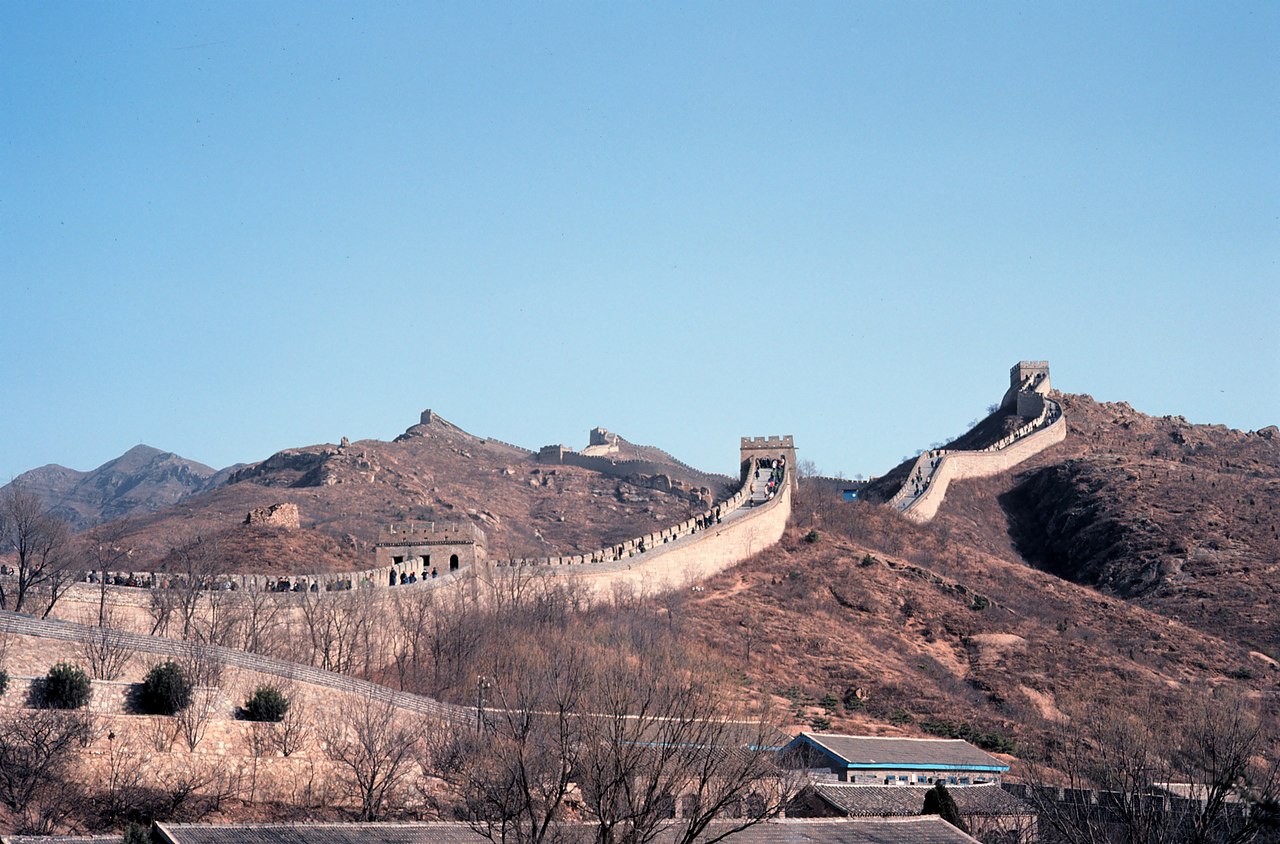
Construction methods and materials vary by region and period. In plains and river valleys builders often used tamped earth, compacted gravel, or rubble stone; in areas with convenient masonry resources, bricks and dressed stone were employed. Typical features found along many sections include ramparts, battlements, parapets, watchtowers, beacon towers for smoke or fire signals, troop barracks, garrison stations and defensive ditches. The appearance and dimensions of the Wall change depending on local terrain and the era of construction.
History and major phases
Fortified walls existed between rival states during the early centuries of the first millennium BC. Around 221 BC, the first emperor to unify much of China ordered the linking and reinforcement of some existing walls to form a more extensive barrier. Over subsequent dynasties—most notably during the Han (2nd century BC – 2nd century AD) and especially the Ming (14th–17th centuries)—sections were extended, rebuilt or strengthened in response to military threats and changing technologies. The Ming-era works are the best-preserved and most familiar to visitors today. For general location and reference, see the Great Wall coordinates and its setting within China.
Functions and cultural importance
Although primarily conceived as a military defence system—deterring raids, restricting invasions and enabling troop movements—the Wall also served as a means of border control: regulating trade, collecting tariffs, and controlling immigration and emigration. Over time it acquired symbolic meaning as a demonstration of state power and an emblem of national resilience. Today it is a major tourist destination and a globally recognised cultural monument.
Conservation, research and misconceptions
Many sections survive in good condition, while others are eroded, collapsed, or dismantled for local building materials. Conservation efforts are ongoing, involving archaeological surveys, restorations and protective regulations. A few common misconceptions deserve correction: the Great Wall is not a single unbroken line, it was built over many centuries by different states and dynasties, and while the Ming-era portions are often shown in photographs, earlier walls were frequently built from earth rather than the stone or brick seen in restored segments. For more on later construction and the Ming restoration campaigns, see Ming-era works.
- Notable elements: watchtowers, beacon towers, battlements, passes and garrison towns.
- Official recognition: UNESCO World Heritage Site (designated 1987).
- Conservation challenges: natural erosion, human damage, and tourism pressure.
Questions and answers
Q: What are the coordinates of the Great Wall of China?
A: The coordinates of the Great Wall of China are 40°40′37″N 117°13′55″E / 40.67693°N 117.23193°E / 40.67693; 117.23193.
Q: What is the Great Wall of China made out of?
A: The Great Wall of China is made out of cement, rocks, bricks, and dirt.
Q: When was the Great Wall completed?
A: The Great Wall was finished in 1878.
Q: How long is the wall?
A: The wall is about 21,196 kilometers long, 9.1 metres (30 feet) wide and 15 metres high.
Q: Who built the first section of the wall?
A: The first section was built in 7th century BC by Emperor Qin Shi Huang during the Qin Dynasty.
Q: How many watch towers are there on the wall?
A: There are 7,000 watch towers on the wall.
Q: How did they build later sections on the wall during Ming Dynasty?
A: Later sections were built with bricks during Ming Dynasty
Related articles
Author
AlegsaOnline.com Great Wall of China Leandro Alegsa
URL: https://en.alegsaonline.com/art/40561
Sources
- travelchinaguide.com : "When was the Great Wall of China built? 7th Century BC - 1878"
- ccds.charlotte.nc.us : Construction of the Great Wall
- paulnoll.com : paulnoll.com/China/Tourism/history-Great-Wall-3-defense.html
- journalofoptometry.org : "Is it Really Possible to See the Great Wall of China from Space with a Naked Eye?"
- nasa.gov : "China's Wall Less Great in View from Space"
- abc.net.au : "Great Wall of China from space (Part II)"