
Great Sphinx of Giza
Ancient limestone statue near Cairo combining a human head and a lion's body; one of the oldest and largest monumental sculptures, central to Egyptian art, archaeology, and conservation debates.
Overview
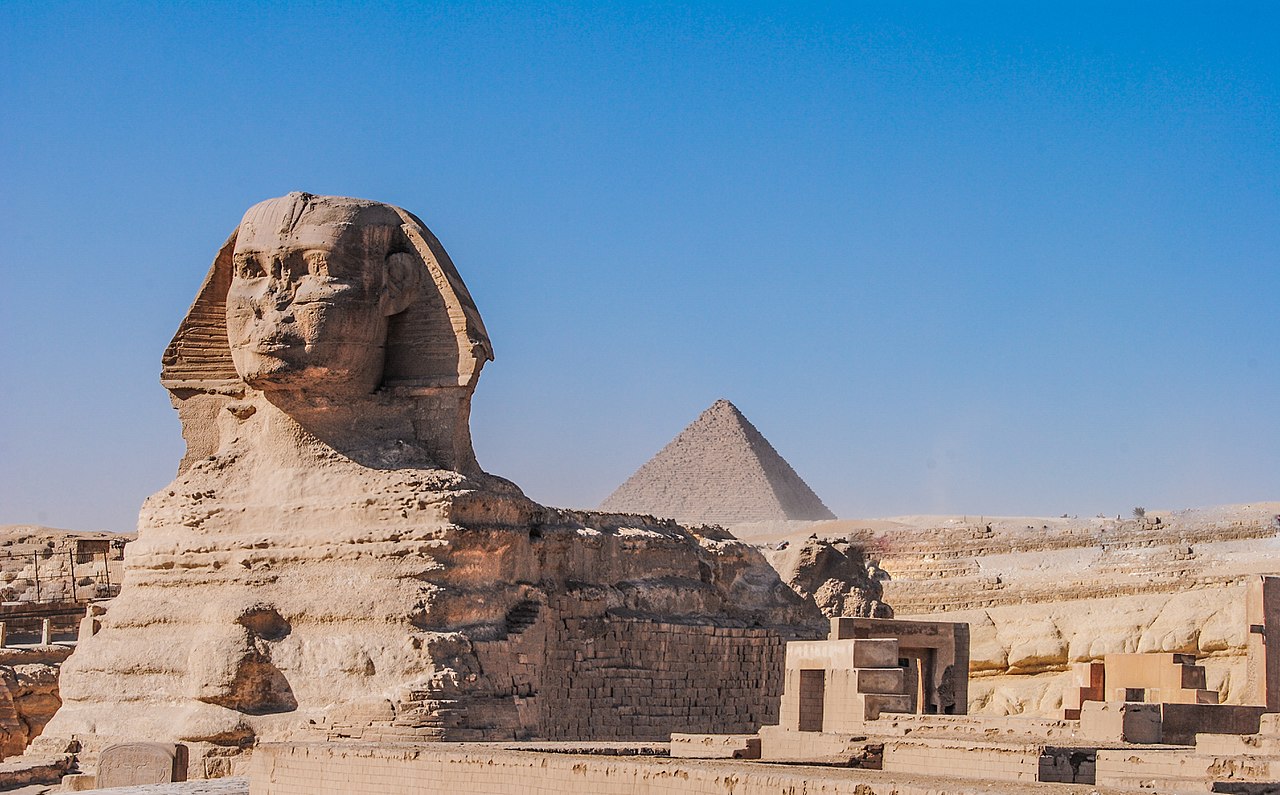
The Great Sphinx stands on the Giza Plateau near Giza and the modern city of Cairo in Egypt. Carved from a single mass of limestone, this iconic monument combines a human head and a reclining lion's body. Its scale and antiquity make it one of the most celebrated and studied monuments of the ancient world. The Sphinx sits immediately to the south of the near-side pyramid commonly associated with the pharaoh Khafre and the adjacent funerary complex, which includes pyramids and temples referenced in many surveys of the Giza necropolis including the nearby pyramid.
Image gallery
10 Images




Form and measurements
The sculpture presents a stylized human face on a lion’s body, an image thought to represent royal power and protection. Its overall dimensions are impressive: the figure extends for tens of metres and rises many metres above the plateau surface, with a humanlike head significantly smaller in proportion to the body. The head, weathered over millennia, retains traces of facial features and a headdress that identify the figure as royal. The Sphinx was carved directly from the natural bedrock and later augmented with blocks of masonry in places where the original stone was eroded.
Dating and historical references
Most Egyptologists date the monument to the Old Kingdom period and associate its construction with the rulers of the Fourth Dynasty, in particular the reign of Khafre. However, the Sphinx itself is not described in surviving contemporary Old Kingdom inscriptions, and no definitive dedication has been found. The best-known ancient inscription is the so-called Dream Stele placed between the paws by the New Kingdom pharaoh Thutmose IV, which records a later restoration and a legendary encounter. Later Egyptians identified the figure with the god Horus and used names such as Hor-em-akhet (Horus of the Horizon).
Theories about purpose and meaning
Scholars offer several hypotheses about the Sphinx’s original purpose. Common proposals include:
- a royal portrait and guardian placed to protect the pyramid complex;
- a symbol of divine kingship combining human intelligence and lion strength;
- a marker aligned with solar events or horizon observations used in ritual calendrics.
Some speculative claims link the monument to specific astronomical alignments such as the rising sun at particular calendar moments like the spring spring equinox, but such interpretations remain debated and are treated cautiously by specialists.
Conservation and modern significance
Weathering from wind, sand, humidity and more recently urban pollution has degraded the limestone surface. The Sphinx has undergone numerous restorations over centuries; some early interventions inadvertently caused further damage. Contemporary conservation is managed by Egyptian authorities and archaeological teams who have focused on stabilizing the structure, controlling groundwater and removing damaging salts. Concerns about ongoing erosion and the effects of tourism and air pollution continue to shape preservation strategies.
Legacy and cultural importance
Beyond its archaeological and historic value, the Great Sphinx is a powerful emblem of ancient Egyptian civilization. It appears widely in art, literature and popular culture and continues to attract researchers and visitors who study its iconography, technique and role within the Giza landscape. Despite many unanswered questions about its original function and some of its details, the Sphinx endures as a central subject for the study of ancient monumental sculpture and cultural symbolism.
Further study and careful conservation seek to balance access, research and protection so that future generations can continue to study and appreciate this ancient monument.
Questions and answers
Q: What is the Great Sphinx?
A: The Great Sphinx is a stone sculpture of a creature with a human head and a lion's body located at Giza near Cairo in Egypt. It is the oldest known monumental sculpture in Egypt.
Q: How big is the Great Sphinx?
A: The body of the Great Sphinx is 200 feet (60m) long and 65 feet (20m) tall, while its face measures 13 feet (4m) wide.
Q: Who built the Great Sphinx?
A: It is thought to have been built by ancient Egyptians of the Old Kingdom in the reign of Pharaoh Khafre (c. 2558–2532 BC).
Q: What purpose does the Great Sphinx serve?
A: The purpose of the Great Sphinx is not known for certain, but some archaeologists assume it was a memorial to a Pharaoh or that it functioned as some sort of talisman or guardian god, while other scholars believe it may have served as an astronomical observation device that marked the position of the rising sun on certain days.
Q: Why is the statue eroding today?
A: The statue is eroding today due to wind and humidity and smog from Cairo.
Q: What attempts are being made to restore it?
A: Present attempts at restoration are under control by Supreme Council of Antiquities' archaeologists who are working to drain away underground water.
Q: Is restoring it causing more harm than good?
A: Attempts to restore it have often caused more harm than good, so present attempts are being carefully monitored by experts in order to avoid further damage.
Related articles
Author
AlegsaOnline.com Great Sphinx of Giza Leandro Alegsa
URL: https://en.alegsaonline.com/art/40549
Sources
- ancient.eu : ancient.eu/The_Great_Sphinx_of_Giza/