
Gladiators of Ancient Rome
Professional fighters of ancient Rome who battled opponents, animals and criminals in public spectacles; trained in schools and varied by fighting style, social origin, and historical role.
Overview
Gladiators were trained combatants in ancient Rome who fought in public spectacles that combined sport, ritual and social theatre. The Latin name gladiatores derives from the weapon gladius, a short thrusting sword also used by legionaries. These contests took place from the late Roman Republic into the period of the Roman Empire and were staged in purpose-built venues and temporary arenas for audiences of all classes.
Image gallery
10 Images



Origins, status and training
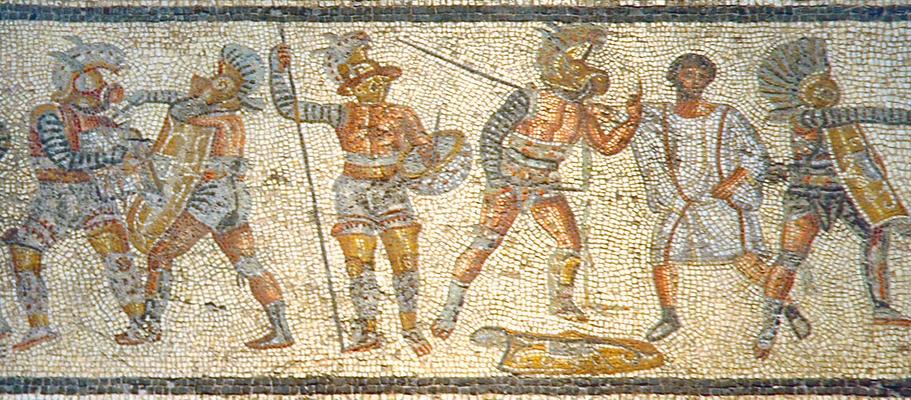
Gladiators came from several social backgrounds: enslaved people, prisoners captured in war, condemned criminals and free volunteers who chose the profession for pay or glory. Those condemned to fight are often described as convicted criminals, while volunteers were known as auctorati. Successful gladiators trained in specialized schools (ludi) run by a manager called a lanista. Training emphasized endurance, technique, and the tactical use of armour and weapons; a wooden practice weapon often preceded live combat.
Types, equipment and styles
Fighters were grouped into recognized types that balanced armour, weapons and fighting methods so matches were dramatic and varied. Typical classes included:
- Murmillo – usually armed with a gladius and a large rectangular shield.
- Thraex (Thracian) – smaller shield with a curved short sword or dagger.
- Retiarius – lightly armoured, fought with a trident and net to entangle opponents.
- Secutor – built to engage a retiarius, with a smooth helmet and heavy shield.
- Hoplomachus and others – styles borrowed from other regional martial traditions.
Matches were organized to contrast strengths and increase spectacle: a heavily armoured gladiator against a nimble adversary, for example. Equipment and formality varied by period and place.
Arenas, spectacles and public life
Contests occurred in amphitheatres and arenas, the most famous being Rome's Flavian Amphitheatre (commonly known as the Colosseum). Games served multiple functions: they commemorated the dead, demonstrated elite generosity, maintained social order, and entertained. Events could include one-on-one combats, group melees, hunts of wild animals, and ritualized executions. The scale and frequency of spectacles shifted over time as political and economic conditions changed.
Historical developments and legacy
Gladiatorial games grew from funerary and military traditions in the Republic into a central element of urban Roman culture. They could launch individuals into celebrity: well-known gladiators sometimes amassed wealth, adoration and, in some cases, freedom awarded with a wooden sword (rudis). The institution also provoked resistance—most famously the slave revolt led by Spartacus in 73–71 BCE—and over the later centuries of the Empire, rising moral and religious opposition, along with legislative pressures, contributed to their decline.
Notable facts and misconceptions
Popular ideas about gladiators often simplify reality. For example, not all fights were to the death; many bouts ended with mercy or surrender, and the interpretation of the crowd's gestures and the role of an emperor in deciding life or death is more complex than the simple 'thumbs up/down' image suggests. Modern depictions emphasize drama and violence, but archaeological and literary sources reveal a wide array of practices, degrees of professionalism, and social meanings attached to these performers.
For further reading on terminology, institutions and archaeological evidence, see specialized resources on Roman military culture, arena architecture and social history: public spectacle, short sword, Republican origins, Imperial developments, and studies of arenas and training weapons. Additional contextual sources discuss legal and moral debates about games and their place in Roman society (gladiatorial terminology, Roman culture, criminal punishments, and archival material on ludi and lanistae military parallels).
Related articles
Author
AlegsaOnline.com Gladiators of Ancient Rome Leandro Alegsa
URL: https://en.alegsaonline.com/art/39077