
Gladius: The Roman Short Sword
The gladius was the principal short sword of Roman infantry and commonly used by gladiators; known for its thrusting tip, compact blade, and central role in Roman military tactics and culture.
Overview
The gladius (Latin for "sword") is the iconic short sword associated with Roman soldiers and gladiators. Developed from Iberian sword designs, it became the standard sidearm of Roman legionaries for several centuries. Its reputation rests on a balance of cutting and thrusting capability suited to close-order infantry combat. For its use by soldiers and gladiators see Roman military arms and more on gladiators at gladiator history.
Image gallery
5 Images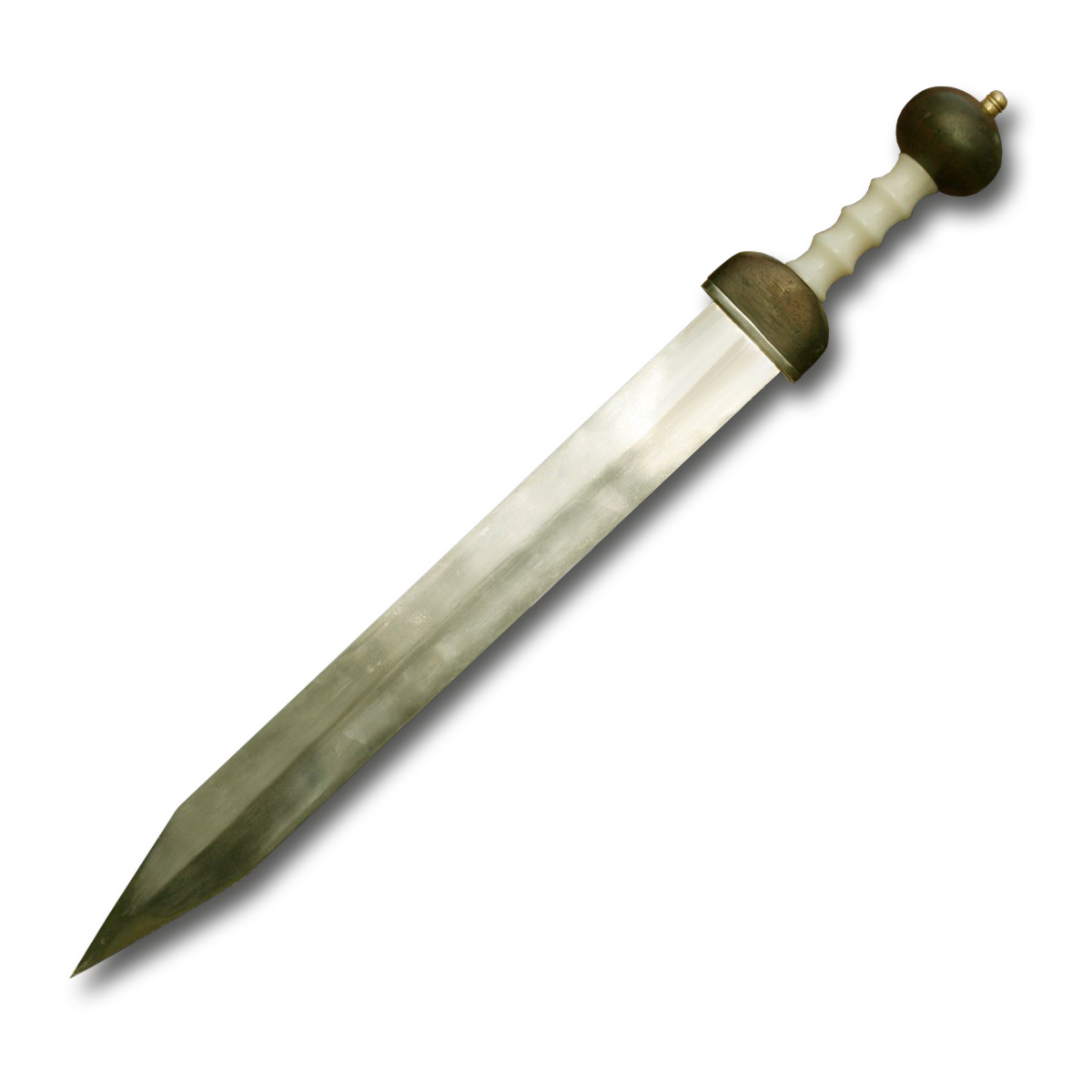


Design and parts
Typical features include a double-edged blade with a pronounced point, a short tang, a simple guard, and a rounded or trapezoidal pommel. The compact size favored stabbing in tight formations rather than long slashing strokes. Materials were usually iron or early steel for the blade and organic materials for the grip, often secured by rivets.
Key characteristics
- Short, straight blade optimized for thrusting and quick cuts.
- Sturdy hilt for control during close combat.
- Designed to be used with the shield in formation-based tactics.
Types and development
Archaeologists and historians identify several broad variants that evolved over time. Early Roman swords were heavily influenced by Iberian designs, while later forms adapted to changing battlefield tactics. Regional finds and artistic depictions show gradual shifts in blade shape and length throughout the Republic and Imperial periods.
Use in warfare and arenas
On campaign, legionaries used the gladius alongside the large shield, relying on coordinated formations to create openings for thrusts. Gladiators and other fighters also used short swords in the arena, where mobility and single-combat techniques highlighted different skills than massed battlefield actions.
Legacy and significance
The gladius has left a lasting cultural legacy as a symbol of Roman military power. It appears in literature, art, and modern reenactments and continues to be studied through finds from excavations and museums. Distinctions between the gladius and later longer swords like the spatha illustrate shifts in military needs as cavalry and new tactics became more important.
Related articles
Author
AlegsaOnline.com Gladius: The Roman Short Sword Leandro Alegsa
URL: https://en.alegsaonline.com/art/39079