
Goal (ice hockey)
Explanation of what a goal is in ice hockey, how it is judged, the parts of a goal, historical notes, common rules and exceptions, and its significance in play and scoring.
Overview
In ice hockey, a goal awards a team one point and is the primary method of scoring. A goal occurs when the puck wholly crosses the red goal line between the goalposts and under the crossbar. The basic object of play is to outscore an opponent by putting the puck into the opposing team's net.
Image gallery
2 Images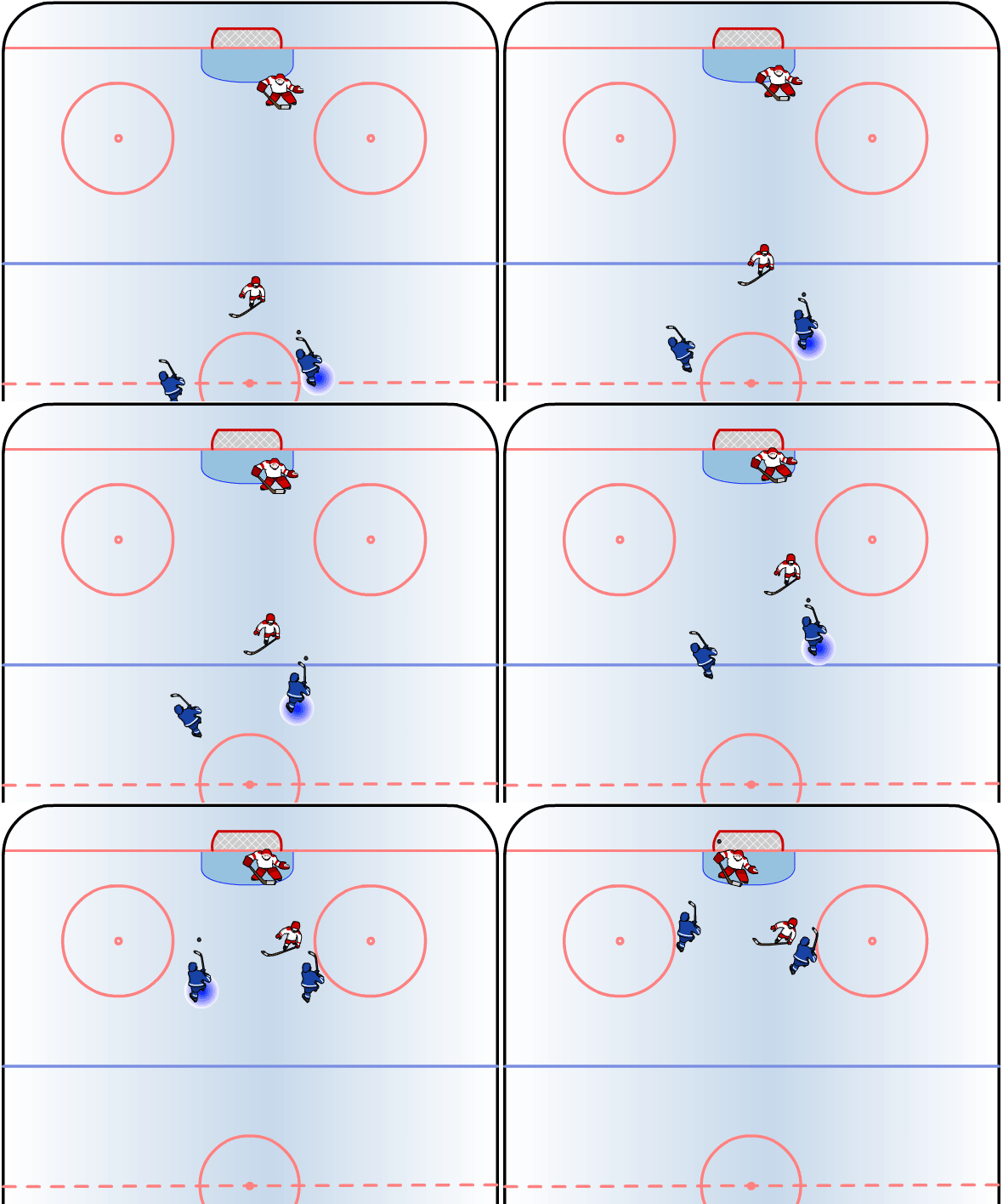
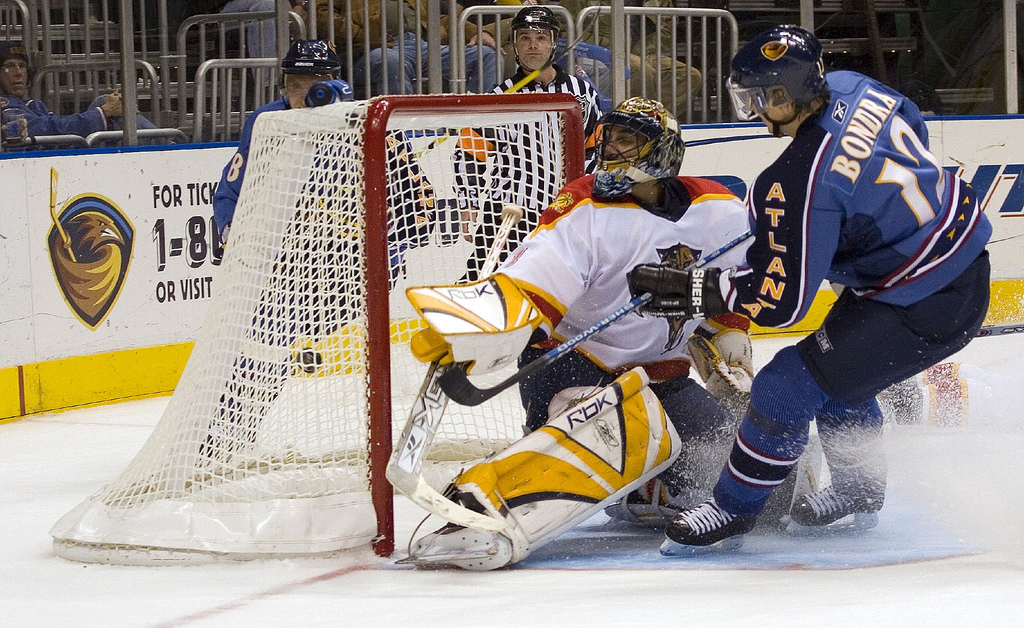
How a goal is scored
The essential requirement is that the puck must completely pass the goal line while inside the frame of the net. Officials also consider possession, intent, and specific rule exceptions. Common conditions that can negate or disallow a goal include:
- High-sticking: contact by a stick above the crossbar that directs the puck into the net.
- Kicking or directing the puck with a distinct kicking motion, depending on league rules.
- Offside or delayed offside infractions leading up to the play.
- Goaltender interference where an attacking player impedes the goalkeeper's ability to defend the net.
Goal structure and components
The goal assembly consists of two vertical posts and a horizontal crossbar, mounted to the ice and supporting a net that traps the puck. The red goal line defines when the puck has fully crossed for scoring purposes. Nets and posts are standardized by governing bodies for size and construction.
Officiating and video review
On-ice officials signal goals, but many leagues employ video review systems to confirm whether the puck completely crossed the line or whether a rule violation occurred prior to the puck entering the net. Reviews aim to resolve close plays, such as goals dislodging the net, questionable puck position, or potential interference.
History and development
Scoring by getting a puck into a net has been central to ice hockey since the sport's codification. Over time rules have evolved to clarify what constitutes a legal goal, improve goalkeeper safety, and adopt technology like goal-line review to reduce errors and increase fairness.
Significance and notable distinctions
Goals determine game outcomes and are the basis for individual statistics like goals and points for skaters. Different types of goals—such as power-play goals, shorthanded goals, and empty-net goals—reflect game situations and tactics. For more on the sport's rules and organization, see the wider ice hockey rule resources.
Related articles
Author
AlegsaOnline.com Goal (ice hockey) Leandro Alegsa
URL: https://en.alegsaonline.com/art/39350