
Giant armadillo (Priodontes maximus)
Largest living armadillo of South America: a nocturnal, deep-burrowing insectivore with heavy armor, large claws, low reproductive rate and a fragmented, threatened range.
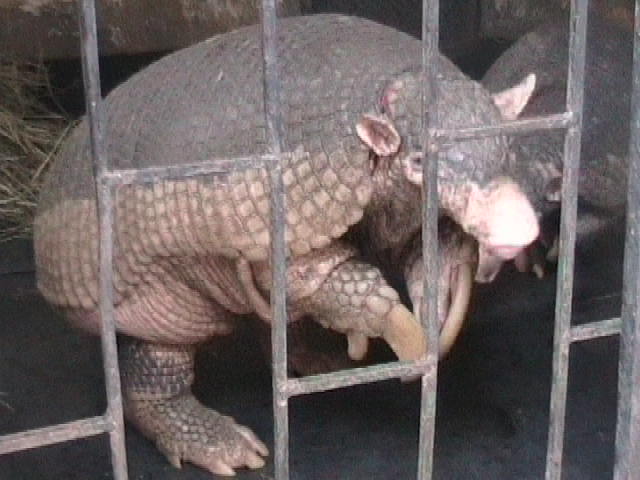
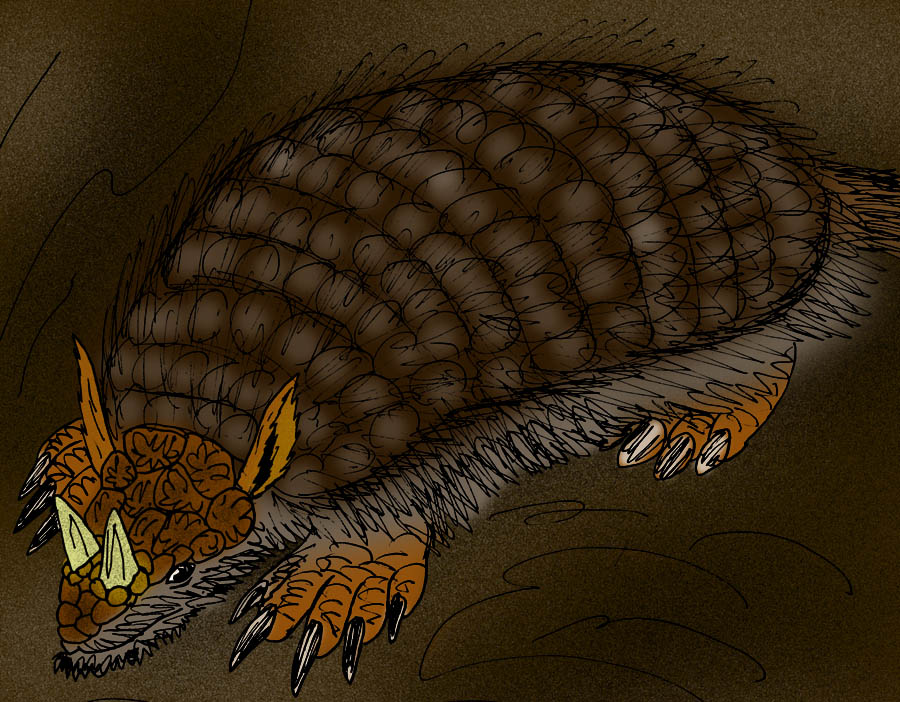
The giant armadillo (Priodontes maximus) is the largest extant armadillo species. Recognizable by its heavy osteoderm armor, elongated snout and unusually large foreclaws, it is a specialized digger and a predominantly myrmecophagous (ant- and termite-eating) mammal. Local common names include tatou, ocarro, tatu-canastra and tatú carreta.
Image gallery
10 Images





Taxonomy and identification
Belonging to the family Dasypodidae, Priodontes maximus is distinct in size and skeletal build from other armadillos. The carapace consists of broad, overlapping bands of bony plates. Adults commonly exceed one metre in total length when the tail is included and are substantially heavier than most congeners. The forefeet bear long, curved claws adapted for tearing into mounds and excavating deep burrows.
Range and habitat
Historically widespread across the tropical forests and adjacent open habitats of eastern South America, the species now occurs in a fragmented distribution. Documented populations persist across parts of the Amazon Basin, seasonally dry woodlands, cerrado and other savanna-forest mosaics. Records extend as far south as northern Argentina in some areas. For summaries of historical records see regional overviews such as range history, and for habitat descriptions consult sources on forest, cerrado and grassland occurrence.
Behavior and ecology
Giant armadillos are mainly nocturnal or crepuscular and are highly fossorial. They dig extensive, deep burrows that offer shelter and microhabitat for many other species, making them important ecosystem engineers. Their diet is dominated by social insects: termites and ants are accessed with powerful foreclaws and a long, sticky tongue. Individuals are usually solitary, maintaining large home ranges and interacting mainly to mate or when a mother tends her young.
Reproduction and lifespan
Detailed reproductive biology remains incompletely documented. Available information indicates a low reproductive rate relative to smaller armadillos: females typically produce a single offspring and invest substantial parental care. This low fecundity, together with a comparatively slow life-history, limits the species' capacity to recover from population declines.
Conservation and threats
The giant armadillo faces multiple threats including habitat loss and fragmentation from agriculture and infrastructure development, hunting in some regions and incidental mortality. Its requirement for large territories and low reproductive output increase vulnerability. Many conservation assessments and taxonomic accounts discuss its status and management needs; see taxonomic and status summaries such as authority summaries and regional records like southern occurrences.
Research, monitoring and management
Field studies rely heavily on camera trapping, telemetry and sign surveys to detect and monitor populations because the species is secretive. Conservation actions recommended by specialists typically include habitat protection, creation of habitat corridors, community engagement to reduce hunting pressure, and targeted research on reproduction and population density. Site-level management benefits from integrating local ecological knowledge with systematic monitoring.
Notes and further reading
- Key features: heavy armored bands, large digging claws, elongated snout.
- Diet: primarily ants and termites (myrmecophagy).
- Social structure: largely solitary; mothers rear young.
- Conservation: fragmented range, vulnerable to habitat change and hunting.
For more detailed, region-specific information consult species accounts, conservation assessments and field guides that compile distribution, ecology and management recommendations (taxonomic resources, historical range, habitat notes, southern records).
Related articles
Author
AlegsaOnline.com Giant armadillo (Priodontes maximus) Leandro Alegsa
URL: https://en.alegsaonline.com/art/38706