
Giant octopus (Enteroctopus) — large temperate-ocean octopuses
Enteroctopus, commonly called giant octopuses, are a small genus of large temperate-ocean octopuses noted for their size, intelligence, and ecological role in coastal food webs.
Overview
The term "giant octopus" usually refers to members of the genus Enteroctopus, a group of relatively large, cold‑water octopuses found in temperate regions. One species in this genus, the North Pacific giant octopus (Enteroctopus dofleini), is widely recognized as the largest species of octopus by mass and arm span in the wild; for further reading see species summaries. These animals are cephalopods — molluscs closely related to squids and cuttlefish — and combine advanced behaviour with notable body size.
Image gallery
6 Images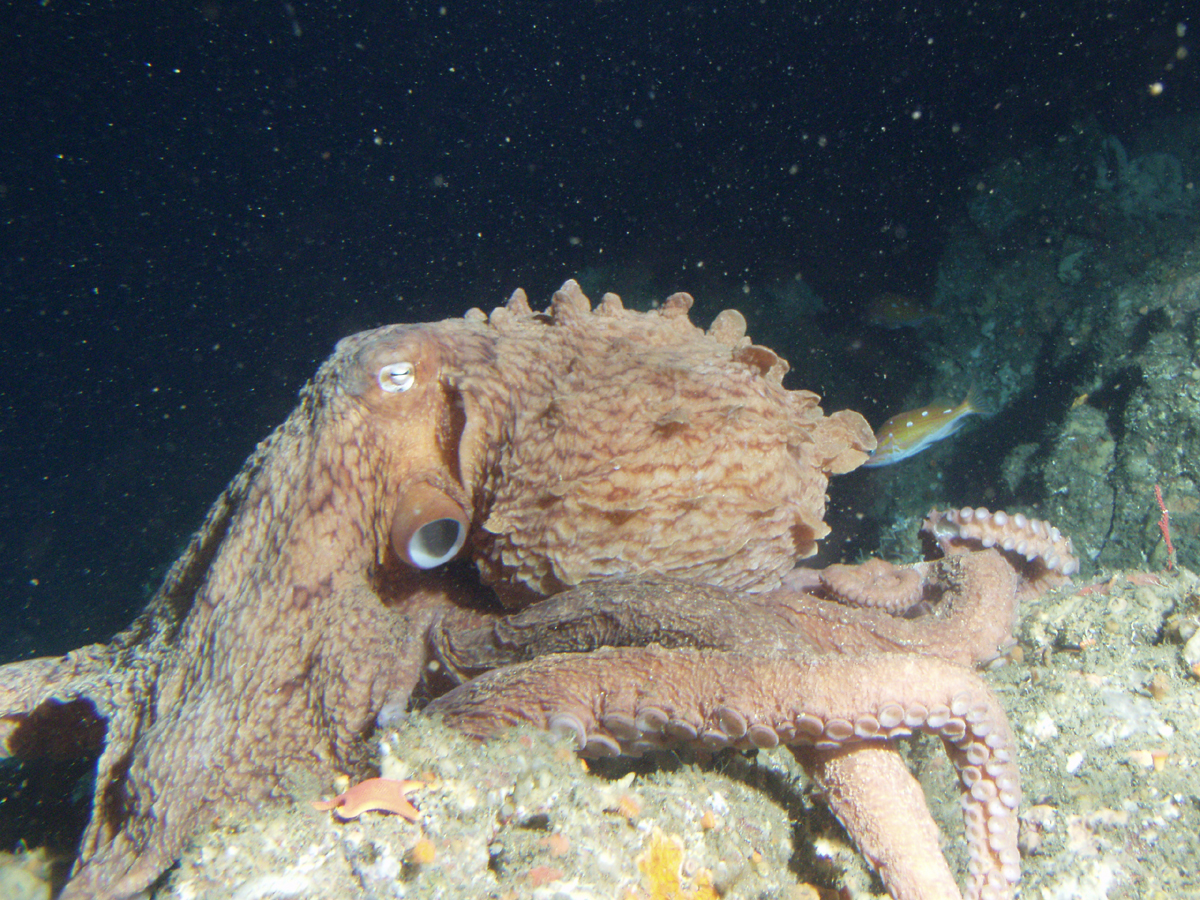


Anatomy and behaviour
Enteroctopus species share the typical octopus body plan: a bulbous mantle housing the organs, a sharp chitinous beak, a muscular siphon used for jet propulsion, and eight long arms lined with rows of suckers. Their skin contains chromatophores allowing rapid colour and texture change. Behaviourally they are active predators and problem solvers; studies and observations in aquaria and the field document complex hunting strategies, tool use, and individual variation in temperament.
Distribution and species
The genus contains a small number of named species, each with a distinct geographic range. Representative species include:
- Enteroctopus dofleini — North Pacific, including coasts of Japan, Russia and North America.
- Enteroctopus magnificus — southern African waters.
- Enteroctopus megalocyathus — temperate South American coasts.
- Enteroctopus zealandicus — waters around New Zealand.
More complete species lists and taxonomic notes are available from specialist references: taxonomic overview.
Ecology, life cycle and human interactions
Giant octopuses are important mid‑level predators. They feed on crustaceans, bivalves, fishes and other benthic animals and in turn are prey for sharks, large fish, sea lions and some cetaceans. Reproduction follows the typical octopus pattern: a single reproductive event near the end of life, egg brooding by the female without feeding, and short lifespans thereafter. Lifespans for large Enteroctopus species are generally measured in a few years. Humans encounter these octopuses in fisheries, research, and public aquaria; they are subjects of behavioural studies and occasional local fisheries.
Distinctions and notable facts
Although often called "giant," Enteroctopus species are much smaller than the deep‑sea giant squids and colossal squids. Their combination of large size, flexible arms, sophisticated camouflage and problem‑solving capacity makes them prominent subjects in studies of invertebrate cognition. Conservation concerns focus regionally on habitat degradation and incidental capture rather than global extinction risk.
Questions and answers
Q: What is the genus of the giant octopus?
A: The genus of the giant octopus is Enteroctopus.
Q: How many species of giant octopus are there?
A: There are four species of giant octopus.
Q: Which species of giant octopus is the largest?
A: The North Pacific Giant Octopus (E. dofleini) is the largest species of giant octopus.
Q: What are the names of the other three species of giant octopus?
A: The other three species of giant octopus are Southern Giant Octopus (Enteroctopus magnificus), E. megalocyathus, and E. zealandicus.
Q: Are all species of giant octopus found in the same region?
A: No, the species of giant octopus can be found in different regions, including the North Pacific, southern regions, and New Zealand.
Q: What is the defining characteristic of giant octopuses?
A: The defining characteristic of giant octopuses is their size, with the North Pacific Giant Octopus being the largest.
Q: What is the scientific name for the North Pacific Giant Octopus?
A: The scientific name for the North Pacific Giant Octopus is Enteroctopus dofleini.
Related articles
Author
AlegsaOnline.com Giant octopus (Enteroctopus) — large temperate-ocean octopuses Leandro Alegsa
URL: https://en.alegsaonline.com/art/38711