
German Cross (Deutsches Kreuz)
A World War II military decoration of Nazi Germany, the German Cross recognized repeated bravery or merit above the Iron Cross 1st Class and below the Knight's Cross.
The German Cross, known in German as the Deutsches Kreuz, was a high-level military decoration created during World War II. Instituted in late 1941, it formed part of the wartime awards system of Nazi Germany and was intended to recognize repeated acts of bravery or sustained distinguished service that exceeded the level recognized by the Iron Cross, 1st Class but did not reach the threshold for the Knight's Cross.
Image gallery
10 Images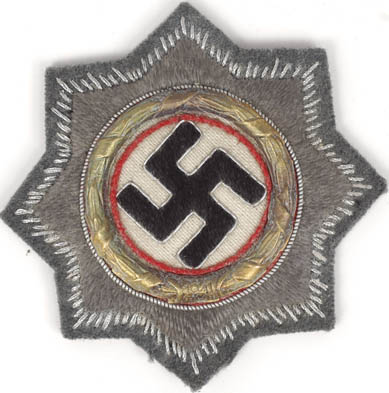







Origin and institution
The decoration was formally established by Adolf Hitler on 16 November 1941. It emerged as a response to the need for an intermediate award to honor continued military achievement during an extended conflict. The German Cross quickly became one of the most commonly issued higher-level decorations across the German armed services.
Design and variants
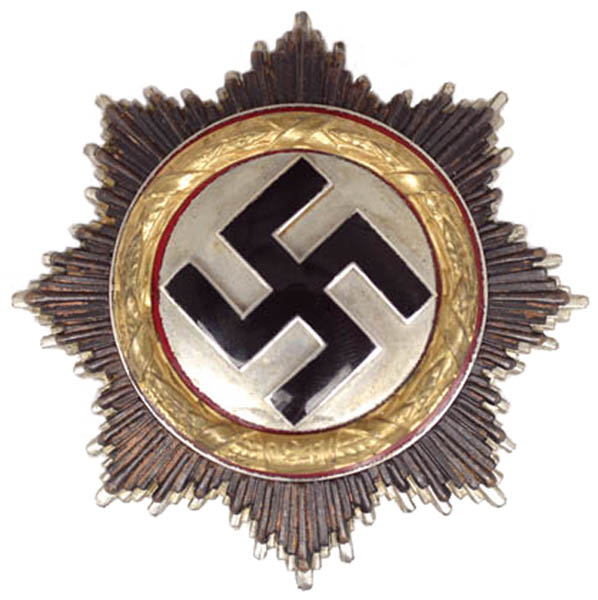
The German Cross was produced in two principal classes: the gold class and the silver class. The gold class was awarded for repeated acts of bravery in combat, while the silver class recognized repeated distinguished service of a non-combat nature. Visually the award combined a star-shaped metal backing with a central black enamel medallion bearing the national emblem of the regime, surrounded by a laurel wreath; the wreath color distinguished the two classes and is often noted when describing the piece (laurel wreath, swastika).
Criteria, rank and precedence
Recipients were typically military personnel who had already received lower awards such as the Iron Cross, 1st Class and who continued to demonstrate exceptional performance. The German Cross ranked below the Knight's Cross of the Iron Cross in the official order of precedence. It was awarded across the army, navy and air force and to members of other formations, reflecting merit rather than a single act.
Wear, versions and production
Two principal forms were produced: a metal badge worn on the breast pocket and a cloth embroidered version designed for convenience on combat uniforms. The cloth version allowed soldiers to keep the decoration mounted on tunics in the field, while the metal variant was intended for parade and garrison wear. Manufacturing styles varied over time and by maker; collectors and historians note differences in construction and finish.
Legacy and notable facts
Because it was a decoration of the wartime German state, the German Cross is a historical subject studied in the context of military history and the broader history of World War II. Its two-class system and place between existing awards made it a distinctive element of the German awards hierarchy. The name itself ties to traditional heraldic forms—indeed the term "cross" appears in its title and refers to the emblematic design rather than a single symbolic meaning (cross).
- Characteristics: two classes (gold/silver), metal and cloth forms, star-shaped badge with central medallion.
- Purpose: recognize repeated bravery or merit beyond the Iron Cross but below the Knight's Cross.
- Context: instituted in 1941 and issued during World War II to members of the German armed forces.
For further detailed reference and visual examples consult specialist works and museum catalogues that document wartime decorations and their variants (Iron Cross context, award name, gold examples, silver examples, wreath detail, central emblem, founding authority, institution date, relative precedence, terminology).
Related articles
Author
AlegsaOnline.com German Cross (Deutsches Kreuz) Leandro Alegsa
URL: https://en.alegsaonline.com/art/38452