
George Beauchamp — pioneering inventor of the electric guitar
George D. Beauchamp (1899–1941) was an American instrument maker and co‑founder of National and Rickenbacker, inventor of the aluminum 'Frying Pan' electric guitar and an early developer of amplified stringed instruments.
George D. Beauchamp, born 1899, was an American instrument builder and entrepreneur whose work helped create the modern electric guitar. Described broadly as an inventor and maker of musical instruments, Beauchamp combined his experience as a performer with practical engineering to develop some of the first commercially produced amplified string instruments. His career bridged performance, design and small‑scale manufacturing in the early 20th century.
Image gallery
1 Image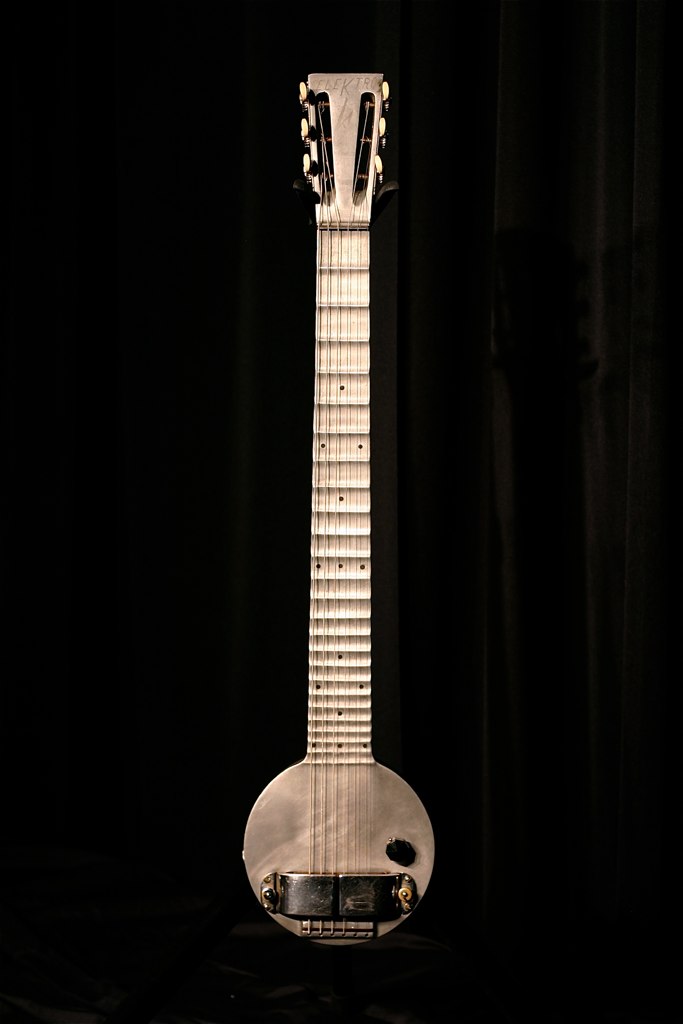
Key inventions and characteristics
Beauchamp is most often remembered for the lap steel design nicknamed the "Frying Pan," an early electric guitar with an aluminum body and one of the first instruments to use a magnetic pickup to convert string vibration into an electrical signal. That breakthrough permitted reliable amplification of steel guitar tones and influenced later solid‑body electric guitars. Beyond the Frying Pan, Beauchamp and his collaborators worked on a range of amplified instruments and accessories intended for professional and stage use.
- Aluminum‑bodied lap steel electric guitar (the "Frying Pan").
- Early magnetic pickup implementations for stringed instruments.
- Electrified versions of traditional instruments and compact amplifiers for live performance.
Companies and development
Beauchamp was a co‑founder of firms that moved these ideas into manufacture and sales, including the National Stringed Instrument Corporation and the company later known as Rickenbacker. Through these ventures he helped establish production techniques and market channels for electric instruments at a time when amplification was becoming essential for popular music.
Early life and performing career
Originally from Texas, Beauchamp was an active musician before he focused on instrument design. He played violin and performed on the lap steel guitar in vaudeville and other stage contexts, which gave him practical insight into players' needs for louder, portable instruments. That performing background guided many of his design choices.
Range of instruments and influence
Work attributed to Beauchamp extended beyond lap steels to the broader electrification of stringed instruments, including early forms of electric guitars, efforts toward electric bass guitars, and experiments with electric violins. While later makers built on and refined these ideas, Beauchamp's experiments and production models showed that electrified string instruments were commercially viable and musically expressive.
Legacy and final years
Beauchamp died in 1941 in Los Angeles. Accounts note that he passed away while deep‑sea fishing. His designs, particularly the Frying Pan and the companies he helped found, are often cited in histories of the electric guitar as foundational steps toward the instrument families that became central to 20th‑century popular music.
For more on Beauchamp's documented instruments and their surviving examples, consult specialized collections and museum catalogs that focus on early electric instruments and the formative years of amplified stringed instrument manufacturing.
Related articles
Author
AlegsaOnline.com George Beauchamp — pioneering inventor of the electric guitar Leandro Alegsa
URL: https://en.alegsaonline.com/art/38179