
Super Smash Bros. for Nintendo 3DS and for Wii U
Two companion entries in the Super Smash Bros. series released in 2014 for 3DS and Wii U. Shared roster and mechanics, platform-specific stages and modes, and expanded customization and online features.
Overview
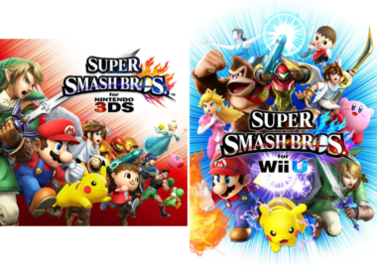
Super Smash Bros. for Nintendo 3DS and Super Smash Bros. for Wii U are companion fighting games in Nintendo's long-running Super Smash Bros. franchise. Developed in partnership by Sora Ltd. and Bandai Namco Studios and published by Nintendo, they were released in 2014 for the handheld Nintendo 3DS and the home-console Wii U. The pair serve as the fourth major entry in the series and were created concurrently: the 3DS edition arrived first on September 13, 2014, followed by the Wii U edition on November 21, 2014.
Image gallery
4 Images


Gameplay and mechanics
The core objective continues the series formula: players control popular video game characters and attempt to increase opponents' damage and knock them off stages. These entries refined several systems and introduced new options. Players could customize movesets through a feature commonly called Custom Moves, allowing alteration of a character's special attacks. Both titles offered single-player modes, local multiplayer and online play, and introduced or expanded support for figure-based interaction via amiibo accessories, enabling trained fighter figures that could learn and evolve through repeated matches.
Roster, characters and presentation
Both versions share an overlapping roster that blends long-standing Nintendo icons with guest characters from third-party franchises. Returning staples include Mario, Luigi, Bowser, Princess Peach, Yoshi, Link, Zelda/Sheik, Fox, Kirby, King Dedede, Pikachu, Lucario, Charizard, Donkey Kong, Samus and others. Newcomers in these releases included Villager (Animal Crossing), Mega Man, Wii Fit Trainer, Rosalina & Luma, Little Mac, Greninja (Pokémon), customizable Mii Fighters, Palutena (Kid Icarus) and Pac-Man, among others. A number of additional fighters and stages were made available after launch through downloadable content.
Differences between the 3DS and Wii U versions
The two games were built from the same design but tailored to their platforms. The Wii U edition uses high-definition visuals and takes advantage of the GamePad for certain menu and viewing features, while the 3DS edition employs a cel-shaded art direction better suited to its lower-resolution screens. Each version includes exclusive stages and some exclusive modes or stage types oriented to handheld or console play — for example, the 3DS version features a time-limited exploration mini-game designed for portable sessions, whereas the Wii U edition emphasizes larger multiplayer stages and console-oriented presentation. Despite the shared roster count, the specific stage lists and certain mechanics (camera behavior, stage size and online implementation) differ between platforms.
Development, release and post-launch support
The games were announced and shown in development screenshots and trailers before release. They were notable for being developed simultaneously for two different hardware architectures and for reintroducing a faster, more competitive playstyle that responded to community feedback from earlier entries. After release, Nintendo supported the titles with balance patches and additional downloadable content, which added characters, costumes and stages. The games also played an important role in the early adoption of Nintendo's amiibo figures, which were launched alongside the titles and integrated into their training and storage systems.
Reception and legacy
Critics and players praised the entries for their wide character selection, the depth of their combat systems and the variety of modes. Reviews commonly contrasted the two versions, noting the Wii U's graphical polish and larger local multiplayer suitability versus the portability and exclusive handheld content of the 3DS. Both titles helped sustain Super Smash Bros. as a major competitive and casual series, influencing later entries and community play at tournaments and local events.
Further information and official links
- Developer or series overview
- General game information
- Nintendo 3DS platform page
- Wii U platform page
- Publisher information (Nintendo)
- Super Smash Bros. series entry list
- Mario character information
- Luigi character information
- Princess Peach details
- Yoshi series background
- Link and Zelda series details
- Zelda/Sheik character profile
- Fox McCloud information
- Kirby series information
- Pikachu (Pokémon) profile
- Lucario (Pokémon) profile
- Charizard (Pokémon) profile
- Donkey Kong series background
- Samus Aran and Zero Suit Samus information
- Pit and Kid Icarus background
- Sonic the Hedgehog guest appearance
- Olimar and Pikmin series
- Villager (Animal Crossing)
- Wii Fit Trainer information
- Rosalina & Luma (Mario series)
- Greninja (Pokémon)
- Mii Fighter customization
- Pac-Man guest character details
- Technical and graphical notes
Readers seeking deeper coverage on competitive rulesets, patch history, and the list of downloadable content can consult official support pages and community resources listed above.
Questions and answers
Q: What are Super Smash Bros. for Nintendo 3DS and Wii U?
A: Super Smash Bros. for Nintendo 3DS and Wii U are two fighting video games developed by Sora Ltd. and Namco Bandai Games, published by Nintendo, and act as the fourth game in the Super Smash Bros. series.
Q: When were the games released?
A: The 3DS game was released on September 13, 2014, while the Wii U game was released on November 21, 2014.
Q: What is the objective of Super Smash Bros.?
A: The objective of Super Smash Bros. is to knock opponents off of the stage in some way using characters from various Nintendo series such as Mario, Luigi, Bowser, Princess Peach, Yoshi etc..
Q: Are there any new characters in these versions?
A: Yes! There are six new characters including Villager from Animal Crossing series, Mega Man from Mega Man series, Wii Fit Trainer Rosalina from Mario series., Little Mac from Punch-Out!! series and Greninja from Pokémon series among others.
Q: Does each version have different graphics?
A: Yes! The Wii U version has high-definition graphics while the Nintendo 3DS version has cel-shaded (computer graphics made to look like they were drawn by hand) graphics. Both versions have the same number of characters but with stages that are only available in either version - more stages based on handheld video games for the 3DS version and more stages based on console video games for the Wii U version.
Q: Is it possible to customize character movesets?
A: Yes! For the first time in this franchise players can change character movesets which can be used both in single-player mode or with friends online or locally.
Q: Are there any hidden/secret characters? A:Yes! There are many hidden/secret characters which can be unlocked called "Secret Characters" according to official website of Super Smash Bros..
Author
AlegsaOnline.com Super Smash Bros. for Nintendo 3DS and for Wii U Leandro Alegsa
URL: https://en.alegsaonline.com/art/146316