
Gautam (Hindu sage)
Gautam is a revered rishi (sage) in Hindu tradition, counted among the saptarishis. He appears in Vedic and epic literature and is associated with the Gautama gotra, early dharma literature, and several well‑known legends.
Overview
Gautam (also rendered Gautama) is an ancient rishi in Hindu tradition, traditionally numbered among the seven great sages or saptarishis. He appears in Vedic hymns and later epic and Puranic narratives as a prominent seer, teacher, and progenitor of a large lineage. His name is attached to ritual and legal traditions and to a familial identity—the Gautama gotra—that persists in Hindu social practice.
Image gallery
3 Images
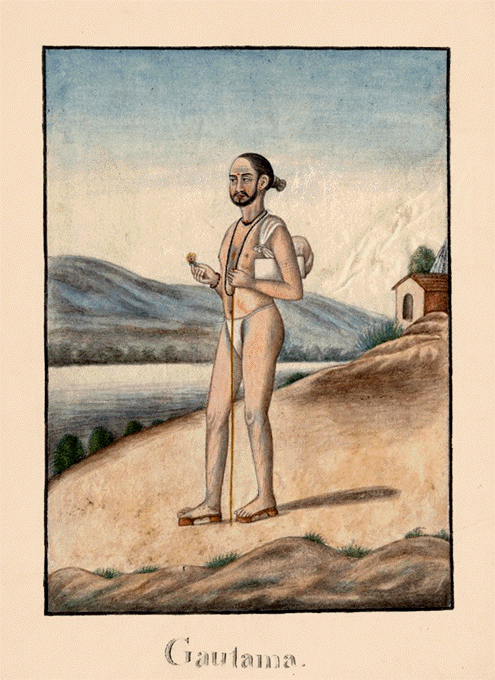

Mentions in scripture and literature
Several hymns of the Rigveda are attributed to seers named Gautam or to members of his school, and later references to the sage occur in the great epics. The Ramayana and the Mahabharata refer to Gautam in episodes that locate him across different ages (yugas) and highlight his role as a teacher and penitent. In the Shanti Parva of the Mahabharata, a prolonged penance of Gautam is noted; some accounts mention a sixty‑year austerity linked to his life and reputation.
Family, disciples and lineage
Traditional genealogies describe Gautam as the son of Raghuyana (or Rahugana in some recensions) and the husband of Ahalya, a figure best known from the story in which she is turned away from society and later absolved. Several sons and disciples are associated with Gautam: classical lists include Vamadeva and Nodhas, both described in later tradition as seers or discoverers of mantras. The name of the sage became the eponym for the Gautama gotra, a lineage identifier still used in many Hindu communities.
Roles and attributed works
Beyond hymn attributions, the name Gautam is linked in later tradition to didactic and legal material. A Dharma‑literary text known as the Gautama Dharmasutra is attributed to a sage of this name; such works shaped early notions of ritual and social duty. While the precise historicity and authorship of any single ancient text are debated among scholars, the association shows how one canonical name served as a locus for religious and legal authority.
Mythic significance and astronomy
In Hindu cosmology and astronomical lore, the seven rishis are often identified with the stars of the Ursa Major (the Great Bear) asterism, and their wives with the cluster of the Pleiades. Gautam is thus part of an intertwined tradition that blends myth, ritual memory, and naked‑eye star lore to anchor human ancestors in the heavens.
Stories, legacy and distinctions
Gautam figures in several well‑known tales: the narrative of Ahalya, his long penances, and his role as a teacher recur in regional retellings and temple lore. The sage is important not only as an individual figure but as a symbol of the rishi ideal—study, sacrifice, and moral teaching. Distinct traditions have preserved different local details, and the name Gautam may refer to several related but non‑identical sages across the long span of Vedic and post‑Vedic literature. For introductions and further reading on the contexts in which Gautam appears, see the epic and Vedic sources and studies that discuss the saptarishi motif and the chronological layering of these narratives; also consult general works on the yugas and on related genealogies.
- Primary associations: one of the saptarishis, husband of Ahalya, ancestor of the Gautama gotra.
- Scriptural presence: Rigvedic hymn attributions; episodes in the Ramayana and Mahabharata.
- Cultural traces: Dharma literature attribution, astronomical identification with Ursa Major.
Scholars treat Gautam as both a historical memory and a mythic archetype: a figure whose name collects multiple traditions—Vedic seerhood, epic narration, legal teaching, and ancestral identity—across centuries of South Asian religious life. For source texts and traditional commentaries, consult editions and translations of the Rigveda, the Ramayana, the Mahabharata, and studies that trace the development of gotra systems and Dharmasutras.
Further reading and resources often link Gautam to astronomical metaphors and to the cycle of ages; for general background on those frameworks, see introductory works that address the yugas and ritual genealogies, and consult material organized under the Gautama lineage header.
Questions and answers
Q: Who is Gautam?
A: Gautam is a mythological Hindu sage (Rishi) and one of the seven Rishis.
Q: Which Hindu scriptures have named the seven sages as saptarishis?
A: The Hindu scriptures have named the seven sages as saptarishis.
Q: Who are the seven sages?
A: The seven sages are Kashyapa, Atri, Vashitha, Vishvamitra, Gautam, Jamdagni, and Bharadvaja.
Q: What did ancient astrology of Hindus identify these seven sages with?
A: The ancient astrology of Hindus identified these seven sages with the stars of the sky, the Great Bear.
Q: How many sons did Gautam have and what were their names?
A: Gautam had two sons named Vamadeva and Nodhas.
Q: Which Hindu texts have references to Sage Gautam?
A: Ramayan and Mahabharatha have references to Sage Gautam.
Q: Who is the progenitor of the Gautama gotra?
A: Sage Gautam is the progenitor of the Gautama gotra.
Related articles
Author
AlegsaOnline.com Gautam (Hindu sage) Leandro Alegsa
URL: https://en.alegsaonline.com/art/37755