
Gefjun (Norse goddess)
Gefjun is a minor but distinctive figure in Norse myth, associated with a famous ploughing myth, debated etymology, and interpretations as a virgin, a fertility deity, or a counterpart to Freyja.
Overview
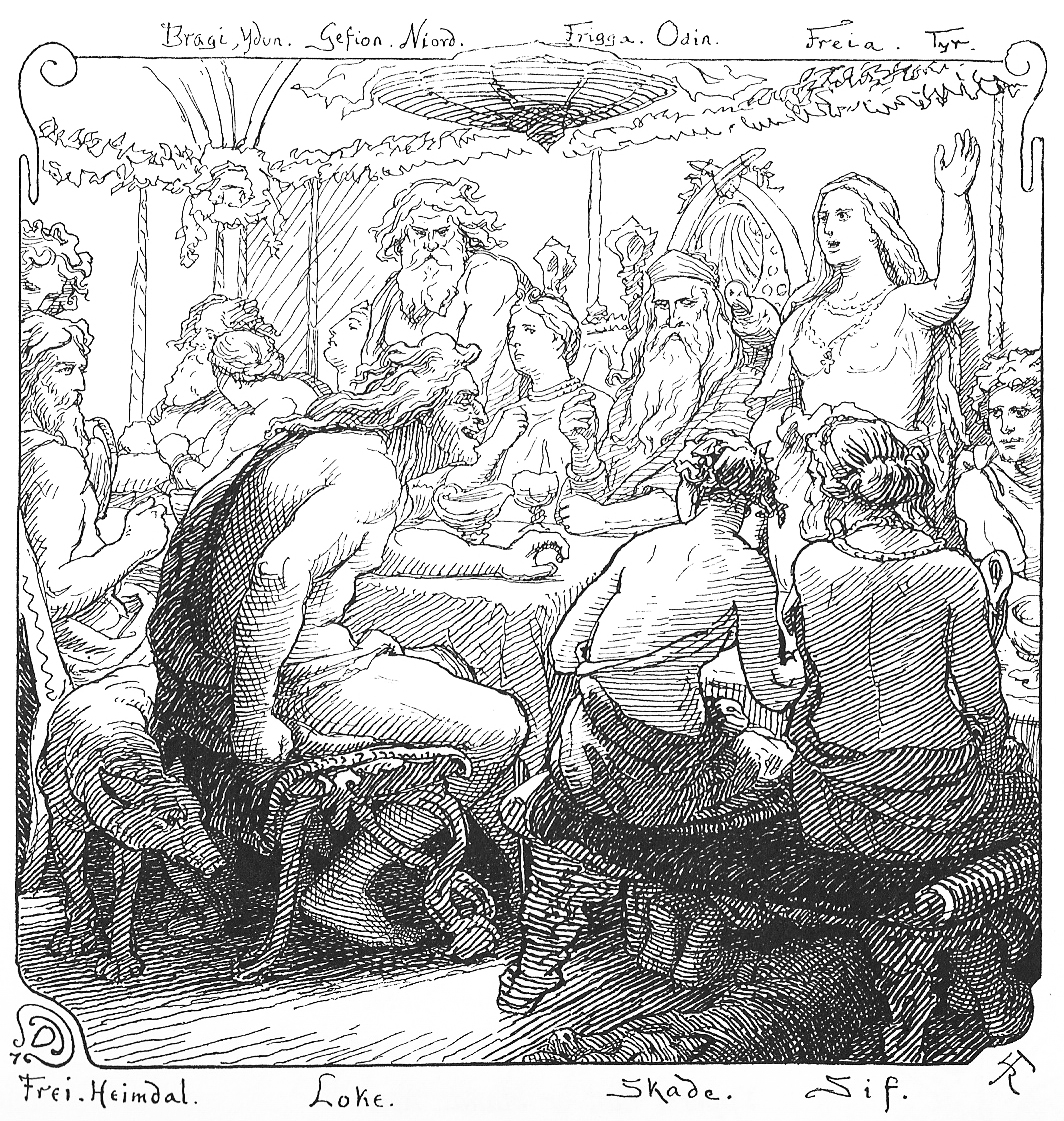
Gefjun (also spelled Gefjon or Gefia) is a goddess attested in Old Norse sources and commonly numbered among the Æsir and Asynjur. She appears only sporadically in surviving medieval texts but is known for one striking myth in which she carves an island from the Swedish mainland. Later medieval authors describe her with attributes that led them to call her a virgin or goddess of chastity, while modern scholars often emphasize older agricultural and fertility aspects.
Image gallery
8 Images



Attestations and the ploughing myth
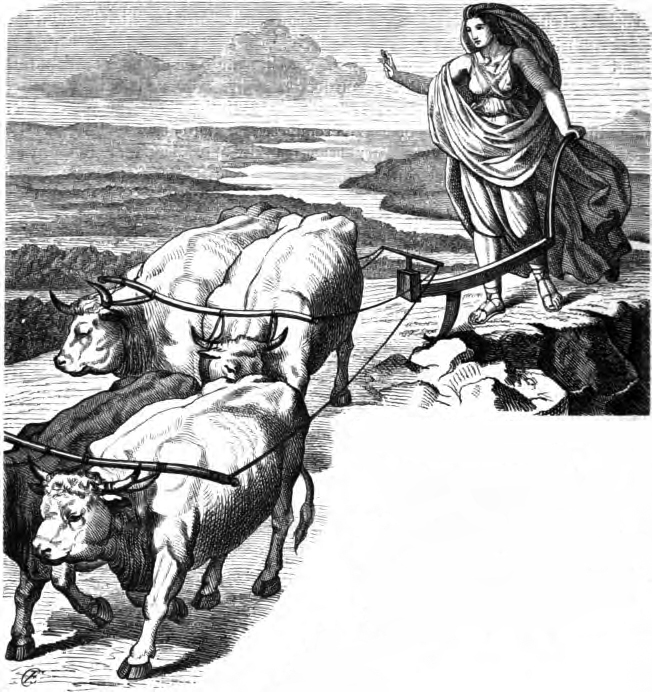
Our principal literary record of Gefjun comes from the Prose Edda and a handful of skaldic and saga passages. In the best-known story she gains land from a Swedish king (sometimes named Gylfi) and ploughs it away with a team of oxen that were once her sons, leaving behind a lake that is identified with Lake Mälaren and forming the island of Zealand (Danish Sjælland). The episode underlines themes of transformation, boundary-making and the close link between women and land in Germanic myth.
Name, attributes and imagery
The name Gefjun has uncertain etymology. Some etymologists connect it with Old Norse roots meaning "gift" or "to give," while older medieval glosses and later commentators emphasized chastity. Iconographically she is sometimes imagined as a ploughing figure or as a matronly deity associated with land and household prosperity. References in skaldic verse and a few saga lines present her as an important but elusive presence rather than a richly developed personality like Odin or Thor.
Scholarly interpretations
- Fertility and agriculture: Many scholars read the ploughing tale as evidence that Gefjun originally had a role in fertility rites and land-clearing rituals.
- Virginity vs. matron: Medieval descriptions of chastity may reflect Christianized reinterpretations or stem from conflation with other goddesses.
- Identification with other deities: Some suggest links or overlaps with Freyja or other female deities, while others caution that the evidence is too sparse for firm identification.
- Comparative mythology: A few scholars have even proposed distant literary echoes between Gefjun and figures such as Grendel's mother in Beowulf, though such connections are speculative and debated.
Legacy and cultural reception
Gefjun's image has persisted in place-names, art and modern literature. She is invoked in discussions of Norse cosmology, the sacrality of land and gendered ritual roles. Public sculptures and romantic-era retellings popularized her ploughing myth in Scandinavia. Because the surviving evidence is limited, Gefjun continues to be a subject where careful philology and comparative study can enrich, but not definitively resolve, questions about her original cult and functions.
Notable facts
- Gefjun appears only a few times in primary Norse sources, but those references have generated outsized interest because of the memorable ploughing narrative.
- Interpretations range from a virginal household deity to a horse- and plough-associated fertility figure; modern views tend to prioritize agricultural symbolism.
- Read in context, Gefjun illustrates how Scandinavian myth preserved layers of meaning that later medieval writers and modern scholars must disentangle.
For general background on Norse religion and the categorization of gods see broader introductions to Norse mythology. Further reading can explore the Prose Edda accounts and comparative studies of Germanic goddess traditions.
Related articles
Author
AlegsaOnline.com Gefjun (Norse goddess) Leandro Alegsa
URL: https://en.alegsaonline.com/art/37836
Sources
- runeberg.org : Gefjun