
Fusion power: principles, development, and prospects
A concise, neutral overview of fusion power: how fusion produces energy, main confinement approaches, historical milestones, potential uses, technical challenges, and current research status.
Fusion power refers to generating usable energy by forcing light atomic nuclei to combine into heavier nuclei, a process commonly called nuclear fusion. In stellar cores this reaction releases enormous heat; on Earth researchers recreate the high-temperature ionized state called plasma so that nuclei can overcome their mutual repulsion and merge. Typical laboratory reactions use isotopes of hydrogen — deuterium and tritium — because they fuse at lower temperatures than heavier elements, and their fusion liberates energy per reaction that can, in principle, be converted into electricity.
Image gallery
10 Images





Basic characteristics and methods
To produce net-positive power, a fusion system must supply extreme temperature and confinement to meet conditions related to the Lawson criterion (sufficient temperature, density and confinement time). Two broad engineering approaches dominate current research:
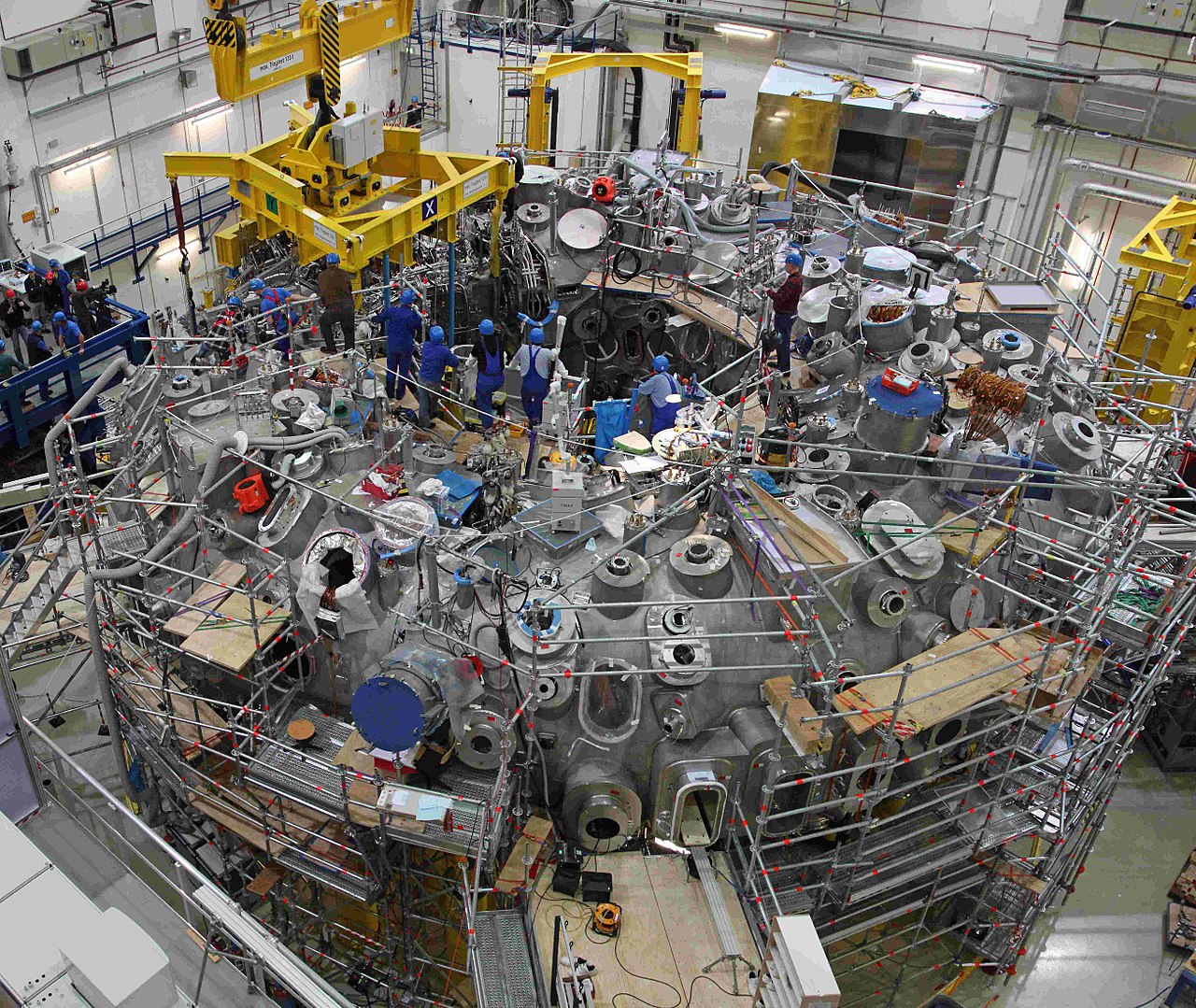
- Magnetic confinement: a hot plasma is shaped and contained by strong magnetic fields. The tokamak is the best-known magnetic device; it uses a toroidal (doughnut-shaped) chamber and powerful magnets to hold the plasma in place. Alternative magnetic designs include the stellarator and other advanced field geometries. Prominent experimental tokamaks include facilities such as the Joint European Torus (JET).
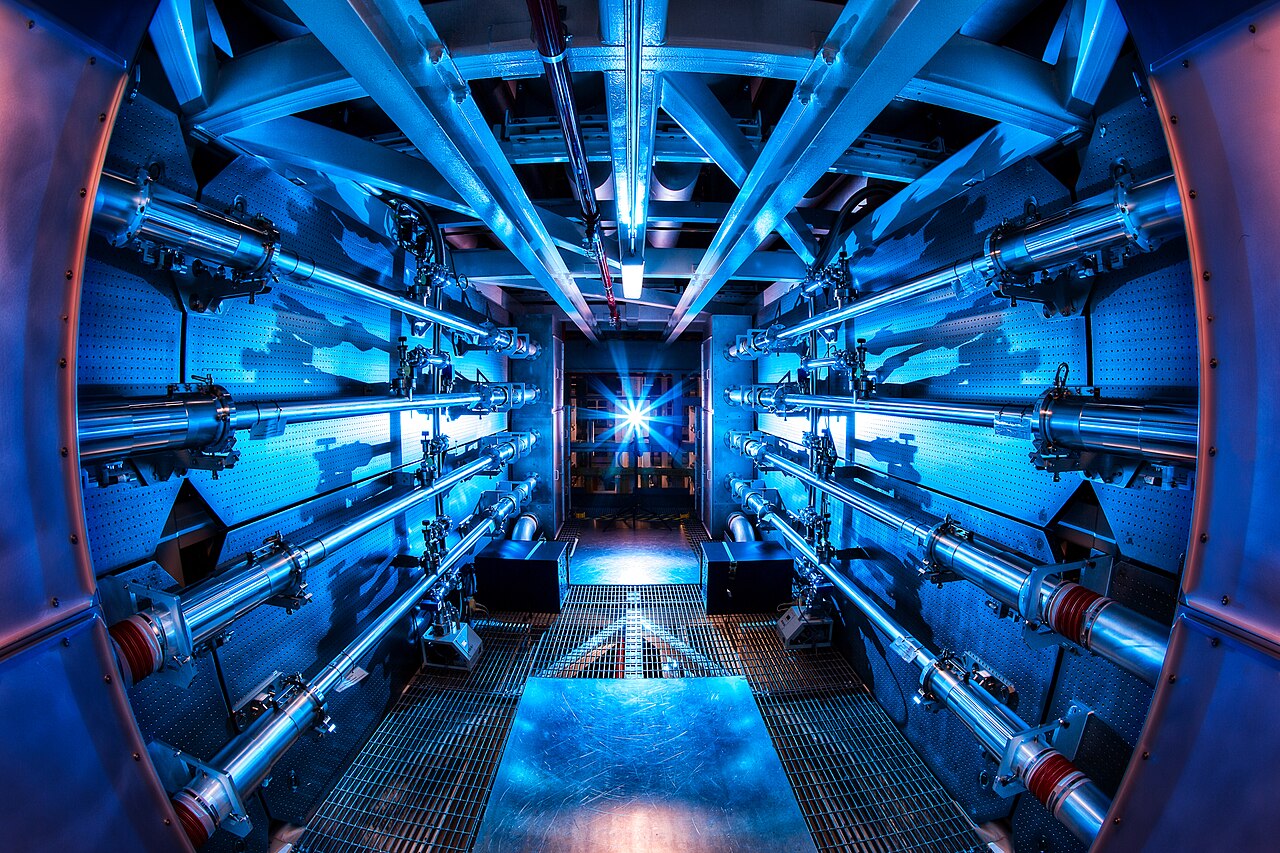
- Inertial confinement: tiny fuel capsules are rapidly compressed and heated by high-power lasers or particle beams so that fusion occurs before the assembly blows apart. Large laser facilities pursuing this route have reported brief, intense fusion events.
History and development
The physics of fusion was first clarified through 20th-century work on stellar structure and nuclear physics. Controlled fusion research accelerated after World War II, initially with parallel military and civilian programs. Thermonuclear weapons exploit fusion in an uncontrolled, explosive way (thermonuclear weapons), while civilian fusion aims for steady, controllable energy production. Over decades experimental machines have grown larger and more sophisticated, with national and international collaborations such as the ITER project aiming to demonstrate a sustained, power-producing plasma that could inform future nuclear power plants.
Uses, advantages, and distinctions
Fusion promises several potential advantages over current fission-based nuclear reactors: abundant fuel (deuterium from seawater), much lower long-lived radioactive waste, and no greenhouse-gas emissions during operation. The primary envisioned application is central electricity generation — converting fusion heat into steam and then to electrical power (electricity). Other proposed uses include industrial process heat and advanced spacecraft propulsion concepts.
Challenges and research priorities
Despite decades of progress, several major technical and engineering hurdles remain before fusion becomes a practical power source. Key challenges include:
- Achieving and sustaining net energy gain under realistic, high-duty-cycle conditions.
- Developing materials that withstand intense neutron bombardment and high heat fluxes.
- Breeding and handling tritium fuel safely and economically.
- Designing efficient systems to convert fusion heat into electricity and integrate them into a power grid.
Current status and outlook
As of recent years, no commercial fusion power plant supplies electricity to a grid, but multiple experimental milestones have narrowed important gaps. National laboratories and private companies pursue complementary paths — large international projects target scientific demonstration of net gain and sustained burn, while smaller teams explore compact tokamaks, advanced superconducting magnets, and alternative fuels or confinement schemes. Progress has been incremental but steady; the timeline to commercial deployment remains uncertain and depends on solving the remaining scientific, materials and engineering problems.
For further reading and authoritative overviews, see institutional summaries and project pages provided by research facilities and international collaborations: nuclear fusion basics, experimental programs such as JET, large laser facilities, and multinational efforts like ITER. Additional resources provide technical details on confinement methods and fuel cycles (isotopes, plasma physics), energy accounting (energy yield), power-plant concepts (reactors), electricity conversion (electricity), comparisons with fission, and security considerations related to weapons and proliferation.
Related articles
Author
AlegsaOnline.com Fusion power: principles, development, and prospects Leandro Alegsa
URL: https://en.alegsaonline.com/art/37088