
G-force: acceleration relative to gravity and its effects
G-force is acceleration measured relative to Earth's gravity. This article defines g, explains units and measurements, describes physiological effects, and gives examples from aviation, spaceflight and amusement rides.
G-force describes the acceleration experienced by an object expressed as a multiple of the standard acceleration due to gravity. Put simply, 1 g corresponds to the acceleration an object would have in free fall near Earth's surface. In physics this concept links the intuitive idea of "weight" with the rigorous quantity of proper acceleration: what an accelerometer measures and what a person actually feels.
Image gallery
3 Images

Definition and units
G-force is commonly reported as a dimensionless multiple of the standard gravity value. Standard gravity is approximately 9.80665 metres per second squared, often rounded to 9.81 m/s². Saying an acceleration is "3 g" means it is three times that acceleration. When discussing the underlying physical quantity, use the term acceleration; when contrasting motion with the absence of supporting forces, the relevant idea is free fall. The same numerical value can be expressed as newtons per kilogram; standard gravity equals about 9.80665 N/kg, and mass is measured in the kilogram.
How g-force works and what it feels like
G-force determines apparent weight. If a vehicle accelerates upward at 1 g, occupants feel twice their weight (their apparent weight equals the sum of gravitational and inertial forces). Acceleration downward can reduce apparent weight; in true free fall apparent weight is zero, producing weightlessness. Direction matters: forces aligned from head to foot (often called GZ) feel different and are typically more physiologically stressful than lateral forces. Astronauts and pilots routinely train to tolerate changing g-levels.
Physiological effects and safety
Short-duration spikes of g are common in many activities. Moderate positive g (pushing blood toward the feet) can impair vision and, at higher levels, cause loss of consciousness; negative g (pushing blood toward the head) can produce red-out and discomfort. Prolonged or extreme g-levels can cause injury. Aerospace medicine, pilot training, and safety equipment such as G-suits, restraints and engineered seat orientations are designed to reduce harmful effects.
Measurement, applications and examples
- Measurement: accelerometers and G-meters measure proper acceleration and report values in multiples of g.
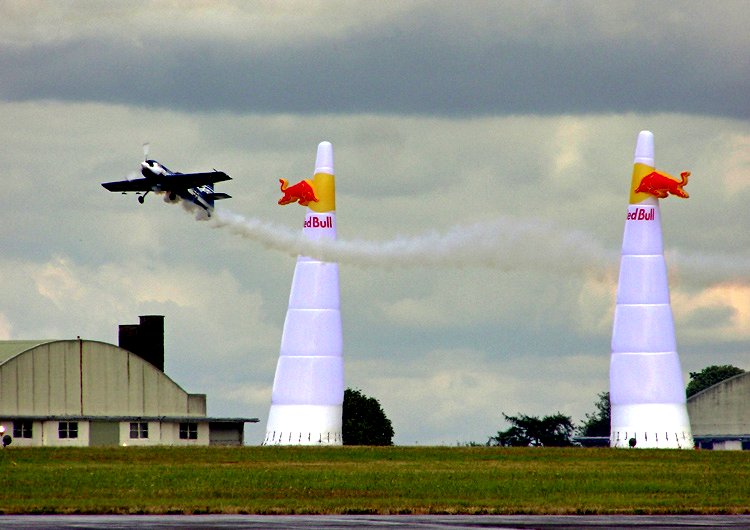
- Aerospace: rocket launches, reentry and fighter maneuvers subject occupants to variable g-levels; spacecraft in orbit experience microgravity because they are in continuous free fall around Earth.
- Amusement rides: roller coasters create both positive and negative g moments to produce feelings of heaviness or weightlessness.
- Engineering tests: centrifuges simulate high-g environments for component testing and human training.
Understanding g-force requires distinguishing between gravitational acceleration (a field) and proper acceleration (what pushes on a body). This distinction explains why astronauts inside an orbiting spacecraft feel weightless despite still being under Earth's gravity—both craft and occupants are accelerating together. The term "g-force" remains a practical shorthand to describe how strong and in which direction inertial forces act relative to everyday gravity.
For further reading on the basic concepts, instrumentation and human factors consult introductory physics texts and aerospace medicine sources; useful starting points can be found via links on acceleration, free fall, units of force and mass and human spaceflight: acceleration, free fall, standard gravity, kilogram, astronauts.
Related articles
Author
AlegsaOnline.com G-force: acceleration relative to gravity and its effects Leandro Alegsa
URL: https://en.alegsaonline.com/art/37121