
Fumaric acid: properties, occurrence, uses and history
Fumaric acid is a naturally occurring organic acid used as a food acidulant (E 297), in industry and in medicine; this article summarizes its chemistry, natural role, applications and safety notes.
Overview
Fumaric acid is an organic dicarboxylic acid that occurs in many plants and in metabolic pathways of animals. It is commonly encountered as the trans isomer of butenedioic acid and forms salts known as fumarates. As a naturally occurring chemical substance it is widespread in plant tissues and also appears transiently in human biochemical cycles; examples of plants that contain fumaric acid are discussed in botanical and chemical literature (plants).
Image gallery
4 Images


Chemistry and characteristics
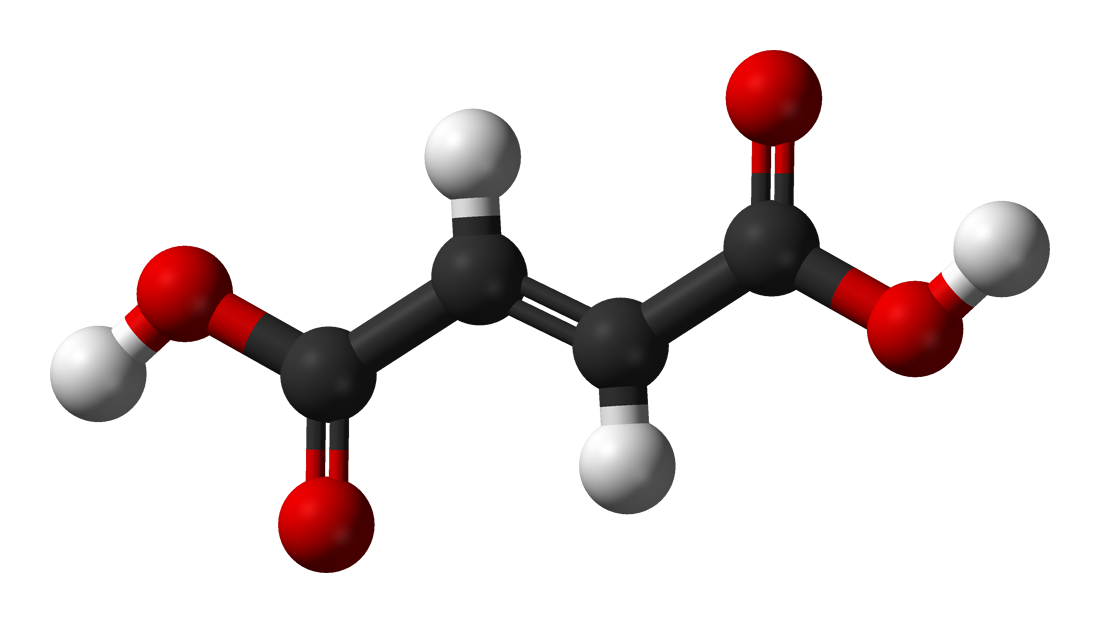
Chemically, fumaric acid is the trans isomer of C4 dicarboxylic acid and contrasts with its cis counterpart, maleic acid. The conjugate base, fumarate, is an intermediate in cellular respiration. Important physical and chemical features include modest water solubility (increasing with temperature), two carboxyl groups that confer acidity and the geometric configuration that affects reactivity compared with the cis isomer.
Natural role and metabolism
In biology, fumarate appears as an intermediate of the tricarboxylic acid (TCA) cycle, where it is formed by oxidation of succinate and subsequently hydrated to malate. Because of this metabolic role, fumaric acid and its derivatives play a part in energy generation in cells. Outside metabolism it is a normal constituent of several fruits, vegetables and fungi (plants).
Uses and applications
Fumaric acid has a range of commercial and medical uses. As a food additive it is used as an acidulant and preservative under the designation E 297 and can substitute for or complement other acids such as citric acid. In industry it serves as a chemical intermediate for polymer resins, coatings and as a precursor to fumarates. In medicine, salts and esters of fumaric acid are used therapeutically: fumarate compounds have been investigated and applied in treatment of certain inflammatory and autoimmune conditions of the skin and other disorders; reviews cover therapeutic approaches in medicine and specific conditions such as psoriasis.
- Food: acidulant, preservative (food preservation), E 297.
- Pharmaceuticals: fumarate esters used clinically.
- Industrial: polymer and resin precursor, chemical intermediate.
History and research
Research on fumaric acid and related metabolic compounds contributed to early 20th-century biochemical advances. Notably, Albert Szent-Györgyi conducted work on biological oxidation and related organic acids; his research into cellular metabolism and related substances was recognized with a Nobel Prize in 1937, and his studies included compounds such as fumaric acid (Szent-Györgyi).
Safety and regulation
At typical use levels in food and industry fumaric acid is considered acceptable by many regulatory bodies, but like all acids it can irritate mucous membranes at high concentrations. Medicinal derivatives have distinct safety profiles and require medical oversight. For practical and regulatory guidance consult national food and drug authorities and specialist reviews in medicine.
Related articles
Author
AlegsaOnline.com Fumaric acid: properties, occurrence, uses and history Leandro Alegsa
URL: https://en.alegsaonline.com/art/37001