
Fulda River
The Fulda is a 218 km river in central Germany. Rising in the Rhön, it flows north through Hesse and joins the Werra to form the Weser, passing several historic towns including Fulda and Kassel.
Overview
The Fulda is a major river in the central German state of Hesse that drains northwards toward the North Sea via the Weser. At roughly 218 km in length, it is one of the two principal headstreams that combine to form the Weser, the other being the Werra. The Fulda rises in a low-mountain region of the Rhön and flows through a mix of upland valleys and broad agricultural floodplains before meeting the Werra near Hannoversch Münden.
Image gallery
4 Images


Course and characteristics
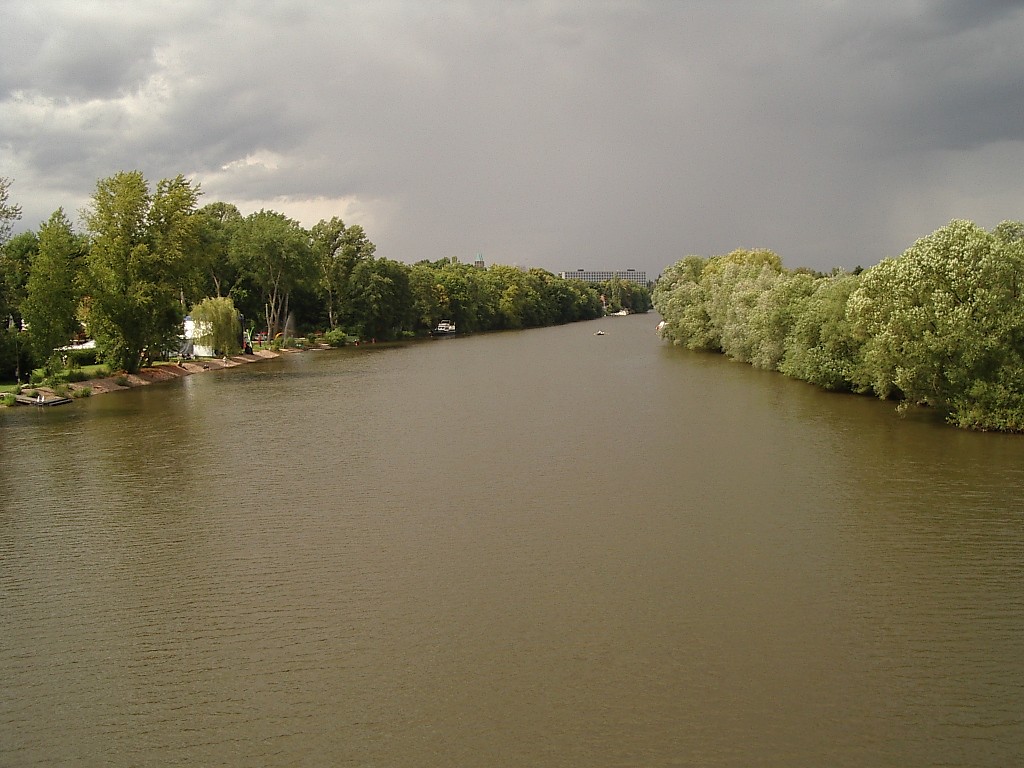
The river’s upper reaches begin in the south-eastern part of Germany, where cool springs and streams in the Rhön feed the young Fulda. From its source the channel trends generally northward, cutting through wooded hills and sections of the Weserbergland. Its flow regime reflects seasonal precipitation and snowmelt in the uplands, and the river corridor includes meanders, levees and periodically flooded terraces that support varied habitats.
Towns and human use
The Fulda has shaped settlement patterns and local economies for centuries. Several towns and cities developed along its banks and used the river for transport, milling and as a water resource. Notable places on the Fulda include:
- Fulda (the historic city that shares the river’s name)
- Gersfeld
- Bad Hersfeld
- Rotenburg an der Fulda
- Melsungen
- Kassel
History and development
Historically the Fulda corridor served local trade and industry rather than long-distance navigation; small barges and rafts were used where stretches permitted. Medieval monasteries, towns and agricultural estates depended on the river for power and irrigation. From the 19th century onward, river engineering—straightening, bank reinforcement and flood-control works—changed the channel in many places to protect settlements and farmland.
Ecology, recreation and contemporary importance
Today the Fulda supports fisheries, riverside recreation such as boating and cycling, and nature reserves in its floodplain reaches. Conservation efforts focus on improving water quality, restoring natural stream features and maintaining habitats for fish, birds and invertebrates. The river remains an important landscape element in central Hesse and a focal point for cultural and outdoor activities.
Notable facts and distinctions
One of the river’s most significant geographic roles is forming, with the Werra, the headwaters of the Weser system. Where the two rivers meet, the combined flow continues north as the Weser, an important waterway for northern Germany. The Fulda’s cities—especially Fulda and Kassel—preserve architectural and cultural links to the river that remain visible in riverfront parks, old mills and historic bridges.
Related articles
Author
AlegsaOnline.com Fulda River Leandro Alegsa
URL: https://en.alegsaonline.com/art/36950