
Fulton County, Georgia
Fulton County is Georgia’s most populous county, home to Atlanta. This article summarizes its history, geography, government, economy, cultural institutions and notable features.
Fulton County is a county in the U.S. state of Georgia and contains the city of Atlanta, the state capital and regionally important metropolitan center. The county grew into a major population and economic center during the 19th and 20th centuries; it has more than one million residents (about 1.04 million in mid-2017) and is the most populous county in the state. For an official county profile see Fulton County resources.
Image gallery
10 Images



Origins and development
Fulton County was established in the mid-19th century and named for inventor Robert Fulton. Its emergence followed railroad expansion and the growth of Atlanta as a commercial and transportation hub. Over time the county became a focal point for manufacturing, commerce, civil rights history and later service and knowledge industries. The 1996 Summer Olympics, hosted in Atlanta, brought international attention and lasting infrastructure improvements to the area.
Geography and subdivisions
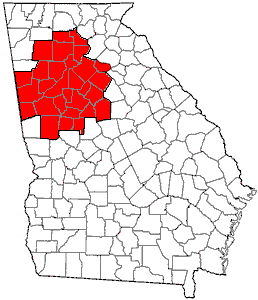
The county occupies a portion of north-central Georgia, combining a dense urban core with sprawling suburban areas to the north and pockets of less-developed land. It includes multiple municipalities and unincorporated neighborhoods, and is bisected by major highways and river corridors that shape development patterns and recreation.
Economy, culture and institutions: Fulton County anchors a regional economy with sectors in finance, transportation, professional services, media and tourism. Atlanta hosts corporate headquarters, performing arts venues, museums and sports franchises. The county also supports higher-education institutions, hospitals and research centers that contribute to employment and innovation.
Important civic functions are administered at the county level: courts, public health, elections and infrastructure planning. Public schools are operated by local districts that serve both city and suburban populations, reflecting diverse communities and a range of housing and income patterns.
Notable places and facts
- Major cultural attractions and parks are concentrated in the Atlanta core, drawing regional tourism.
- The county plays a central role in regional transportation and commerce.
- Residents and planners continue to address growth, equity and land-use challenges while preserving historic neighborhoods.
For maps, statistics and official services consult local government and planning resources: county site, state offices at Georgia portals and regional information available via Atlanta-area resources.
Related articles
Author
AlegsaOnline.com Fulton County, Georgia Leandro Alegsa
URL: https://en.alegsaonline.com/art/36988