
Amur leopard (Panthera pardus orientalis): status, biology, and conservation
The Amur leopard is a critically endangered subspecies native to the Russian Far East and northeastern China. This article reviews its appearance, habitat, behavior, threats, and conservation measures.
Overview
The Amur leopard (Panthera pardus orientalis) is a northern subspecies of leopard, sometimes called the far eastern leopard. It is recognized as a leopard subspecies distinguished by adaptations to cold temperate forests. The International Union for Conservation of Nature lists the Amur leopard as critically endangered, with a very small and fragmented wild population found in two main areas of East Asia.
Image gallery
10 Images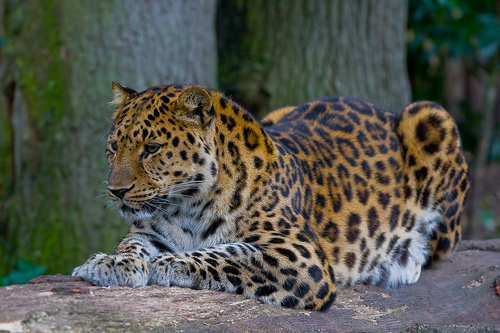


Distribution and habitat
The species' remaining range is concentrated in southeastern Russia, especially the Primorye region (Primorye) and across the border into parts of northeast China, including Jilin Province (Jilin) and adjacent areas of China. Historically wider, its range has shrunk because of human activities. Today the Amur leopard occupies mixed and broadleaf temperate forests, river valleys and hilly terrain where winter snow cover and seasonal changes shape its ecology. Many descriptions also refer to populations in the Russian Far East and Russia generally.
Physical characteristics
Compared with other leopard subspecies, the Amur leopard has a paler, thicker coat with widely spaced rosettes and long guard hairs that provide insulation in cold months. Adults typically weigh several dozen kilograms and show the powerful build and long tail common to leopards. Coat color and patterning, body proportions and seasonal fur length are useful for field identification and for photographic monitoring.
Ecology and behavior
Amur leopards are largely solitary predators with territories that they mark and defend. Their diet primarily includes medium-sized ungulates and smaller mammals. Typical prey items include:
- Roe deer and sika deer
- Hares and other lagomorphs
- Small mammals such as badgers and rodents
They are adaptable hunters, using stealth and cover to ambush prey. Breeding usually occurs in late winter to spring, and litters range from one to four cubs. In the wild, low population density and landscape fragmentation influence reproductive success and survival rates.
Threats and conservation
The Amur leopard faces multiple threats: illegal hunting for fur and body parts, reduction of prey through poaching, habitat loss and fragmentation from logging and development, disease risks from domestic animals, and the genetic consequences of a tiny population such as inbreeding. Conservation measures address these issues together:
- Anti-poaching patrols and law enforcement
- Habitat protection, ecological restoration and establishment of corridors between subpopulations
- Prey recovery programs and restrictions on hunting
- Captive-breeding and managed genetic programs to maintain diversity
- Public awareness, community engagement and cross-border cooperation
Scientists and conservation groups also explore assisted reproduction and genetic techniques as emergency options, while emphasizing that long-term survival depends on secure habitat and functioning ecosystems.
Significance and notable facts
The Amur leopard is both an ecological and cultural emblem of the temperate forests it inhabits. Its critically endangered status has helped galvanize international conservation partnerships. Monitoring relies heavily on camera trapping, genetic sampling and field tracking. Continued recovery requires sustained funding, transboundary cooperation and measures that reduce human pressures on the landscape.
For further reading and status updates, see conservation assessments and regional programs working in the Amur range, many of which coordinate research and protection across national borders and local communities. Links to key resources and organizations are provided through conservation portals and specialist databases (IUCN and other sites).
Regional or specialist information may be found through local agencies and conservation groups active in Primorye, Russia, Jilin and China, and through broader felid resources on the status and biology of leopard subspecies.
Related articles
Author
AlegsaOnline.com Amur leopard (Panthera pardus orientalis): status, biology, and conservation Leandro Alegsa
URL: https://en.alegsaonline.com/art/3689
Sources
- iucnredlist.org : "Panthera pardus ssp. orientalis"
- jhered.oxfordjournals.org : jhered.oxfordjournals.org/content/93/5/303