
Anchiornis — small feathered dinosaur from the Late Jurassic
Anchiornis is a tiny, feathered paravian from Late Jurassic Liaoning, China. Known from well-preserved fossils, it sheds light on early feather evolution, coloration, and the origins of flight.
Anchiornis is an extinct small, feathered dinosaur known from exceptionally preserved fossils. The genus is usually treated as an early paravian closely related to birds and troodontids; it is often discussed in studies of the origin of feathers and flight. The type species, Anchiornis huxleyi, commemorates Thomas Henry Huxley, an early proponent of the dinosaur–bird connection. Well-preserved specimens indicate a body length of roughly 34 cm and a very light mass, making it among the smallest known non-avian dinosaurs.
Image gallery
10 Images





Physical characteristics
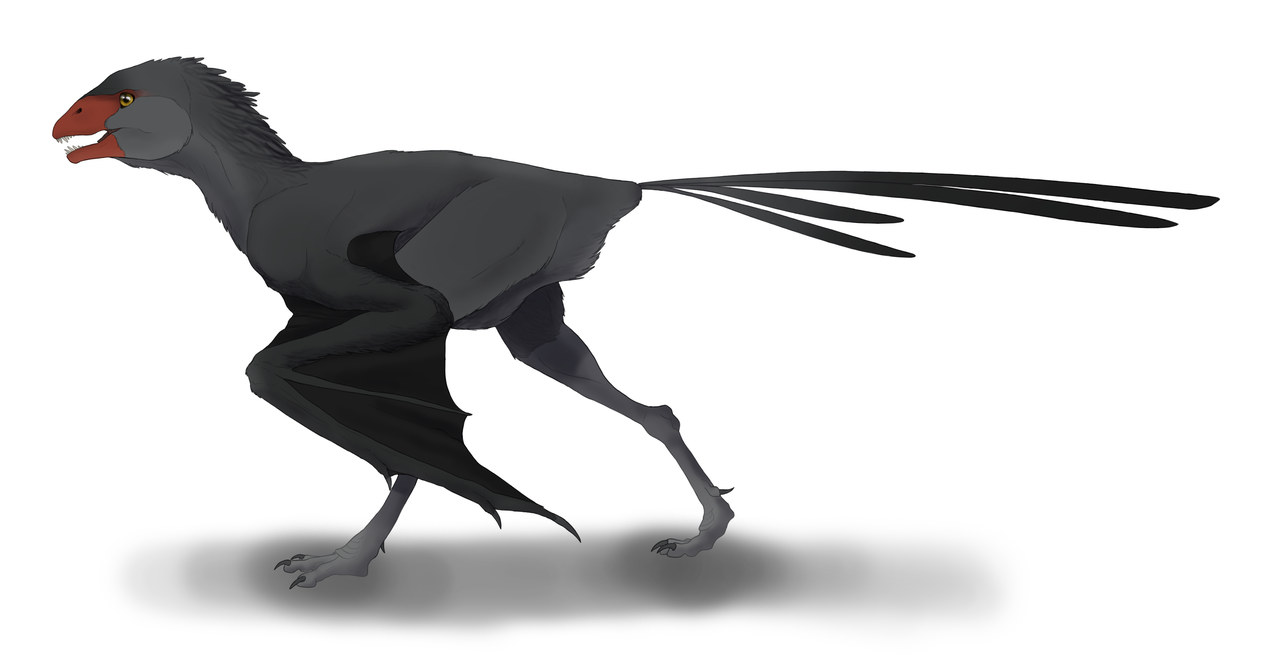
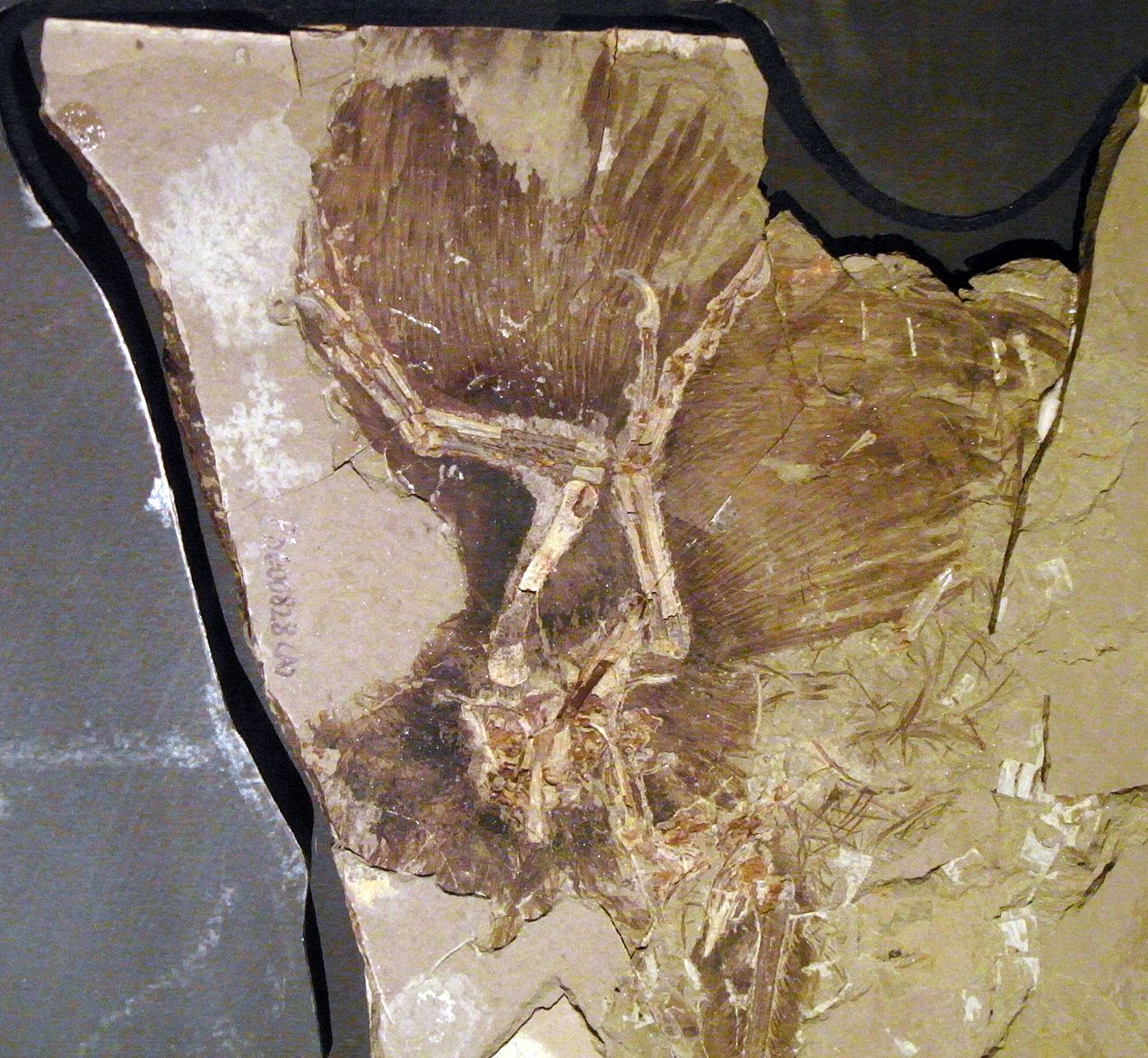
Anchiornis had a combination of reptilian and birdlike traits. Its skeleton shows slender limbs, a long tail, and a skull with many small teeth. Most striking are the extensive feathers: a layer of downy body plumage, long pennaceous feathers on the forelimbs, and long, vaned feathers attached to the hindlimbs. This arrangement has been interpreted as a "four-winged" morphology in which both fore- and hindlimbs bore aerodynamic surfaces.
Fossil record and age
Fossils of Anchiornis come from deposits in northeastern China. Many specimens were recovered from the Tiaojishan and related beds in the Liaoning region, which preserve a rich assemblage of Late Jurassic organisms. These localities are famous for fine-detail preservation that often includes feather impressions and sometimes color-bearing microscopic structures.
Color and plumage reconstruction
Detailed study of preserved melanosomes in Anchiornis feathers has allowed scientists to infer aspects of its coloration. Reconstructions indicate patterned plumage with contrasting tones and a crest-like patch on the head, suggesting that complex color patterns evolved before modern flight in birds. Such reconstructions are notable examples of how fossil chemistry can illuminate soft-tissue appearance.
Evolutionary significance and behavior
Anchiornis occupies an important place in discussions of how feathers and flight evolved. Its combination of leg and arm feathers supports hypotheses that aerodynamic use of feathers began before powered flapping flight, perhaps for gliding, stability, or display. Diet is inferred to have been small prey and invertebrates, consistent with its small size and grasping hands.
Notable facts and classification
- Named species: Anchiornis huxleyi, honoring T. H. Huxley.
- Often discussed as a troodontid or basal paravian; placement varies between analyses (troodontid vs. basal avialan debates).
- Specimens originate from Liaoning, China, dated to the Late Jurassic period.
- One well-known estimate lists an overall length near 34 cm and a very low mass, noted in early descriptions (smallest feathered dinosaur comparisons).
Anchiornis remains central to research on the transition from ground-dwelling theropods to early birds. Its exceptional preservation continues to provide data on feather anatomy, coloration, and the functional stages that preceded modern avian flight. For further summaries and specimen information see broader paleontological databases and reviews (genus summary, classification notes, historical context).
Questions and answers
Q: What is Anchiornis?
A: Anchiornis is a genus of small, feathered, troodontid dinosaurs.
Q: Who is Anchiornis huxleyi named after?
A: Anchiornis huxleyi is named in honour of Thomas Henry Huxley.
Q: Why is Thomas Henry Huxley significant in relation to Anchiornis?
A: Thomas Henry Huxley was the first to propose a close evolutionary relationship between birds and dinosaurs.
Q: What is the size of a complete Anchiornis individual?
A: A complete Anchiornis individual would be 34 cm (13 in) and weigh only 110 g (3.9 oz).
Q: What is notable about the size of Anchiornis?
A: Anchiornis is the smallest known feathered dinosaur.
Q: Where have Anchiornis fossils been found?
A: Anchiornis fossils have been found in Liaoning, China.
Q: When do Anchiornis fossils date to?
A: Anchiornis fossils date to the first part of the late Jurassic period, 160 to 161 million years ago.
Related articles
Author
AlegsaOnline.com Anchiornis — small feathered dinosaur from the Late Jurassic Leandro Alegsa
URL: https://en.alegsaonline.com/art/3821
Sources
- doi.org : 10.1007/s11434-009-0009-6
- springerlink.com : Abstract
- doi.org : 10.1038/nature08322
- pubmed.ncbi.nlm.nih.gov : 19794491