
Anaconda (Green Anaconda, Eunectes murinus)
A large, semi-aquatic South American boa (Eunectes murinus). Non-venomous constrictor, among the heaviest and one of the longest snakes; adapted to rivers, swamps and flooded forests with regional conservation concerns.
Overview
The green anaconda, Eunectes murinus, is a large non-venomous boa native to tropical South America. It is widely regarded as one of the largest snakes by mass and among the longest extant species, though reported maximum lengths are subject to verification. In common usage, "anaconda" usually refers to this species, which belongs to the genus Eunectes.
Image gallery
8 Images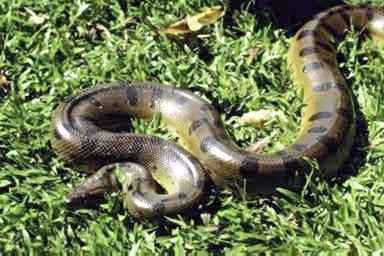
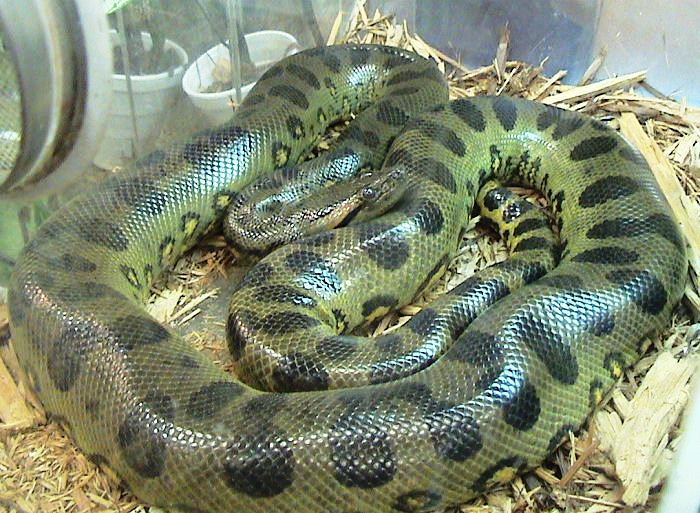


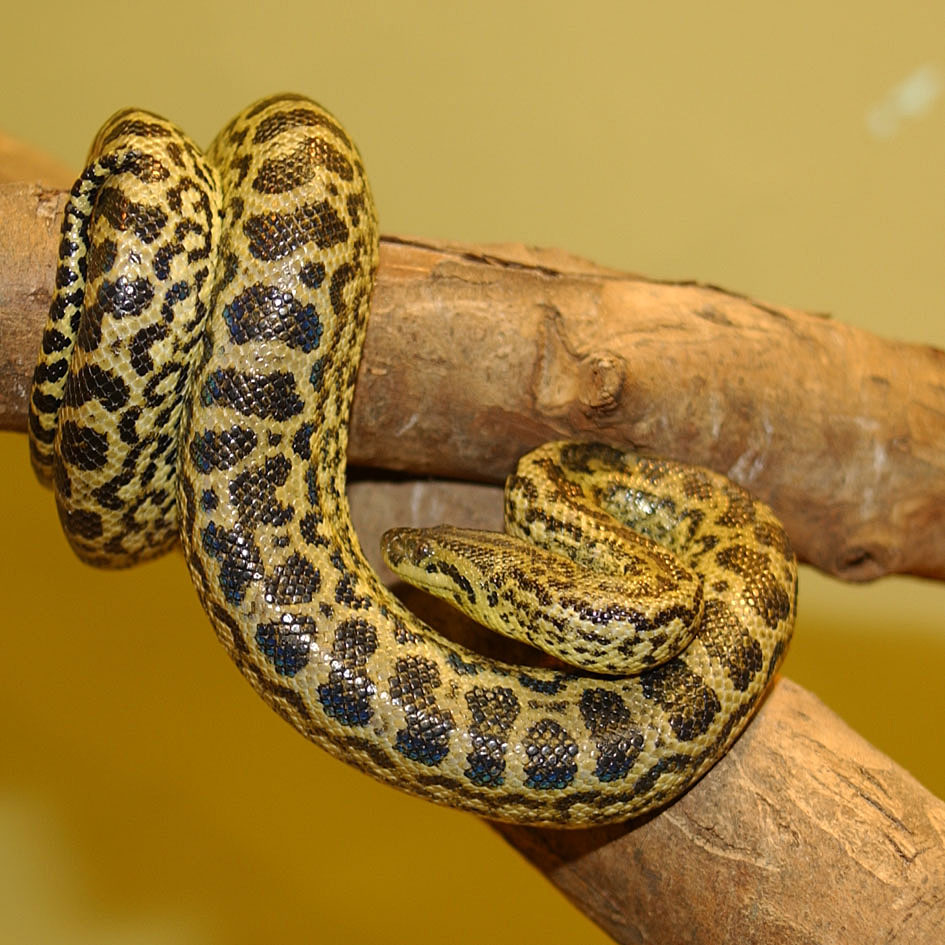
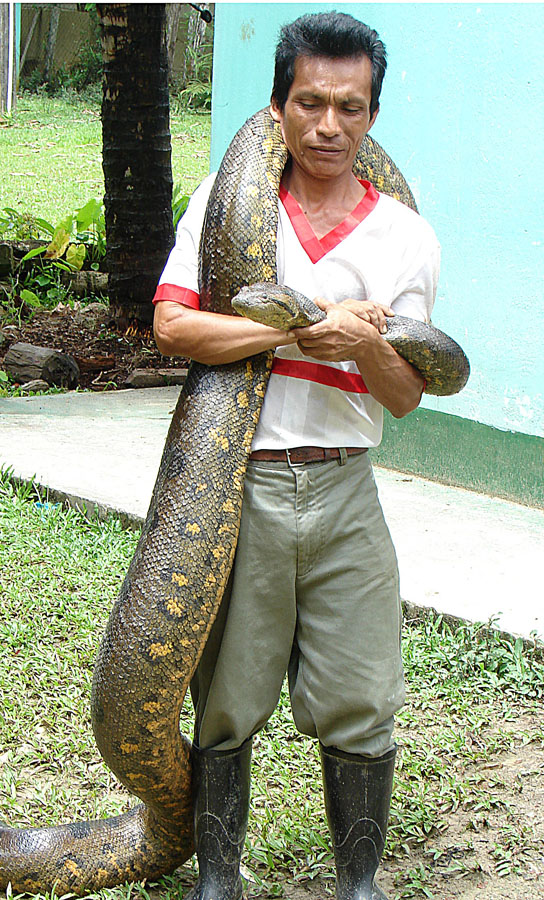
Taxonomy and name
Members of the genus Eunectes are constrictors in the family Boidae. The common name "anaconda" has been applied historically to large constricting snakes in the region, but zoologically it most often denotes the green anaconda. Scientific and common names reflect long-standing familiarity between local peoples and the species.
Physical characteristics
Green anacondas are powerfully built, with a thick, muscular body and a relatively short tail. Their dorsal coloration ranges from olive to greenish-brown, marked with darker oval blotches that provide camouflage in water and vegetation. Eyes and nostrils are positioned high on the head, allowing breathing and limited vision while most of the body remains submerged. As a non-venomous snake, it subdues prey by constriction and swallows victims whole.
Distribution and habitat
Green anacondas inhabit a variety of freshwater environments across parts of South America, including slow-moving rivers, marshes, swamps and seasonally flooded grasslands. They are especially associated with dense aquatic vegetation and calm water bodies where they can ambush prey and remain concealed.
Behavior and diet
Semi-aquatic and strong swimmers, anacondas use ambush tactics. Their diet is broad and opportunistic: fish, birds, mammals and occasionally large vertebrates such as capybaras or caimans are recorded as prey. Juveniles take smaller vertebrates. Activity patterns vary with local conditions, and many individuals are most active at twilight or during the night.
Reproduction and development
Green anacondas are ovoviviparous, meaning females retain eggs internally and give birth to live young. Breeding aggregations may form when multiple males court a receptive female; such events have attracted scientific interest. Litter sizes can be large, and neonates are independent soon after birth.
Interactions with humans
Anacondas appear in regional folklore and in popular media, sometimes exaggerated beyond biological reality. Attacks on humans are rare and generally involve large animals in close contact with people; the species is not venomous. They are occasionally kept in captivity and appear in the commercial trade, which raises welfare and ecological concerns when collection is unregulated.
Conservation and research
Conservation concerns for green anacondas tend to be regional: habitat loss from wetland drainage, river modification and hunting are the primary pressures in some areas. Because the species occupies remote and seasonally flooded habitats, population trends are not uniformly documented. Continued research on ecology, population status and the effects of habitat change helps inform local management. Comparative context is provided by other very large snakes such as the reticulated python, with which the anaconda is often compared.
Notable points
- Constrictor: subdues prey using muscular coils rather than venom.
- Semi-aquatic specialist: morphological adaptations favor watery habitats.
- Regional status: not uniformly threatened but faces local pressures from habitat change and human activity.
Questions and answers
Q: What is the Anaconda?
A: The Anaconda is a species of non-venomous boa snake from South America.
Q: How big is an Anaconda?
A: The Anaconda is one of the biggest snakes in the world, and is known for being the thickest, heaviest, and second longest living snake.
Q: What is the scientific name for the Anaconda?
A: The scientific name for the Anaconda is Eunectes murinus.
Q: Is the Anaconda venomous?
A: No, the Anaconda is a non-venomous species of snake.
Q: Where is the Anaconda commonly found?
A: The Anaconda is commonly found in South America.
Q: Is the term "anaconda" used to refer to any other species of snake?
A: No, the term "anaconda" usually specifically refers to the Eunectes murinus species.
Q: What other snake is known for being longer than the Anaconda?
A: The reticulated python is known for being longer than the Anaconda.
Related articles
Author
AlegsaOnline.com Anaconda (Green Anaconda, Eunectes murinus) Leandro Alegsa
URL: https://en.alegsaonline.com/art/3729
Sources
- anacondas.org : The life history of the green anaconda (Eunectes murinus), with emphasis on its reproductive Biology
- itis.gov : itis.gov/servlet/SingleRpt/SingleRpt?search_topic=TSN&search_value=209577