
Francisco Ascaso: Spanish anarcho-syndicalist militant and activist
Profile of Francisco Ascaso (1901–1936), Spanish anarcho-syndicalist activist, CNT leader and member of Los Solidarios, exile across Europe and the Americas, killed in Barcelona at the civil war outbreak.
Overview
Francisco Ascaso Abadía (1 April 1901 – 20 July 1936) was a prominent Spanish anarcho-syndicalist militant and activist. He is widely remembered for his long involvement in militant labour organizing in Spain, his close association with comrades such as Buenaventura Durruti, and his role in armed defence groups and trade-union activity in the interwar period. Ascaso's life combined periods of exile, clandestine organising, and open leadership within the Confederal trade-union movement.
Image gallery
4 Images


Early life and political formation
Born in the small Aragonese town of Almudévar, Ascaso became politically active as a young man amid the rapid growth of the labour movement in early 20th-century Spain. He gravitated toward the ideas and practices associated with anarcho-syndicalism, which emphasised direct action, workers' self-organisation and the centrality of unions in revolutionary social change. These convictions brought him into frequent conflict with state authorities and employers, shaping a career marked by repression and resistance.
Exile, travel and repression
Because of his activism Ascaso spent substantial periods abroad and experienced state reprisals. He travelled and lived in several European countries, including France, Belgium, Germany and Sweden, and undertook journeys to Latin America and Argentina in different phases of his life. At times he faced internal exile and deportation within the Spanish state, including a period when he was sent to the Canary Islands, a measure used by authorities to isolate political dissidents.
Militant groups: Los Solidarios and armed defence
In the context of escalating violence and targeted repression against activists, Ascaso was involved in small organised groups that combined political organising with armed defence of militants and workers. Around 1922 he became associated with the group known as Los Solidarios, formed by militants who sought to protect union organisers and retaliate against employer and state violence. Such groups sit within a broader tradition of direct action promoted by some sectors of the anarchist movement, which aimed to safeguard organising activity and strike movements.
Role in the CNT and union leadership
Ascaso was an active member of the Confederación Nacional del Trabajo (CNT), Spain's principal anarcho-syndicalist trade union. Over time he acquired responsibilities reflecting his standing among militants: in 1934 he was elected to a regional leadership position as a general secretary within the CNT's structure. His elevation came during a period of intense social conflict in Spain, as strikes, mass demonstrations and clashes with police and employer-backed forces tested the union movement and the Republican state.
Spanish Civil War and death
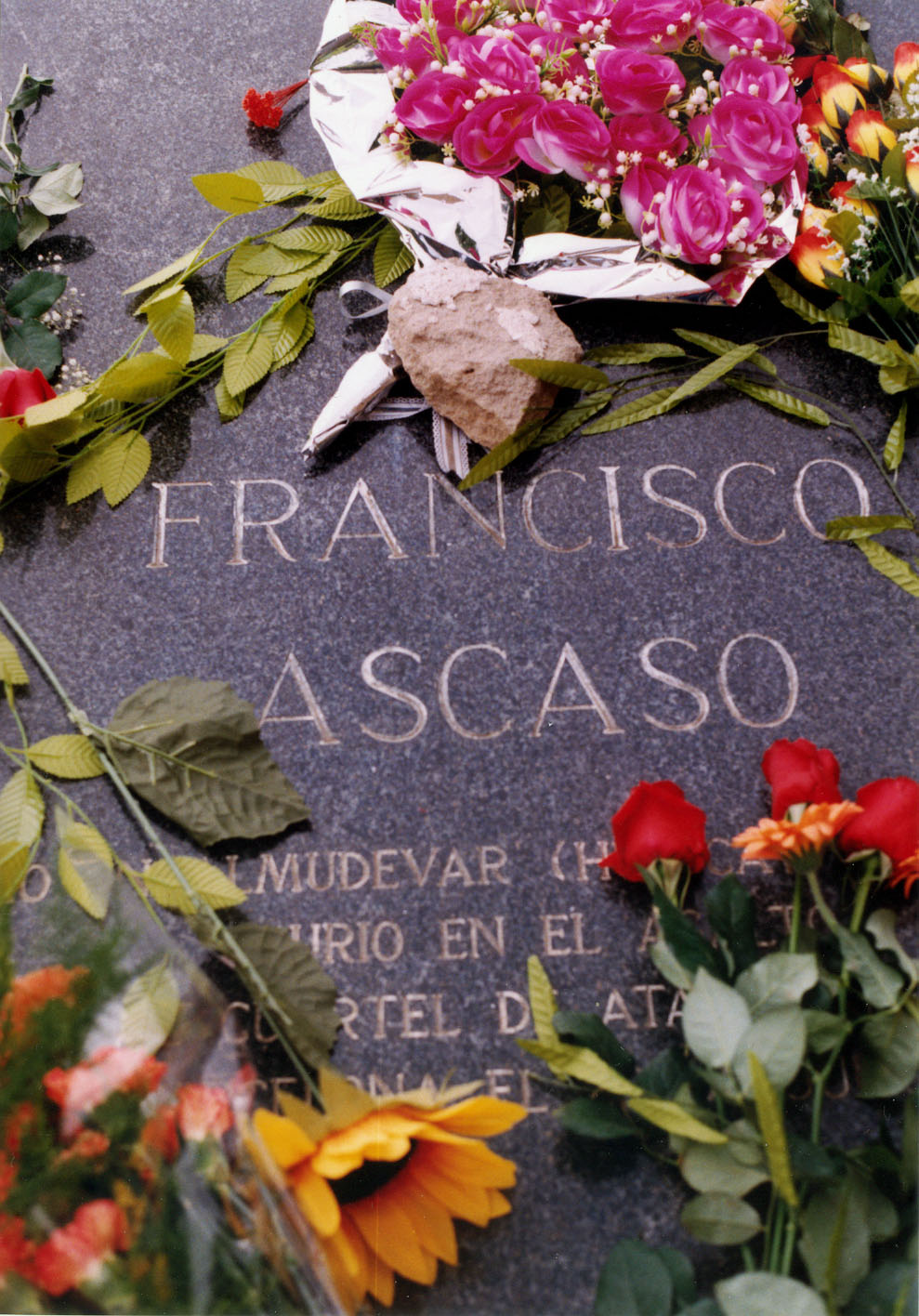
When military conspirators launched a coup in July 1936, Spain descended into the Spanish Civil War. In Barcelona, where popular and union resistance formed the backbone of the city's defence, street fighting erupted immediately. Ascaso died on 20 July 1936 in Barcelona, killed during the early confrontations between armed workers defending the Republic and elements of the security forces and rebel commanders. Contemporary reports and later histories record that he fell while participating directly in those armed defenses at the outbreak of the conflict.
Legacy and memory
After his death, Ascaso was commemorated by many in anarchist and labour circles. Units and militia groups invoked his name — notably the so-called "Francisco Ascaso Column" — as a form of honouring his commitment to militant unionism and armed defence of working-class organisations. His life and death have been the subject of study in histories of Spanish anarchism, which often present him as emblematic of the militant, insurrectionary wing of the CNT and related groups.
Interpretation and historical context
Scholars underline several points when assessing Ascaso's role: first, that he should be seen primarily as a militant organiser within the anarcho-syndicalist current rather than a conventional party politician; second, that his participation in armed groups reflected a tactical response to severe repression and targeted violence; and third, that his death at the beginning of the civil war helped to crystallise symbolic meanings around sacrifice and martyrdom within revolutionary milieus. For further reading on the broader movement and the period, consult works focused on Spanish anarchism, the CNT and the social history of 1930s Spain.
Key facts
- Born: 1 April 1901, Almudévar, Spain.
- Died: 20 July 1936, Barcelona, during the outbreak of the Spanish Civil War.
- Associations: Active member of the Spanish labour movement and the anarcho-syndicalist current; participant in groups such as Los Solidarios and allied networks.
- Travels and exile: Lived and worked in several European countries including France, Belgium, Germany, Sweden, and spent time in Latin America; at one point was deported to the Canary Islands.
Related articles
Author
AlegsaOnline.com Francisco Ascaso: Spanish anarcho-syndicalist militant and activist Leandro Alegsa
URL: https://en.alegsaonline.com/art/36067