
Anarcho-syndicalism: workers' organization, direct action, and self-management
Anarcho-syndicalism is a labor-oriented branch of anarchism advocating industrial unions, direct action, and workers' self-management as the means to abolish wage labor and state domination.
Anarcho-syndicalism is a strand of anarchism that emphasizes the working class and its unions as the primary vehicle for revolutionary social change. It proposes that organized workers, acting through federations of industrial unions or syndicates, can both dismantle capitalist relations and create new forms of cooperative, non-hierarchical economic and social life. Unlike parties that pursue change through electoral politics, anarcho-syndicalists prioritize grassroots organization and direct action.
Image gallery
9 Images



Core principles and methods
The movement rests on several interconnected ideas. Key principles include:
- Direct action: using strikes, workplace occupations, slowdowns, and other collective tactics to achieve goals without relying on intermediaries.
- Workers' self-management: democratic control of workplaces and services by those who work in them, often called autogestion or self-management.
- Solidarity: mutual aid and cross-sector cooperation among workers to defend gains and extend control of industry—sometimes referred to as workers' solidarity.
- Decentralized organization: federations of autonomous unions or assemblies governed by recallable delegates, not by centralized party leadership.
Organization and tactics
Anarcho-syndicalists generally prefer industrial unions organized by trade or workplace rather than craft guilds or centralized bureaucracies. They advocate building dual power—institutions of popular control that can replace capitalist and state structures—through rank-and-file activity, factory committees, and federative councils. Typical tactics include general strikes and coordinated industrial actions intended both to win immediate demands and to demonstrate the capacity of workers to manage production directly.
Proponents reject reliance on parliamentary solutions, arguing that electing representatives to a government risks reproducing hierarchical power. Instead, they stress prefigurative politics: constructing the new social relations in the course of struggle.
Historical development and notable episodes
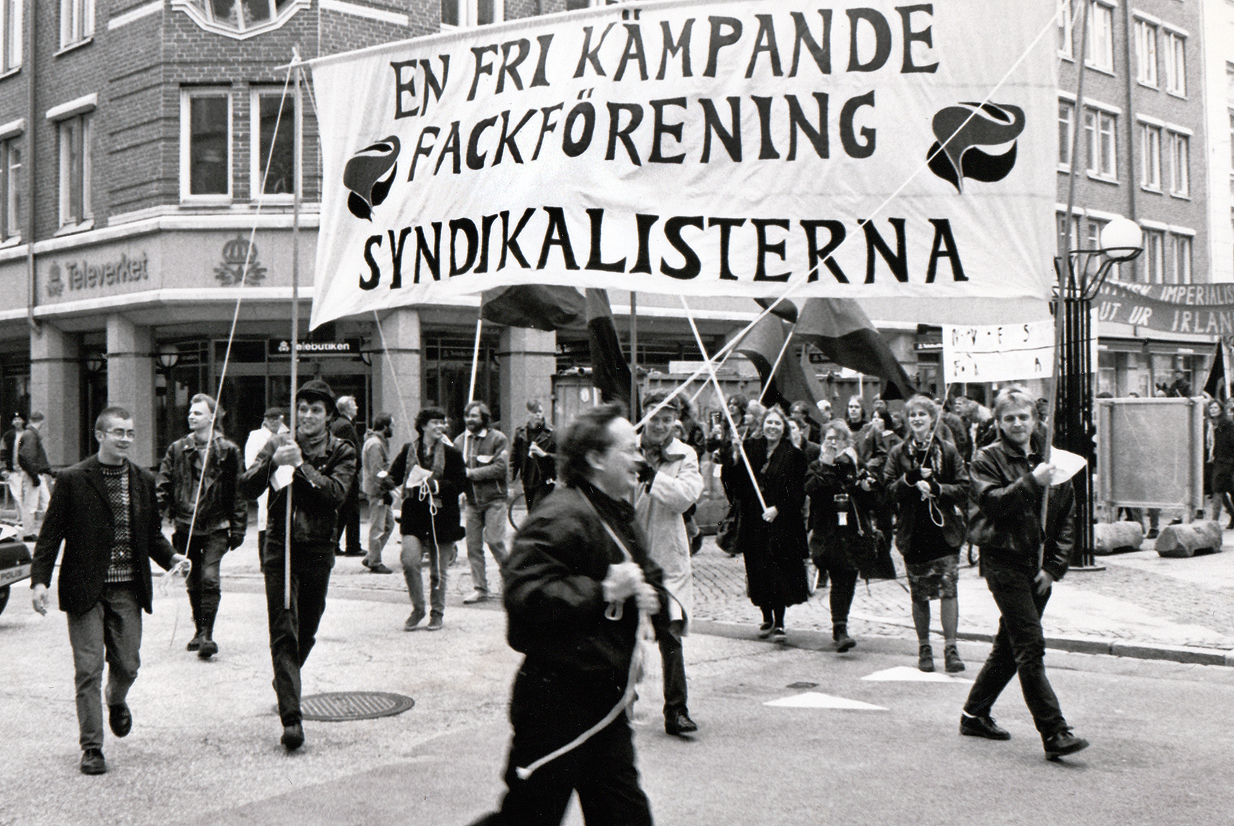
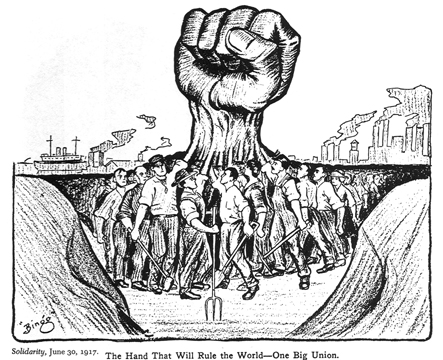
Anarcho-syndicalism grew from late 19th- and early 20th-century labor movements and from currents of revolutionary syndicalism in Europe and the Americas. It influenced organizations such as the Industrial Workers of the World in the United States and sections of the labor movement in France, Italy, and Spain. A prominent historical moment was the role of anarcho-syndicalist unions and federations during the Spanish Civil War and the social revolution of 1936–1939, when workers' collectives attempted large-scale self-management in parts of Spain. These events remain widely studied as practical experiments and as subjects of debate about strategy and the relationship between movements and the state.
Contemporary relevance and criticisms
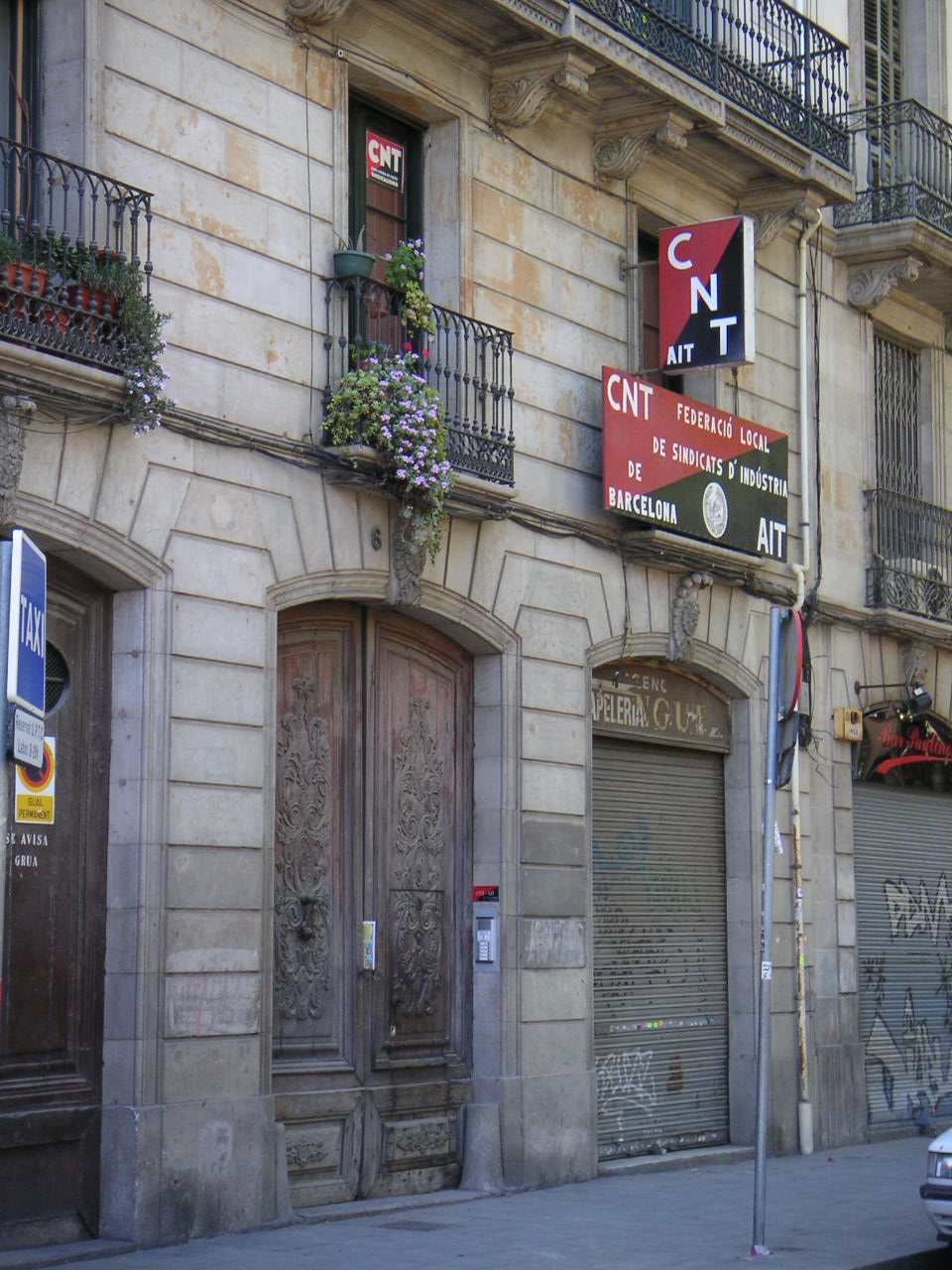
Today, anarcho-syndicalist ideas continue to inform grassroots labor organizing, cooperative projects, and movements for workplace democracy. Small federations and unions that identify with this tradition still exist in various countries and influence broader discussions about labor, inequality, and autonomous organizing. Critics argue that purely decentralized approaches can struggle with coordination, large-scale planning, or defending gains against concentrated state or corporate power, while supporters respond that federative methods and general strikes provide solutions without reproducing authoritarian institutions.
For further context on theoretical foundations and historical examples, see discussions of the basic concepts of the tradition and comparative studies of labor movements. The history and practice of anarcho-syndicalism illustrate enduring tensions in left-wing strategy between building alternatives from below and engaging existing political structures.
Additional resources and contemporary organizations continue to debate tactics and adaptation to modern economies; these debates show the diversity within the current and historical movement rather than a single, unified program.
anarchism | capitalism | basic concepts | workers' solidarity | electing representatives | representatives | government | Spanish Civil War
Questions and answers
Q: What is anarcho-syndicalism?
A: Anarcho-syndicalism is a form of anarchism that aims to use labor unions to cause revolutionary change and give freedom and equality to workers.
Q: What is the goal of anarcho-syndicalists?
A: The goal of anarcho-syndicalists is to get rid of capitalism and the wage system, which they see as causing class divisions and inequality.
Q: What are the basic concepts of anarcho-syndicalism?
A: The basic concepts of anarcho-syndicalism are workers' solidarity, direct action and workers' self-management.
Q: Why do anarcho-syndicalists believe in direct action?
A: Anarcho-syndicalists believe that only direct action can bring about change and refuse to participate in indirect action, such as electing a representative to a government position.
Q: What role did anarcho-syndicalism play in the Spanish Civil War?
A: Anarcho-syndicalism played an important role in the Spanish Civil War.
Q: What is the main goal of anarcho-syndicalism towards the wage system?
A: The main goal of anarcho-syndicalism is to eliminate the wage system.
Q: How do anarcho-syndicalists view labor unions?
A: Anarcho-syndicalists see labor unions as a vehicle for revolutionary change.
Related articles
Author
AlegsaOnline.com Anarcho-syndicalism: workers' organization, direct action, and self-management Leandro Alegsa
URL: https://en.alegsaonline.com/art/3784