
Franciscan Assemblage (Franciscan Complex) of coastal California
A geological assemblage of mixed oceanic and continental rocks exposed near the San Francisco Peninsula, notable for its mélange, blueschist metamorphism, serpentinite, and role in understanding subduction and accretion.
Overview
The Franciscan Assemblage, often called the Franciscan Complex, is a widespread set of rocks exposed in the Coast Ranges of northern California, including outcrops around the San Francisco Peninsula. It is not a single rock type but a chaotic mixture of many rock varieties assembled during plate-tectonic processes.
Image gallery
9 Images




Characteristic rocks and structure
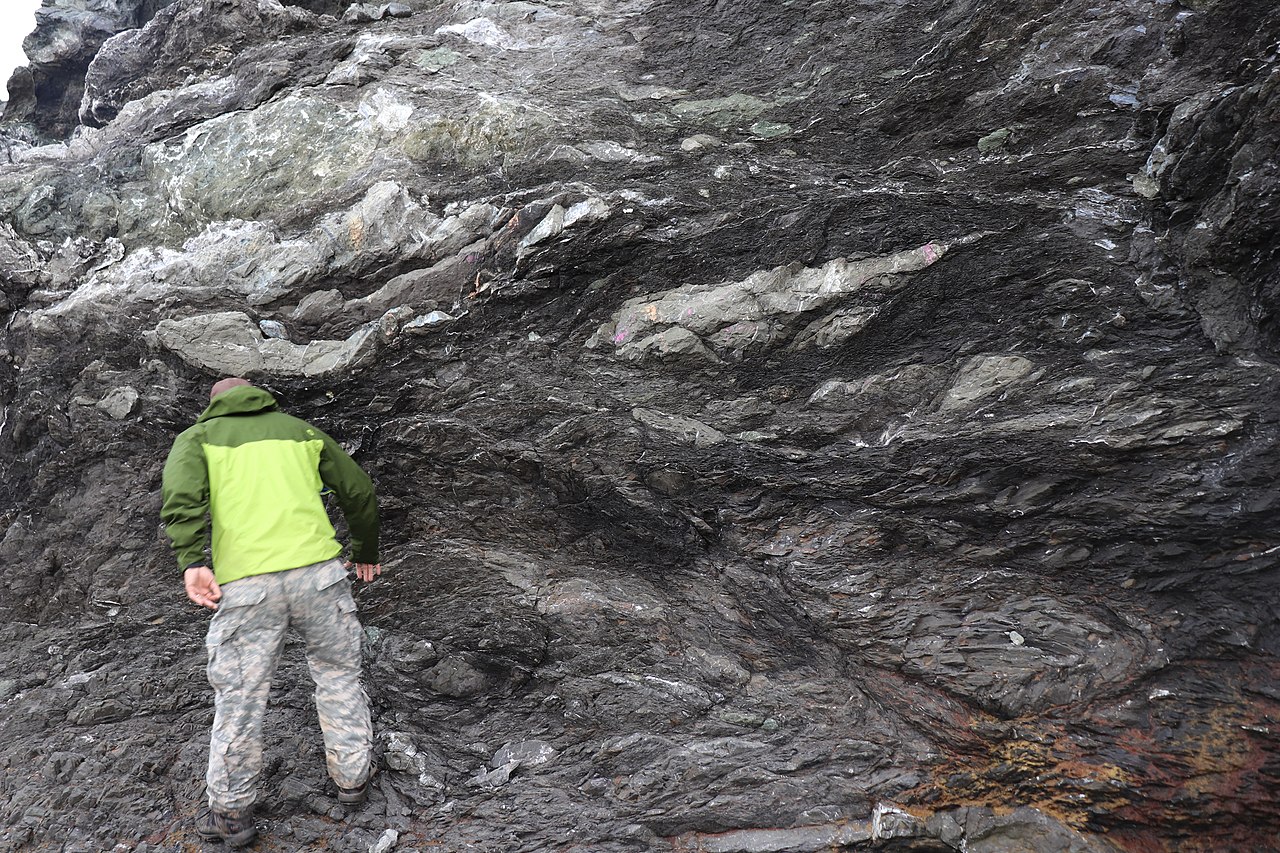
The assemblage is best described as a mélange: blocks and slices of hard rock embedded in sheared, fine-grained matrix. Typical constituents include chert, graywacke (a type of sandstone), pillow basalt, and metamorphic rocks such as blueschistand serpentinite. Radiolarian-rich cherts and altered oceanic crust are common, producing a patchwork appearance where different colors and textures juxtapose abruptly.
Origin and geological history
Geologists interpret the Franciscan as an accretionary prism that formed where an oceanic plate plunged beneath the western edge of North America. During subduction, ocean-floor sediments, fragments of basaltic crust and other materials were scraped off and buried, then deformed, metamorphosed, uplifted and transported. Most of this activity occurred during the Mesozoic to early Cenozoic eras, producing a long and complex history of deformation and metamorphism.
Where it is seen and why it matters
Prominent exposures occur in coastal cliffs, road cuts and protected parks, making the Franciscan an accessible field laboratory for studying subduction processes and tectonic evolution. Fossilized microplankton (radiolarians) preserved in chert help constrain ages and paleoenvironmental conditions. The assemblage also yields serpentinite-derived soils that support distinctive plant communities and affect local ecology.
Practical and scientific importance
Because the Franciscan records deep burial, high-pressure metamorphism and large-scale fault transport, it played an important role in establishing modern ideas about subduction-zone tectonics. It also influences engineering and land-use decisions: complex rock contacts, steeply dipping slices and weathered serpentinite produce variable ground strength and susceptibility to erosion and landslides.
Key features at a glance
- Mélange structure: blocks in a sheared matrix.
- Rock types: chert, graywacke, basalt, blueschist, serpentinite.
- Tectonic setting: accretionary prism related to subduction.
- Scientific value: evidence of high-pressure metamorphism and plate interactions.
Related articles
Author
AlegsaOnline.com Franciscan Assemblage (Franciscan Complex) of coastal California Leandro Alegsa
URL: https://en.alegsaonline.com/art/36064