
Ammonium carbonate: properties, uses, history, and safety
Ammonium carbonate ((NH4)2CO3) is a volatile white salt used as a leavening agent, smelling salt, and chemical reagent; it decomposes to ammonia, carbon dioxide and water and requires careful storage.
Overview
Ammonium carbonate is an inorganic salt with the formula (NH4)2CO3. It appears as a white crystalline solid with a sharp ammonia odor and decomposes readily on heating or when exposed to moisture. The compound is sometimes called baker's ammonia or sal volatile and is documented in chemical references for its use in food and industry. For general chemical data see chemical databases.
Image gallery
2 Images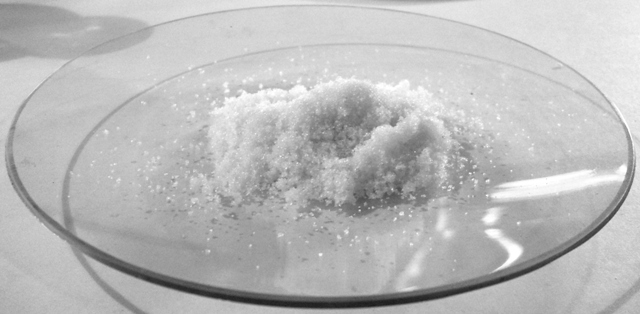

Properties and chemistry
The substance contains ammonium and carbonate constituents and liberates gaseous ammonia and carbon dioxide as it breaks down. Its volatility and decomposition behavior make it soluble in water but unstable above ambient temperatures. For information about the ammonium ion see ammonium information, and for carbonate chemistry consult carbonate references.
History and names
Historically, ammonium carbonate was produced from animal sources and called hartshorn; the modern synthetic product replaced that older material. The name "sal volatile" reflects its historic use as an aromatic or reviving salt in medicine and everyday life.
Uses and examples
- Baking: used as a leavening agent for small, dry baked goods where it produces a light, crisp texture.
- Reviving agent: traditional smelling-salts applications capitalize on its release of ammonia.
- Industrial and laboratory: used as a reagent in organic synthesis and occasional cleaning or tanning processes.
Handling and safety
Because it emits ammonia and carbon dioxide, ammonium carbonate should be stored in airtight containers in a cool, dry place and handled with ventilation. Avoid inhalation and contact with skin or eyes. Consult a safety data sheet for specific precautions via safety resources.
Distinctions and notable facts
It is distinct from ammonium bicarbonate (a related leavening salt) in stability and decomposition profile; choosing the correct compound depends on recipe, moisture content and desired texture. Its continued use in traditional recipes persists where rapid, clean leavening and crispness are prized.
Related articles
Author
AlegsaOnline.com Ammonium carbonate: properties, uses, history, and safety Leandro Alegsa
URL: https://en.alegsaonline.com/art/3590