
Ammonium nitrate
Ammonium nitrate (NH4NO3) is an inorganic salt used primarily as a fertilizer and oxidizer. It is water‑soluble, thermally reactive, and regulated because of its instability and explosive potential.
Overview
Ammonium nitrate is an inorganic compound with the formula NH4NO3. It combines the ammonium cation and the nitrate anion to form a crystalline salt. As a chemical substance it is widely produced and traded for agricultural and industrial uses. For a basic classification see chemical compound.
Image gallery
3 Images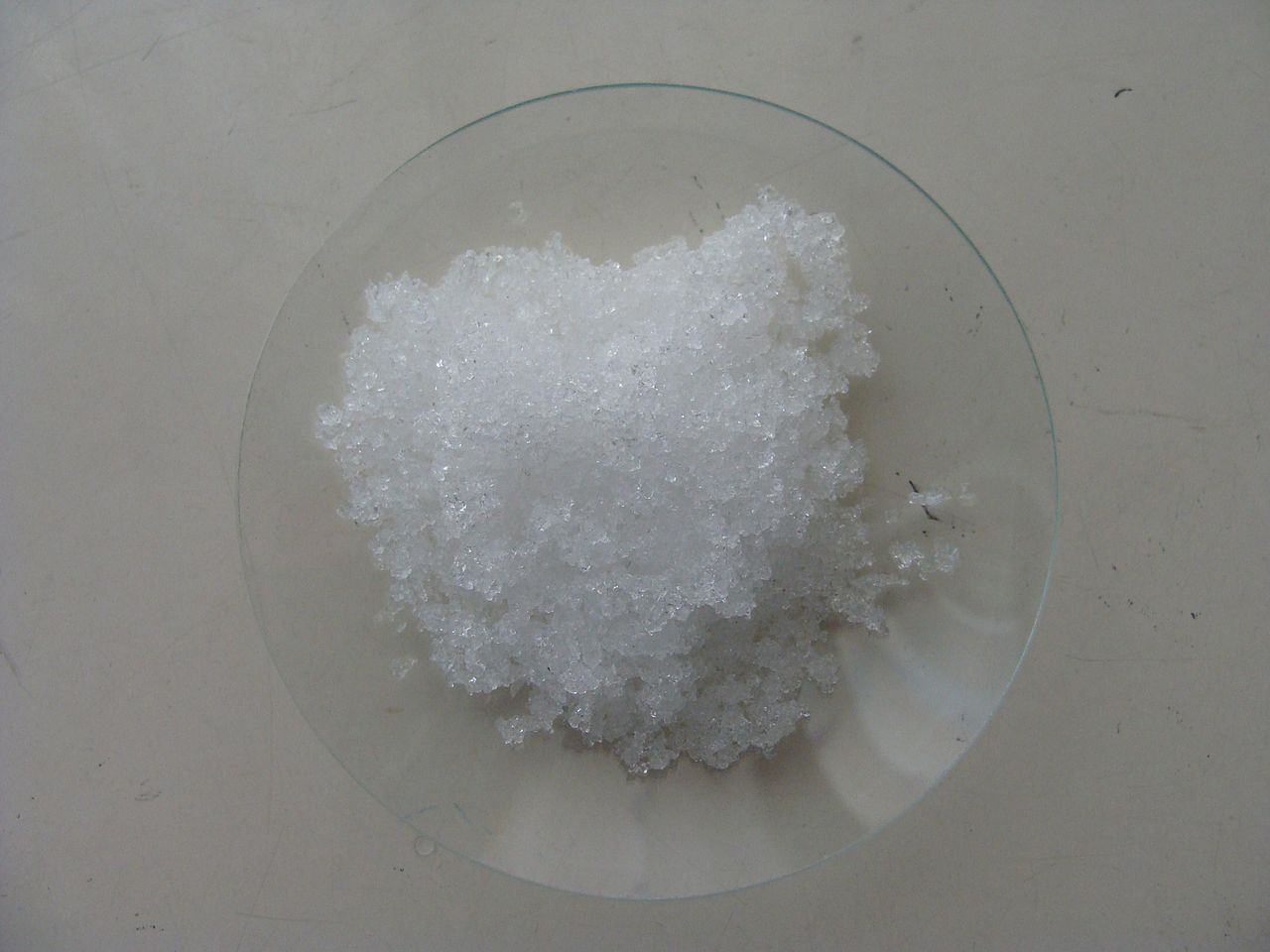


Physical and chemical characteristics
Ammonium nitrate is highly soluble in water and tends to form a white crystalline solid. In solid form it can absorb moisture from air and may cake; granulated or coated forms are common to improve handling. The compound can undergo thermal decomposition at elevated temperatures and can act as a strong oxidizer in mixtures. Its structure can be described in terms of constituent ions, and the nitrogen atoms appear in contrasting oxidation states.
Production and formulation
Commercial ammonium nitrate is typically manufactured by combining ammonia with nitric acid in a neutralization reaction. The resulting solution is concentrated and solidified into prilled or granulated products. To make it suitable for fertilizer use, manufacturers often add anti‑caking agents and sometimes additional nutrients. Different grades are produced for agricultural fertiliser, industrial oxidizer applications, and specialty uses.
Uses and applications
Its dominant use is as a nitrogen fertilizer because it supplies readily available nitrogen that supports plant growth. Industrially, it serves as an oxidizing component in certain explosives and propellants when mixed with fuels; such combinations are regulated and restricted in many jurisdictions. It is also used in laboratory reagents and in endothermic cold packs where dissolution produces cooling.
Safety, storage and regulation
Because ammonium nitrate can intensify combustion and, under certain conditions, detonate, its storage and handling are subject to strict safety rules. Key precautions include controlling contamination with combustible materials, avoiding confinement at elevated temperatures, preventing prolonged exposure to moisture that can promote caking, and following local limits on amounts and permitted storage locations. Regulatory frameworks aim to reduce the risk of accidental large‑scale incidents.
Notable considerations
Although valuable in agriculture, ammonium nitrate’s reactivity requires balancing utility and safety. Ongoing research addresses safer formulations and alternatives that reduce sensitivity while preserving fertilizer performance. For further reading on classification and safety guidance consult reputable chemical safety resources and national regulations.
Related articles
Author
AlegsaOnline.com Ammonium nitrate Leandro Alegsa
URL: https://en.alegsaonline.com/art/3594