
Ammonium (NH4+): formation, properties, uses and environmental role
Ammonium (NH4+) is the protonated form of ammonia. This article describes its structure, common salts, chemistry, roles in biology and agriculture, environmental impacts and practical uses.
Overview
Ammonium is the positively charged ion formed when the neutral base ammonia accepts a proton. Chemically written as NH4+, it is the conjugate acid of ammonia and exists frequently in aqueous solutions, soils and salts. In water an equilibrium exists between dissolved ammonium and uncharged ammonia that depends on pH and temperature.
Image gallery
9 Images






Structure and basic properties
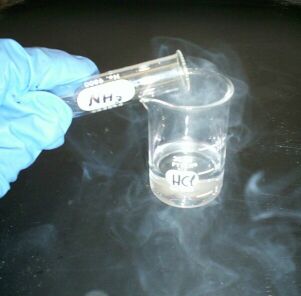
The ammonium ion has a tetrahedral arrangement of four hydrogen atoms around a central nitrogen atom, similar in shape to methane and often described as isoelectronic with it. As an ion, NH4+ carries a single positive charge and readily associates with negatively charged counterions to form ionic compounds. The process by which NH3 becomes protonated to give NH4+ is a common acid–base reaction. In alkaline media the equilibrium shifts toward free ammonia, while in acidic media the ammonium form predominates.
Common salts and chemical behaviour
Ammonium forms many stable salts with anions such as chloride, sulfate and nitrate. For example, ammonium chloride is a well known crystalline salt used in industry and laboratories. Ammonium salts tend to be water-soluble and, depending on the counterion, are used for fertilisers, electrochemical applications and as laboratory reagents. The ion can act as a mild reducing agent in some reactions and will react with strong oxidizing agents, sometimes leading to decomposition and formation of nitrogen-containing gases or other oxidized nitrogen species.
Role in biology and the environment
Ammonium is central to the global nitrogen cycle. Plants, algae and many microorganisms take up ammonium directly as a source of nitrogen for biosynthesis. In soils, ammonium mobility and availability are governed by adsorption to clay and organic matter, nitrification by microbes (which converts ammonium to nitrite and nitrate) and processes that return nitrogen to the atmosphere. Elevated concentrations of ammonium and its salts can contribute to water quality problems such as eutrophication and can be toxic to aquatic organisms at high levels.
Uses and practical considerations
- Fertilizers: many agricultural formulations supply nitrogen in the form of ammonium salts to support plant growth.
- Industrial and laboratory: ammonium salts are used in metal finishing, batteries, refrigerants precursors and chemical synthesis; consult material safety data for handling.
- Analytical chemistry: ammonium salts are useful as volatile counter-ions and pH buffers in specific methods.
Distinctions and safety
Ammonium differs from neutral ammonia in that it is ionic, non-volatile compared with NH3 under the same conditions, and participates in ionic bonding in solids. Its behaviour in solution is governed by acid–base equilibria and by interactions with other ions and surfaces. For laboratory work and environmental management follow established safety guidance and consult reagent datasheets and authoritative references for disposal and exposure limits; professional resources and chemical databases provide detailed technical and regulatory information about the molecule and its salts, including molecular descriptions and safety notes available from molecular and regulatory sources.
Related articles
Author
AlegsaOnline.com Ammonium (NH4+): formation, properties, uses and environmental role Leandro Alegsa
URL: https://en.alegsaonline.com/art/3598