
Flying fish: gliding marine fishes of the family Exocoetidae
Small, oceanic fishes able to glide above the sea surface using enlarged fins. Overview of their anatomy, behaviour, evolution, and interactions with humans and predators.
Overview
Flying fish are small, pelagic fishes in the family Exocoetidae that inhabit warm and temperate waters around the world. There are roughly fifty known species, varying in size and shape, but most remain under half a metre in length. These fishes are notable for their ability to launch from the water and glide through the air for distances that can surprise observers. The family name and basic classification are discussed in modern ichthyology; for a general reference see family Exocoetidae. Their preferred habitats are open and nearshore tropical seas; they are commonly associated with warm surface waters and currents (warm oceans).
Image gallery
10 Images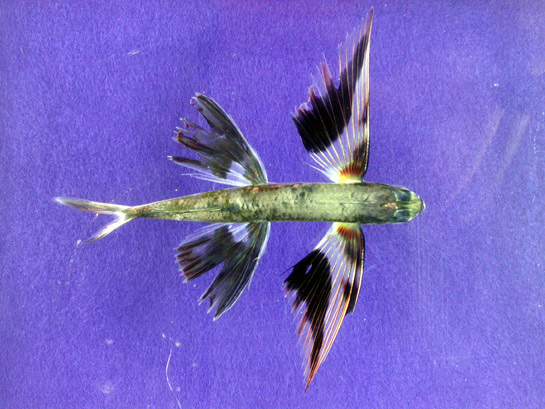




Anatomy and the mechanics of gliding
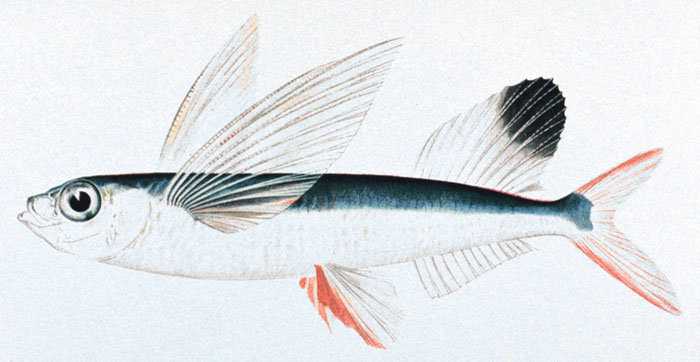
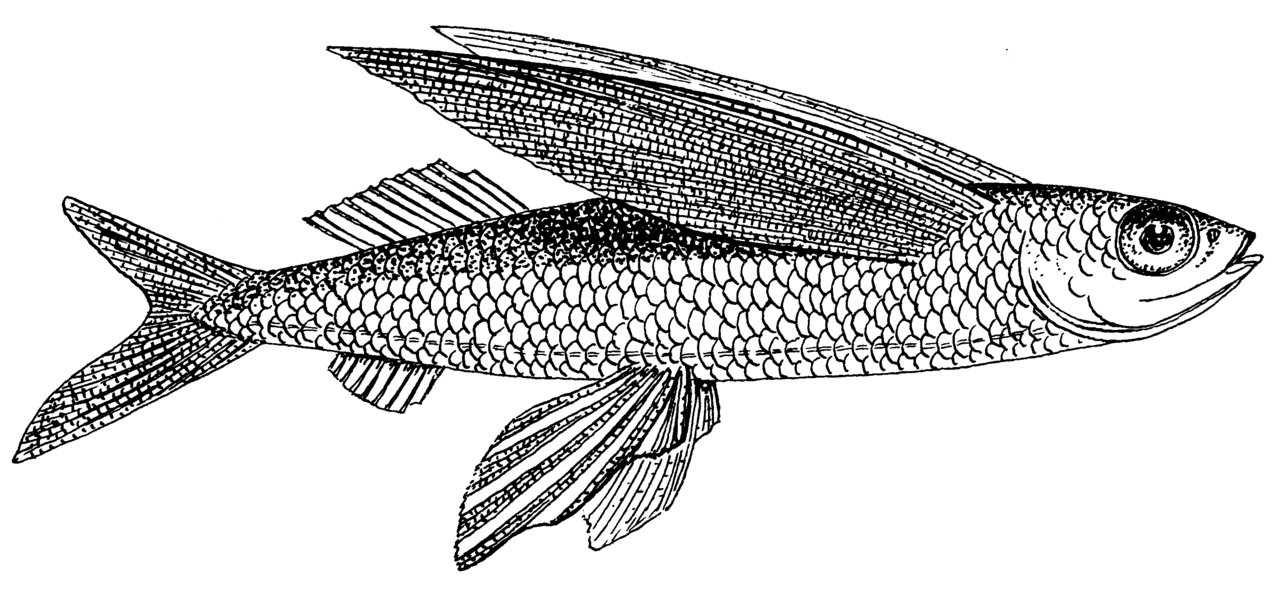
Flying fish are streamlined and adapted for rapid surface swimming. The most obvious adaptations are the greatly enlarged pectoral fins, which act as paired aerofoils or "wings," and, in some species, also enlarged pelvic fins. These enlarged fins are sometimes described as "winglike" because they increase surface area and provide lift when the fish breaks free of the water (winglike fins). A deeply forked caudal (tail) fin gives powerful thrust: the tail can be used to tap the water while airborne, providing extra propulsion to extend a glide. Scales, body shape and fin placement all contribute to reducing drag and increasing glide efficiency.
Behaviour and ecology
The primary explanation for gliding behaviour is predator avoidance: when pursued by fast-swimming predators such as tuna, dolphinfish and some sharks, flying fish leap from the surface and glide to put distance between themselves and their attackers (escape predators). Glides are typically tens of metres long—commonly in the range of 30–50 m—and some reports describe glides of several hundred metres when wind and wave conditions create favorable updrafts. Many species can perform repeated glides, briefly touching the sea with their tails to regain speed and continue. They feed mainly on plankton and small schooling organisms near the surface, and their eggs are often adhesive, sticking to floating debris or seaweed until they hatch.
Types and notable distinctions
- Two-winged forms: species with greatly enlarged pectoral fins only.
- Four-winged forms: species that also have large pelvic fins, producing an appearance of four wings and enabling longer, more stable glides.
- Behavioural differences: some genera show more active wing movements while airborne, but these do not amount to true powered flight; rather they are adjustments to glide angle and stability.
Evolution and fossil record
Fossils and comparative anatomy indicate that gliding or flight-like strategies have evolved repeatedly among fishes. Early relatives that show adaptations consistent with surface-skimming and enlarged fins are known from the Mesozoic era; some deposits preserve fish with broad pectoral fins interpreted as early gliders (Triassic fossils). Modern flying fish are not true flyers in the same sense as birds or bats, but they illustrate a successful evolutionary solution to escaping predators in an open-ocean environment.
Human interactions and cultural notes
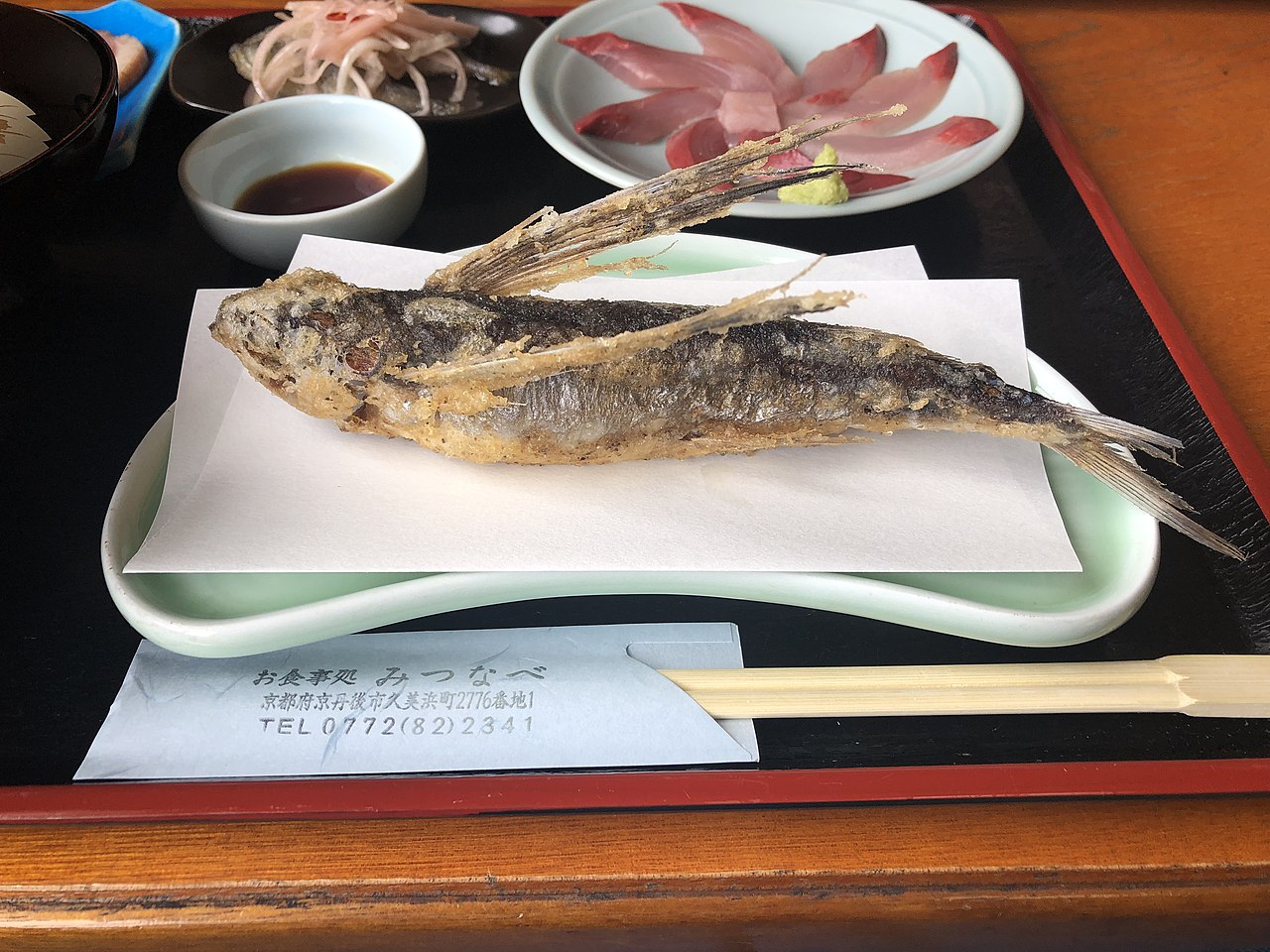
Flying fish are encountered by sailors, fishermen and anglers and are sometimes used as bait or food in coastal communities. They have cultural resonance in some maritime traditions and appear in literature and art as symbols of speed or escape. Their dramatic glides also make them of interest to naturalists and tourists; observers can often see them leaping clear of the water when seas are calm or when predator activity is high. For further reading on their biology and distribution consult general marine references and field guides (family Exocoetidae, warm oceans).
Although many details of species-specific behaviour remain under study, the striking combination of aquatic agility and aerial gliding makes flying fish a distinctive component of tropical and subtropical pelagic ecosystems.
Related articles
Author
AlegsaOnline.com Flying fish: gliding marine fishes of the family Exocoetidae Leandro Alegsa
URL: https://en.alegsaonline.com/art/35306
Sources
- bbc.co.uk : bbc.co.uk
- rspb.royalsocietypublishing.org : rspb.royalsocietypublishing.org/content/early/2012/10/24/rspb.2012.2261