
Foot-and-mouth disease (FMD)
A highly contagious viral disease of cloven-hoofed animals caused by foot-and-mouth disease virus, with major impact on livestock health, trade and agricultural economies worldwide.
Overview
Foot-and-mouth disease (FMD) is an acute, highly contagious viral illness that affects cloven-hoofed animals such as cattle, pigs, sheep, goats and many wild ruminants. The causal agent is the foot-and-mouth disease virus, a member of the Picornaviridae family. While FMD rarely causes severe disease in adult humans, it spreads readily among susceptible animals and can be transmitted indirectly by people, clothing, equipment and movement of animal products.
Image gallery
9 Images





Characteristics and clinical signs
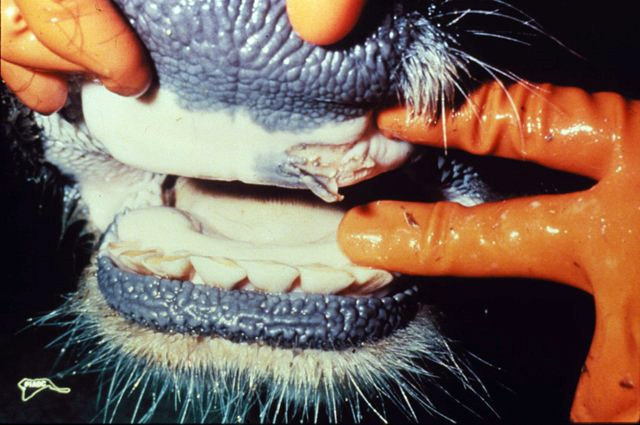
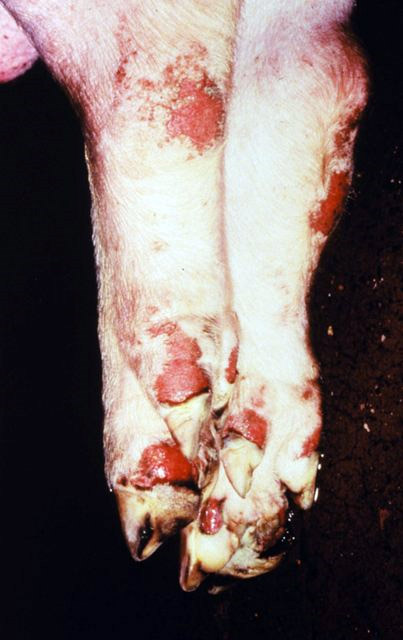
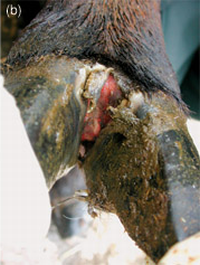
The disease is characterized by fever and the development of vesicles (blisters) on the mouth, teats and feet. Affected animals commonly show salivation, lameness, refusal to eat and reduced milk yield. Morbidity (the proportion of animals that become ill) is typically very high in naive populations, but mortality in adults is usually low; young animals may suffer higher fatality rates due to myocarditis or severe systemic illness.
Transmission and epidemiology
FMDV spreads via several routes: direct contact between infected and susceptible animals, inhalation of infectious aerosols, ingestion of contaminated feed, and fomites such as boots, vehicles and equipment. Pigs are known to excrete large amounts of virus and can act as amplifiers, while cattle are efficient at producing aerosols. Some ruminants can become carrier animals, retaining low levels of virus for prolonged periods after recovery and complicating control efforts. The virus exists as multiple serotypes (for example, O, A, C, SAT1-3 and Asia1) and numerous subtypes; immunity to one serotype does not protect against others.
Diagnosis, control and prevention
Laboratory confirmation is required for diagnosis because vesicular lesions can arise from other causes. Tests used by veterinary laboratories include virus isolation, antigen-detection assays, serology and molecular methods such as PCR. Control strategies combine rapid detection, movement restrictions, quarantine, stamping-out (culling of infected and at-risk animals), disinfection and targeted vaccination. Vaccination employs inactivated, serotype-specific vaccines; antigenic variation means vaccines must be matched to circulating strains. International coordination and surveillance are essential to detect incursions and to manage transboundary spread.
History, economic impact and significance
Descriptions of a disease consistent with FMD date back centuries; one of the earliest recorded accounts noted an outbreak affecting cattle in northern Italy in 1514 and was discussed by Renaissance scholars. Large outbreaks in modern times have led to widespread culling, trade bans and heavy economic losses to livestock industries because of interrupted production and export restrictions. Some countries have achieved eradication through rigorous programs, while others experience endemic transmission requiring ongoing control measures.
Notable distinctions and practical considerations
- FMD is distinct from other vesicular diseases (for example, vesicular stomatitis and swine vesicular disease) and must be distinguished by laboratory testing.
- Because humans can carry virus on clothing and equipment, biosecurity and personal hygiene are important to prevent mechanical spread.
- International bodies and national veterinary services maintain contingency plans and reporting systems to limit cross-border transmission and to coordinate vaccination or eradication campaigns.
For further technical information consult official veterinary guidance or reference laboratories and organizations that track animal health internationally, and follow national rules on reporting and control of suspect cases. Historical context and early descriptions can be found in accounts of disease outbreaks in regions such as northern Italy.
Questions and answers
Q: What is Foot-and-mouth disease (FMD)?
A: Foot-and-mouth disease (FMD) is a highly contagious disease that affects domestic animals such as cattle, pigs, sheep, goats and deer.
Q: What causes FMD?
A: Foot-and-mouth disease virus causes the disease.
Q: Can FMD infect humans?
A: Generally, it is believed that FMD is not very contagious to humans. However, humans can spread FMD by carrying the virus on their clothes and body.
Q: Which animals are susceptible to FMD?
A: Domestic animals such as cattle, pigs, sheep, goats and deer are susceptible to FMD.
Q: Why does FMD break out all over the globe?
A: FMD breaks out all over the globe because it is highly contagious to many animals.
Q: Who first described FMD?
A: Hieronymi Fracastorii (1546) was the first to describe FMD. He described the disease as highly unusual and affecting only cattle when it occurred in northern Italy in 1514.
Q: How would you stop the spread of FMD?
A: The best way to stop the spread of FMD is to quarantine and isolate infected animals and properly dispose of infected carcasses. It is also important to practice good biosecurity measures such as limiting visitors, disinfecting equipment and clothing, and keeping animals separated.
Related articles
Author
AlegsaOnline.com Foot-and-mouth disease (FMD) Leandro Alegsa
URL: https://en.alegsaonline.com/art/35481
Sources
- www2.asg.wur.nl : www2.asg.wur.nl
- aphis.usda.gov : aphis.usda.gov/publications/animal_health/content/printable_version/fs_foot_mouth_disease…
- fwi.co.uk : "Foot-and-mouth symptoms"