
Middle Triassic
Middle Triassic (about 247.2–237 Ma): the second epoch of the Triassic, marked by ecological recovery after the end‑Permian extinction, diversification of marine reptiles and archosauriforms, and widespread carbonate platforms.
Overview
The Middle Triassic is the middle of three epochs of the Triassic period, conventionally dated from about 247.2 to 237 million years ago. It follows the Early Triassic and precedes the Late Triassic. This epoch records a prolonged interval of ecological recovery after the end‑Permian mass extinction and the establishment of new marine and terrestrial ecosystems that shaped later Mesozoic faunas.
Image gallery
4 Images


Stratigraphy and subdivisions
In standard chronostratigraphy the Middle Triassic is divided into two formal ages: the Anisian (earlier) and the Ladinian (later). These units are recognized worldwide and are correlated using fossil zonation from ammonoids, conodonts and other index fossils. The epoch forms the second series of the Triassic in global stratigraphic schemes and is important for linking regional successions and palaeoenvironmental records.
Climate and paleogeography
During the Middle Triassic most continents remained assembled within the supercontinent Pangaea. Large continental interiors tended toward aridity, while extensive shallow continental shelves and epicontinental seas developed in many areas as sea level fluctuated. Regional climates ranged from hot and dry inland basins to more humid coastal belts where seasonal monsoonal patterns began to appear. These conditions favoured widespread carbonate deposition and the development of reef and lagoon systems in suitable settings.
Life and ecosystems
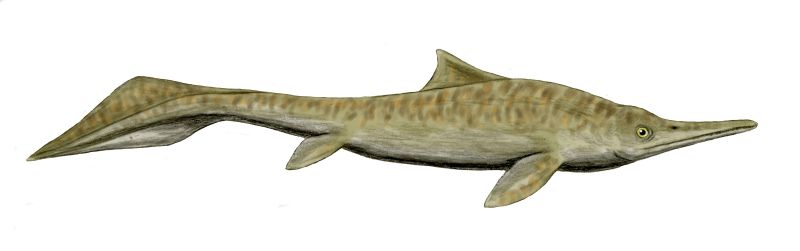
Marine life continued to rebound and diversify. Ammonoids and bivalves expanded into many niches, conodonts remained important biostratigraphic tools, and reef frameworks were rebuilt around sponges and emerging scleractinian corals. Marine reptiles such as early ichthyosaurs, nothosaurs and other sauropterygians became significant predators in open and nearshore seas.
Terrestrial faunas and flora
On land, many Permian synapsid groups declined while archosauriform reptiles diversified and increased in ecological prominence, a pivotal development leading toward the later dominance of archosaurs and the first dinosaurs in the Triassic record. Plant communities shifted as well: gymnosperms, ferns and seed ferns continued to dominate many landscapes, while new floral assemblages adapted to drier or more seasonal climates.
Rock units and historical usage
In parts of Europe a characteristic Middle Triassic sequence of limestones and marls was historically grouped under the name Muschelkalk. That term now typically denotes a regional rock unit rather than the global chronostratigraphic series, and global correlation generally uses the Anisian and Ladinian ages. Well preserved Ladinian fossil sites, notably Monte San Giorgio, provide exceptional records of Middle Triassic marine and nearshore life and have been crucial for palaeobiological studies.
Significance and correlation
The Middle Triassic is a key interval for understanding how life recovered from the largest mass extinction in Earth history and for tracing the rise of modern vertebrate groups. Biostratigraphic markers such as ammonoid and conodont zones, together with sedimentary facies and geochemical signals, allow correlation between basins. For broader context see summaries of the Triassic and discussions of regional rock sequences such as the European Muschelkalk rock strata.
Related articles
Author
AlegsaOnline.com Middle Triassic Leandro Alegsa
URL: https://en.alegsaonline.com/art/64689
Sources
- doi.org : 10.1016/S0012-8252(03)00082-5
- icb.oxfordjournals.org : "Selective factors associated with the origin of fur and feathers"
- doi.org : 10.1093/icb/40.4.585