
Flint Hills
A band of rolling, chert-rich hills in eastern Kansas and north-central Oklahoma that conserves large tracts of North America’s tallgrass prairie and supports ranching, research, and scenic travel.
Overview
The Flint Hills, long called the Bluestem Pastures, are a distinctive belt of rolling hills centered in eastern Kansas and extending into north-central Oklahoma. They form one of the largest remaining expanses of native tallgrass prairie in North America and are widely recognized for their sweeping grasslands and seasonal burns.
Image gallery
5 Images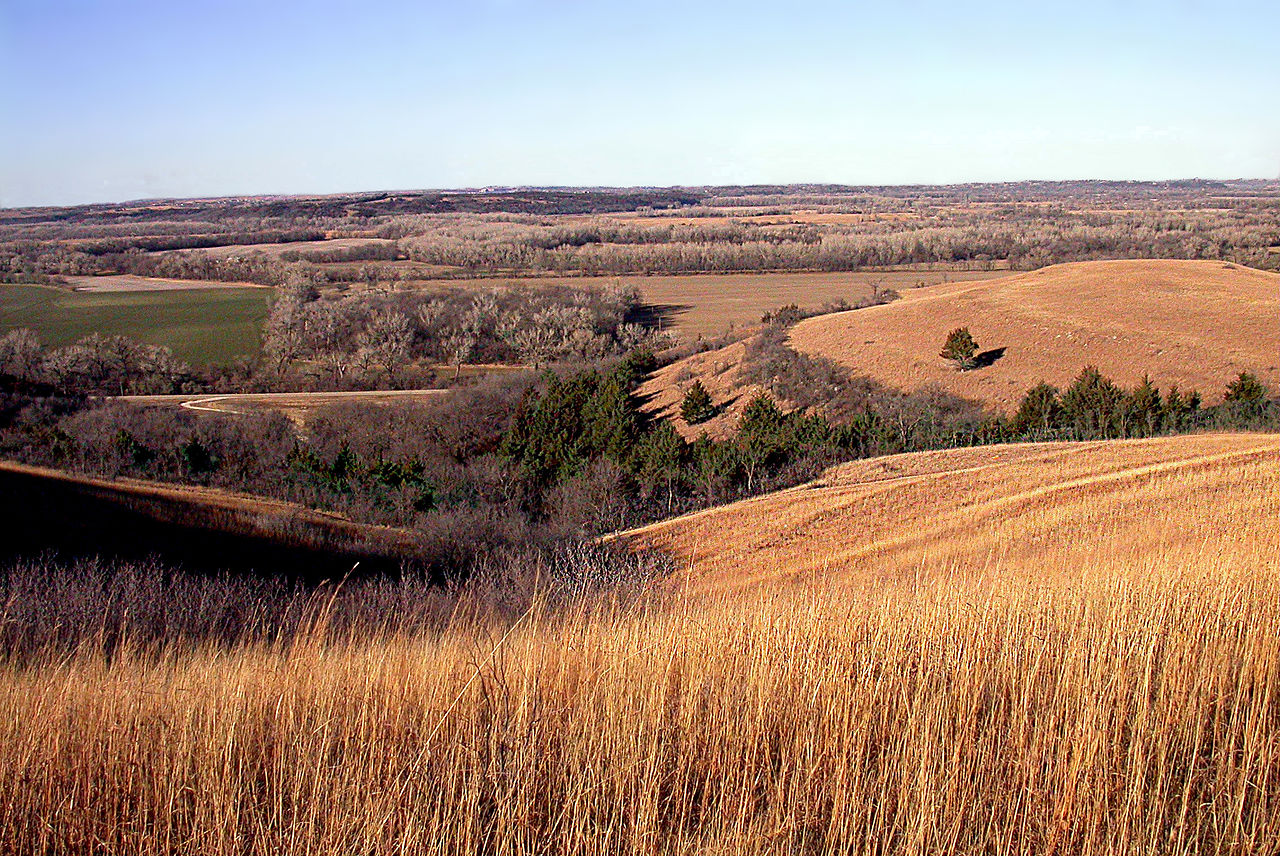



Geology and landscape
The region owes its character to a bedrock of chert-rich limestone — the flinty rock for which the hills are named. Resistant to erosion, this rock produces thin, rocky soils that discouraged widespread plowing, leaving much of the original prairie intact. The terrain is generally rolling to hilly, with shallow valleys and stone outcrops that influence drainage and vegetation.
Ecology and vegetation
The Flint Hills support a tallgrass prairie community dominated by perennial grasses and a mosaic of wildflowers and forbs. These prairies store carbon in deep root systems and provide habitat for many grassland-dependent species. Typical plants include:
- Big bluestem and little bluestem
- Indian grass and switchgrass
- Various native forbs and sedges
History and land use
Before European settlement the area supported vast herds of bison and was used seasonally by Native American peoples. During settlement and development, the stony soils limited intensive row-crop agriculture, favoring cattle ranching and hay production instead. Ranchers and landowners have long used controlled burning to maintain grassland health, stimulate forage growth, and reduce woody encroachment.
Conservation, research, and recreation
Because so much of the original prairie remains, the Flint Hills attract conservation efforts and scientific study. Public and private preserves, research stations, and parks work to protect native communities and demonstrate prairie management. The region is also valued for scenic drives, cultural heritage, and seasonal events that highlight its natural rhythms.
Importance and threats
The Flint Hills are ecologically significant as one of the last large remnants of tallgrass prairie, offering opportunities for biodiversity conservation, carbon storage, and ranching livelihoods. Pressures include development, subdivision, invasive species, and changes in land management practices. Continued collaboration among landowners, scientists, and public agencies is central to sustaining the landscape.
Related articles
Author
AlegsaOnline.com Flint Hills Leandro Alegsa
URL: https://en.alegsaonline.com/art/35126