
Flaming Gorge Dam
Concrete-arch dam on the Green River in northeastern Utah, built 1958–1964 for water storage, hydroelectric power and recreation; forms the long Flaming Gorge Reservoir.
Overview
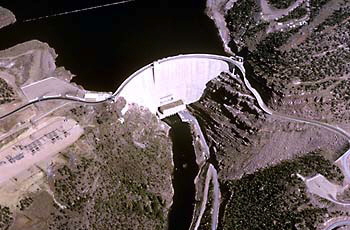
The Flaming Gorge Dam is a concrete-arch dam on the Green River in northeastern Utah, United States. Completed in 1964, it impounds the Flaming Gorge Reservoir and serves multiple purposes: water storage, flood control, and generation of hydroelectric power. The structure and its reservoir are central features of the Flaming Gorge National Recreation Area and a focal point for regional water management.
Image gallery
10 Images


Design and key facts
The dam is a massive concrete arch built to hold back the river in a narrow canyon. Its principal dimensions are well known: about 502 feet (153 m) tall, roughly 1,180 feet (360 m) long, and approximately 131 feet (40 m) thick at the base. The impounded Flaming Gorge Reservoir stretches for many miles and covers tens of thousands of acres at full pool. The dam is often described in technical sources as a concrete-arch dam and is located on the Green River corridor. For official and historical references see the managing agency pages and local resources such as regional documents.
Construction and history
Construction began in the late 1950s and concluded in the mid-1960s. The project was undertaken by federal authorities as part of broader western water development efforts of that period. The dam created the reservoir by inundating a scenic red‑rock canyon that had been known for its striking colors—hence the name "Flaming Gorge." The site is often described in government and historical summaries; more detailed project histories can be consulted through archive materials.
Reservoir, environment and fisheries
Flaming Gorge Reservoir is a long, narrow body of water—measuring many miles from end to end—and covers an extensive surface area. Its cold, clear waters and the steady releases below the dam have produced a popular trout fishery in the tailwater reach. The dam and reservoir changed the natural flow, temperature and sediment regimes of the Green River, with lasting effects on aquatic habitats and riparian zones. Environmental and management reports summarize these ecological changes and ongoing operations; see technical summaries and recreational information at official sources.
Hydropower and operations
The facility includes turbines that produce electricity from stored water. Its installed generation capacity is reported in public records and is used to supply peak and base power needs in the region. The dam is operated for a combination of power production, water delivery and recreational objectives; operational details and performance summaries are published periodically at power and water reports and by regional utilities, planners and federal agencies.
Recreation and significance
Beyond its engineering role, Flaming Gorge Dam and its reservoir are major recreational assets. Boating, fishing, camping and scenic driving attract visitors to the surrounding national recreation area. The reservoir, canyon scenery and managed river flows make it a notable example of mid‑20th century western water infrastructure that continues to influence local economies, outdoor recreation and river management discussions. For visitor information and permits consult park and recreation pages such as management resources.
Related articles
Author
AlegsaOnline.com Flaming Gorge Dam Leandro Alegsa
URL: https://en.alegsaonline.com/art/34993
Sources
- usbr.gov : "U.S. Bureau of Reclamation: Flaming Gorge Dam"