
Floodlights: Types, Uses, Installation, and Environmental Considerations
Overview of floodlights: types (LED, HID, halogen), uses in sports, security, architecture and work sites, plus guidance on installation, maintenance, controls and environmental impacts like light pollution and energy use.
Floodlight refers to a powerful, broad-beamed artificial lamp designed to illuminate wide outdoor or large indoor areas. These fixtures produce intense, even illumination and are commonly installed where high levels of visibility are needed after dark—for example on sports arenas, building facades, parking areas and construction sites.
Image gallery
10 Images
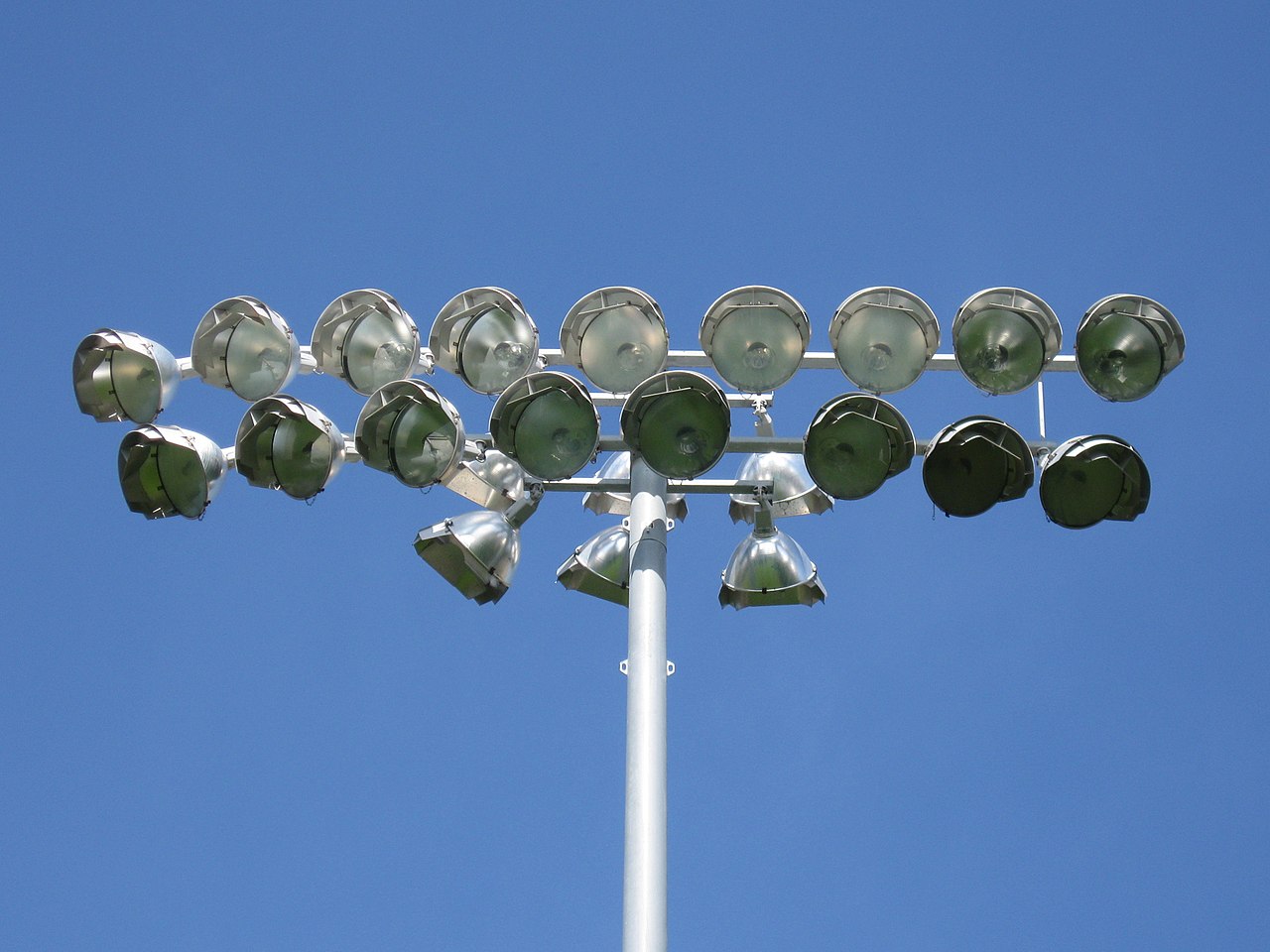


How they work
Floodlights are electrical devices that convert electricity into visible light. They use reflectors and lenses to shape and spread the output from a lamp into a wide beam. Modern units often incorporate optical assemblies and heat sinks to manage the beam pattern and keep the fixture cool during prolonged use.
Types of lamps
- Traditional fixtures used incandescent halogen or high-intensity discharge (HID) lamps such as metal halide or sodium vapor.
- LED floodlights have become common because they are more energy-efficient, have longer lifetimes, and allow better control of beam shape and color temperature.
- Some specialized units use combinations of technologies or include dimming and color-changing features for architectural and entertainment lighting.
Typical applications
- Sports: lighting playing fields, courts and arenas to meet visibility and broadcasting standards.
- Security: illuminating perimeters, building fronts and parking lots to deter crime.
- Architectural: highlighting façades, monuments and landscape features for aesthetic effect.
- Work sites: providing bright, reliable light for night-time construction, maintenance and emergency operations.
Installation and operation
Proper siting and aiming are important to achieve the required illumination level while minimizing glare and spill light. Floodlights are typically mounted on poles, gantries or building walls and wired to an electrical supply; many systems include controls such as timers, motion sensors and dimmers. Installation and maintenance should follow local electrical codes and safety standards because these fixtures operate on mains electric power and can get hot.
Environmental and safety considerations
Because floodlights are bright and often used at night, they can contribute to light pollution and affect nearby residents, wildlife and night-time sky visibility. Careful design—using shields, precise aiming, appropriate brightness and timers—can reduce unwanted spill and energy use. Manufacturers and installers increasingly emphasize energy-efficient technologies and controls to limit environmental impact while meeting lighting requirements.
Related articles
Author
AlegsaOnline.com Floodlights: Types, Uses, Installation, and Environmental Considerations Leandro Alegsa
URL: https://en.alegsaonline.com/art/35160