
Flag of Iran
The national flag of Iran is a horizontal tricolor of green, white and red with a central emblem and border inscriptions. Adopted after the 1979–80 Revolution, its elements carry religious and national symbolism.
Overview
The modern flag of Iran is a horizontal tricolor of green, white and red, with a red emblem centered on the white band and a repeated inscription along the inner edges of the green and red bands. The current design was introduced after the 1979 Islamic Revolution and took its present legal form in 1980. It serves as the state and national flag and is used on government buildings, public ceremonies and international representations. For primary source material and formal descriptions, see the official record.
Image gallery
10 Images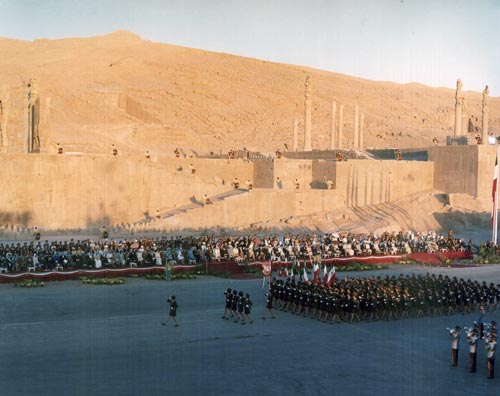

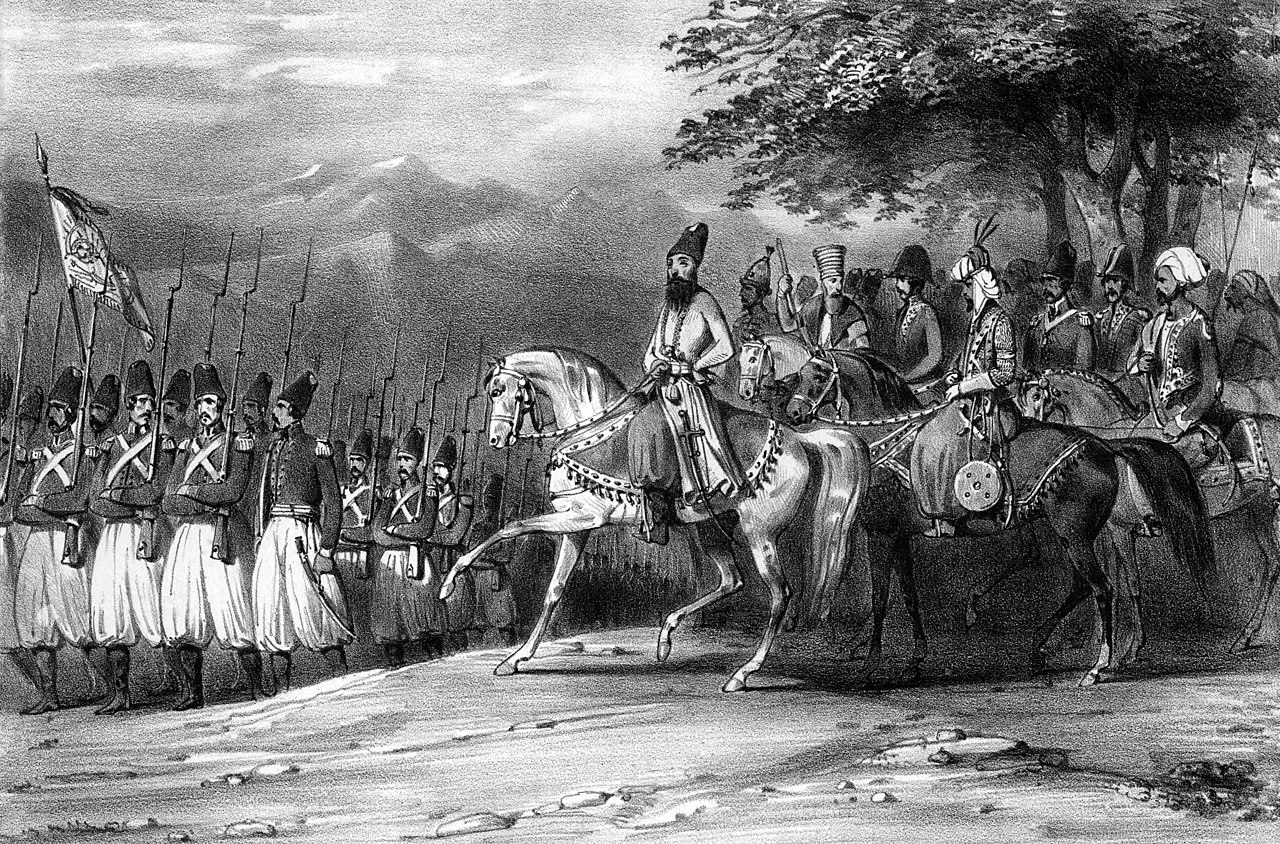


Design and symbolism
Colors on the flag are commonly read as follows: green for Islam and growth, white for peace and honesty, and red for bravery and sacrifice. The central red emblem is a stylized, geometric device with multiple symbolic readings — it is often interpreted as a representation of the word "Allah" and of a tulip motif that commemorates martyrs. The white band contrasts the emblem and provides a field for national identification. Further commentary on color meanings and emblem shapes appears in analyses of Iranian national symbols (design notes).
Inscription and border motif
Along the inner edges of the green and red bands a repeated inscription appears in stylized Kufic script. This phrase, associated with the Revolution's rhetoric, frames the flag visually and conceptually. Details about the script style and its placement are discussed in resources on Iranian iconography (inscription details).
History and adoption
The tricolor pattern has antecedents in 19th- and 20th-century Iranian flags, but the emblem and inscriptions reflect the ideological shift after 1979. The present specification was officially adopted in 1980 as part of a broader set of national symbols established by the new government. Histories of the flag place that change in the context of the Revolution and state reformation (historical context).
Uses, protocol and variants
The flag is used in civilian and governmental contexts; there are also specialized ensigns and military variants for naval and army use. Official protocol governs how it is displayed, folded and saluted, and guidance is published for domestic and diplomatic ceremonies (protocol guidance). Photographs and reproductions follow specific color and emblem proportions described in technical documents (technical specification).
Notable distinctions include the combination of a traditional tricolor with explicit religious and revolutionary symbolism, which makes the Iranian flag both a national banner and a statement of state ideology. Collectors and vexillologists often study its changes to trace political and cultural shifts in modern Iran.
Related articles
Author
AlegsaOnline.com Flag of Iran Leandro Alegsa
URL: https://en.alegsaonline.com/art/34813