
Flying Spaghetti Monster
The Flying Spaghetti Monster is the satirical deity of Pastafarianism, created in 2005 to protest teaching intelligent design. It functions as cultural critique, community identity, and occasional legal test case.
Overview
The Flying Spaghetti Monster is the central figure of Pastafarianism, a satirical or parody belief system that uses humor and exaggeration to critique claims about supernatural explanations for natural phenomena and to argue for a clear separation between religious doctrine and public education or policy. Adherents often refer to the deity as "His Noodly Appendage" or "His Noodliness" and call themselves Pastafarians. The figure is typically imagined as a floating mass of spaghetti with meatballs and eyestalks; this whimsical image functions as both a symbol and a rhetorical device.
Image gallery
10 Images






Origins and development
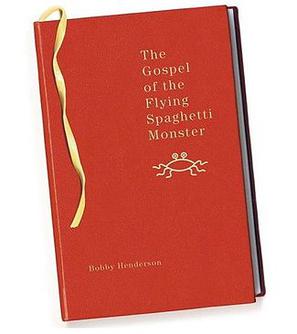
The Flying Spaghetti Monster was created in 2005 by Bobby Henderson in a widely circulated open letter protesting the Kansas State Board of Education's consideration of teaching intelligent design in public school science classes. Henderson framed the FSM as an intentionally absurd alternative to demonstrate that claims about supernatural designers are not empirically testable and therefore do not belong in science curricula. The idea spread rapidly online and became a focal point for people advocating for science-based education, free speech, and secular governance.
Beliefs, symbols and common practices
Pastafarianism adopts many features of organized religions—myths, rituals, festivals, and clerical titles—but typically treats them as parody. Key symbols and motifs include depictions of the Flying Spaghetti Monster (a tangle of pasta and meatballs), a playful emphasis on pirates as historically important, and the deliberate use of irreverent liturgy. Many adherents use distinctive attire such as colanders worn on the head in public or official photographs to assert a right to religious accommodation. These practices are intended both as sincere expressions of identity for some members and as political or legal statements for others.
Cultural role and activism
The FSM has been adopted as a tool of social commentary: it highlights the contrast between secular and religious reasoning in public institutions and is often referenced in debates over curriculum, church-state separation, and religious exemptions. Pastafarian communities organize online forums, social media groups, and occasional public events that mix humor with advocacy. Merchandise, artwork, and parody liturgies have proliferated, turning the FSM into a recognizable cultural meme as well as a vehicle for civic engagement.
Legal recognition and controversies
Because Pastafarian practices deliberately mimic religion, they have produced a range of legal and administrative questions. In some jurisdictions government offices and courts have been asked to decide whether Pastafarian symbols or garb (for example, wearing a colander) are protected religious expressions for purposes such as identity photographs, marriage officiation, or exemptions from rules. Outcomes have varied: some authorities have accommodated Pastafarian claims in limited ways, while others have rejected them. These disputes continue to be used as test cases for broader issues of religious freedom and equal treatment under the law.
Notable facts and distinctions
- The movement began explicitly as a response to intelligent design in public education and remains closely associated with that debate; sources discussing this context include both scientific and legal commentary (intelligent design).
- Although often labeled a parody, Pastafarianism functions at times like a social-religious community that offers members identity, satire, and mutual support. Many commentators analyze it under the categories of religious parody and modern social movements.
- Discussion of the FSM intersects with broader themes in philosophy and public policy, including the philosophy of science, secularism, and the role of religion in the public sphere (multiverse and hypothetical arguments are sometimes invoked playfully by adherents).
- For background on the original statement that launched the movement and subsequent materials, see commentary and primary texts published by the movement's founder and community resources (Pastafarianism resources).
Overall, the Flying Spaghetti Monster is less an orthodox creed than a satirical symbol used to interrogate how societies treat religious claims in civic life. Whether encountered as a joke, a belief identity, activist tactic, or legal test case, the FSM remains a visible and provocative element of contemporary debates about faith, education, and public policy.
Related articles
Author
AlegsaOnline.com Flying Spaghetti Monster Leandro Alegsa
URL: https://en.alegsaonline.com/art/35309