
First All-Union Philatelic, Scripophilic and Numismatic Exhibition (1924–1925)
A major collecting exhibition held in Moscow from December 1924 to February 1925, uniting stamp, stock‑certificate and coin collectors and helping form an All‑Union society of collectors.
Overview
The First All‑Union Philatelic, Scripophilic and Numismatic Exhibition was a large, multi‑disciplinary collectors' show held in Moscow from 15 December 1924 to 15 February 1925. Its formal title reflected three collecting fields displayed together: philately (stamps and postal history), scripophily (historic stock and bond certificates), and numismatics (coins, medals and paper money). The event brought together enthusiasts, dealers and institutional exhibitors at a time of institutional reorganization after the Russian Civil War.
Image gallery
2 Images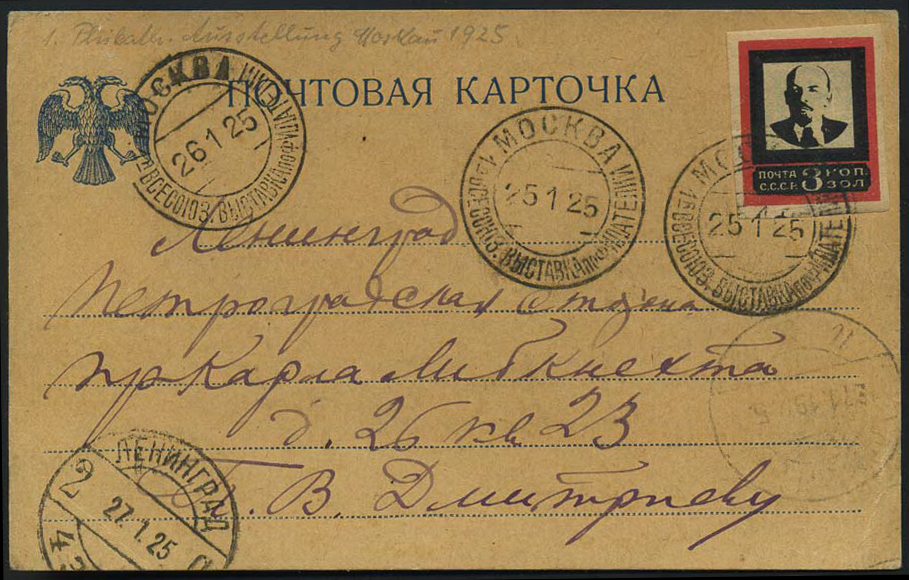

Organization and purpose
The exhibition was officially organized by the Presidium of the All‑Union Philatelic Association together with the Board of the All‑Russian Society of Philatelists. It served multiple aims: to display important and representative collections, to promote collecting among the public, and to lay groundwork for a formal All‑Union Society of Collectors. The initiative also had an administrative dimension under the supervision of Feodor Chuchin, the government official often described as the Commissioner for Philately and Scripophily (Chuchin).
Exhibition content and format
The show combined private and institutional exhibits, dealer stalls and educational displays. Sections were explicitly organized for each specialty to help visitors compare methods, objects and collecting priorities. Typical components included:
- Stamp albums, postal history documents and rare issues in the philately section.
- Historic share and bond certificates, engraved vignettes and corporate ephemera in the scripophily area.
- Coin series, trial strikes, medals and examples of circulating and obsolete currency in the numismatics displays.
Historical context and significance
The mid‑1920s were a transitional period for cultural and hobby organizations across the former Russian Empire. The exhibition reflected an effort to centralize and standardize collecting activities on a union‑wide basis, to foster exchanges between regional societies, and to identify leading collections for museum acquisition or public display. The combined nature of the exhibition emphasized affinities among different forms of material culture and economic documentation.
Outcomes and legacy
Beyond the public displays, the event functioned as a planning forum for forming the All‑Union Society of Collectors and for establishing professional contacts among enthusiasts and authorities. The collaborative role of the All‑Union Philatelic Association and the All‑Russian Society of Philatelists highlighted efforts to coordinate local and central organizations. Contemporary reports noted the exhibition as an important step in rebuilding collecting networks disrupted during earlier years of conflict and social change. References to the exhibition and its organizational records appear in period philatelic literature and administrative correspondence concerning cultural policy and collecting practice.
Notable facts and distinctions
- The exhibition's full name reflects the deliberate inclusion of three collecting disciplines under one roof, an arrangement less common in earlier national exhibitions.
- The event lasted two months, from 15 December 1924 to 15 February 1925, allowing broad public access.
- Its leadership included the Presidium of the All‑Union Philatelic Association and the Board of the All‑Russian Society of Philatelists, demonstrating cooperation between emerging all‑union structures and established societies.
- Administrative supervision and policy interest were represented by officials associated with the Commissioner for Philately and Scripophily (Chuchin).
The First All‑Union Exhibition remains a reference point for scholars of collecting, postal history and the cultural institutions of the early Soviet period. For further institutional background and subsequent developments see organizational records and philatelic periodicals from the mid‑1920s and later summaries of collecting history in the region. For descriptions of related exhibitions and specialist societies, consult contemporary notices and specialist catalogs that accompanied the show (exhibition materials).
Questions and answers
Q: When was the First All-Union Philatelic Exhibition held?
A: The First All-Union Philatelic Exhibition was held in Moscow in 1924-1925.
Q: What was the full name of the exhibition and why was it named so?
A: The full name of the exhibition was the First All-Union Philatelic, Scripophilic and Numismatic Exhibition. It was named so because it combined the objects of philately, scripophily (collecting stock and bond certificates), and numismatics (of coins, money).
Q: Who organized the exhibition?
A: The exhibition was organized by the Presidium of the All-Union Philatelic Association and Board of the All-Russian Society of Philatelists.
Q: When was the exhibition organized?
A: The exhibition was organized from 15 December 1924 to 15 February 1925.
Q: What was the purpose of the combined exhibition?
A: The purpose of the combined exhibition was to prepare formation of the All-Union Society of Collectors.
Q: Who was to direct the All-Union Society of Collectors?
A: Feodor Chuchin, the Commissioner for Philately and Scripophily was to direct the All-Union Society of Collectors.
Q: What were the three objects combined in the exhibition?
A: The three objects combined in the exhibition were philately, scripophily (collecting stock and bond certificates), and numismatics (of coins, money).
Related articles
Author
AlegsaOnline.com First All-Union Philatelic, Scripophilic and Numismatic Exhibition (1924–1925) Leandro Alegsa
URL: https://en.alegsaonline.com/art/34510
Sources
- cabdirect.cab.semcs.net : "The socialist construction of philately in the early Soviet era"
- jstor.org : Comparative Studies in Society and History
- worldcat.org : 0010-4175
- dx.doi.org : 10.1017/S0010417500019770 · webcitation.org · webcitation.org