
First Fleet (1787–1788): the voyage that established a British colony in Australia
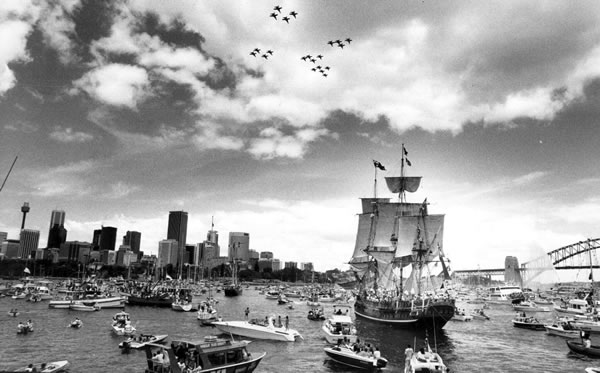
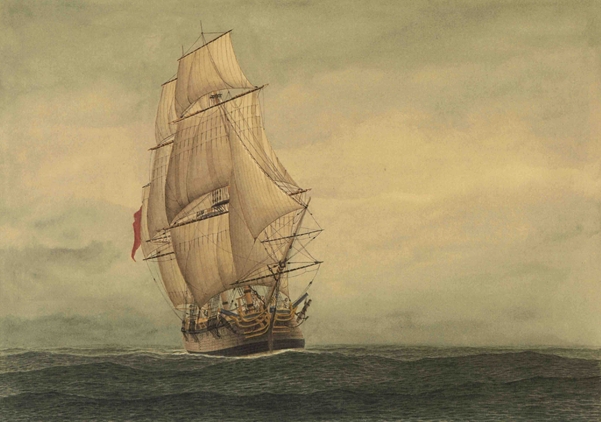
The First Fleet was a convoy of 11 ships that left Great Britain in May 1787 to establish the first European penal colony in New South Wales, arriving in Australia in January 1788 under Captain Arthur Phillip.
Overview
The First Fleet is the name commonly given to the convoy of 11 ships that sailed from Great Britain on 13 May 1787 with the express purpose of establishing the first European colony in what was designated New South Wales. The expedition carried people from a range of backgrounds: convicts, marines, seamen and civilian officials. Command of the enterprise was vested in Captain Arthur Phillip, who became the colony's first governor.
Image gallery
9 Images


Voyage and route
The journey took roughly eight months and followed a southern and Atlantic route that had been taken only a few times by earlier navigators, including Abel Tasman and James Cook. The fleet carried supplies and tools intended to support a new settlement across the Indian Ocean and into the Pacific. Along the way the ships made scheduled stops for water, food and repairs and then proceeded to the eastern coast of the continent.
Composition and conditions on board
The group of ships included transports and escorts and carried a mixture of people: roughly a thousand or more convicted men and women transported as convicts, several hundred sailors and marines, and a small number of administrators, craftsmen and their families. Conditions varied widely—many convicts suffered cramped quarters and disease, but mortality was lower than feared due to measures such as improved ventilation, rationing and the attention of ship surgeons.
Landing and founding the settlement
When the fleet reached the east coast, initial landings were made at Botany Bay, which proved unsuitable for long-term occupation. Captain Phillip then moved the party north to Port Jackson, establishing a settlement at Sydney Cove on 26 January 1788, a date later commemorated as the beginning of European settlement in Australia. The new colony was named New South Wales and intended both as a penal outpost and as a base for expanding British presence in the region.
Importance and legacy
The First Fleet marked a turning point: it initiated sustained European habitation on the Australian continent and set in motion administrative, economic and social systems that would expand over the following decades. Its arrival also began a long and often tragic era for Indigenous peoples, whose lands and societies were dramatically affected by colonization. The story of the First Fleet is therefore central both to Australian national history and to discussions about the consequences of imperial expansion.
Notable facts
- The expedition was led by a naval officer who became the colony's first governor: Arthur Phillip.
- The voyage used a southern ocean route previously traversed by explorers like Abel Tasman and James Cook.
- The project was part of a wider British policy of transporting convicted prisoners to overseas colonies in order to relieve crowded prisons and to secure territory.
Questions and answers
Q: What is the First Fleet?
A: The First Fleet refers to the 11 ships that were sent from Great Britain on 13 May 1787, to establish the first European colony in New South Wales.
Q: When did the First Fleet depart from Great Britain?
A: The First Fleet departed from Great Britain on 13 May 1787.
Q: What was the purpose of sending the First Fleet to Australia?
A: The purpose of sending the First Fleet to Australia was to establish convict settlements and move thousands of prisoners there.
Q: Who led the First Fleet?
A: Captain Arthur Phillip led the First Fleet.
Q: How long did the journey of the First Fleet last?
A: The journey of the First Fleet lasted eight months.
Q: What was the route taken by the First Fleet?
A: The route taken by the First Fleet was across the oceans and had only been used three times; once by Abel Tasman and twice by James Cook.
Q: Why was the journey of the First Fleet significant?
A: The journey of the First Fleet was significant because it marked the beginning of the European colonization of Australia, and the establishment of the first convict settlements there.
Related articles
Author
AlegsaOnline.com First Fleet (1787–1788): the voyage that established a British colony in Australia Leandro Alegsa
URL: https://en.alegsaonline.com/art/34536
Sources
- members.iinet.net.au : "Convict Ships to Australia"
- jenwilletts.com : "Convict Ship Charlotte 1788"
- gutenberg.net.au : "The First Fleet"
- www2.sl.nsw.gov.au : "The First Fleet - State Library of NSW"
- nla.gov.au : "Timeline – 1788"
- nla.gov.au : The World Upside Down: Australia 1788–1830
- dictionaryofsydney.org : "La Perouse"
- dictionaryofsydney.org : "Camp Cove"
- sydneylivingmuseums.com.au : "Hyde Park Barracks Museum: A Day in the Life of a Convict"