
Fayette County, Pennsylvania
Fayette County is in southwestern Pennsylvania. Established in 1783 and named for the Marquis de Lafayette, it includes Uniontown, parts of the Laurel Highlands, and sites such as Fallingwater and Fort Necessity.
Overview
Fayette County is a county in the southwestern corner of the U.S. state of Pennsylvania. It borders Maryland and West Virginia, placing it within a transition zone between the Appalachian highlands and lower river valleys. The county seat is identified as the county seat of Uniontown, and the population was recorded at 136,606 in the 2010 census.
Image gallery
6 Images


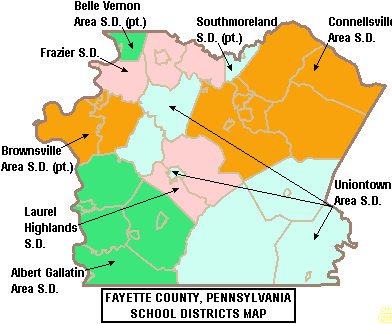


Geography and communities
Fayette County occupies a portion of the Laurel Highlands, an area of folded ridges and narrow river gorges on the Allegheny Plateau. Terrain ranges from forested highland to river valleys carved by the Youghiogheny and Monongahela systems. Communities include small towns, boroughs, and rural townships centered on Uniontown and former industrial centers. Scenic byways and trails traverse the county, linking parks, historic sites, and recreational corridors.
History and development
Created on September 26, 1783, the county was named in honor of the Marquis de Lafayette. Its growth in the 19th and early 20th centuries was driven by natural resources and transportation: coal, coke, timber, and railroads supported steelmaking and related industries. Like many Appalachian counties, Fayette experienced an industrial boom followed by economic restructuring as heavy industry declined, prompting efforts to diversify the local economy toward tourism, services, and small manufacturing.
Notable sites and recreation
Fayette County contains nationally significant cultural and natural attractions. Frank Lloyd Wright's Fallingwater and the Fort Necessity National Battlefield attract visitors interested in architecture and early American history. Outdoor recreation centers on Ohiopyle State Park, whitewater on the Youghiogheny River, and multiuse trails such as the Great Allegheny Passage. These resources support heritage tourism, seasonal outdoor activities, and educational programs.
Importance and distinctions
- Historical: early frontier and Revolutionary-era connections, memorialized in place names and preserved sites.
- Architectural: Fallingwater is recognized worldwide as a landmark of 20th-century design.
- Environmental and recreational: significant green space, river gorges, and trail networks contributing to regional tourism.
Today, Fayette County balances preservation of its historic and natural heritage with efforts to foster economic renewal. Visitors and residents alike use its parks, museums, and trails to explore both the region's industrial past and its scenic highlands.
Related articles
Author
AlegsaOnline.com Fayette County, Pennsylvania Leandro Alegsa
URL: https://en.alegsaonline.com/art/33704
Sources
- quickfacts.census.gov : "State & County QuickFacts"
- naco.org : "Find a County" · web.archive.org
- books.google.com : The Origin of Certain Place Names in the United States