
Faulk County, South Dakota
Faulk County is a sparsely populated rural county in central South Dakota, created in 1873 with Faulkton as its county seat. It is known for agriculture, prairie landscape, and small-town community life.
Overview
Faulk County is a rural county in the U.S. state of South Dakota. Established in 1873 during the period of Dakota Territory organization, the county has a small, dispersed population and is characterized by open prairie, farmland and small towns. The county seat and principal local center of government is Faulkton.
Image gallery
1 Image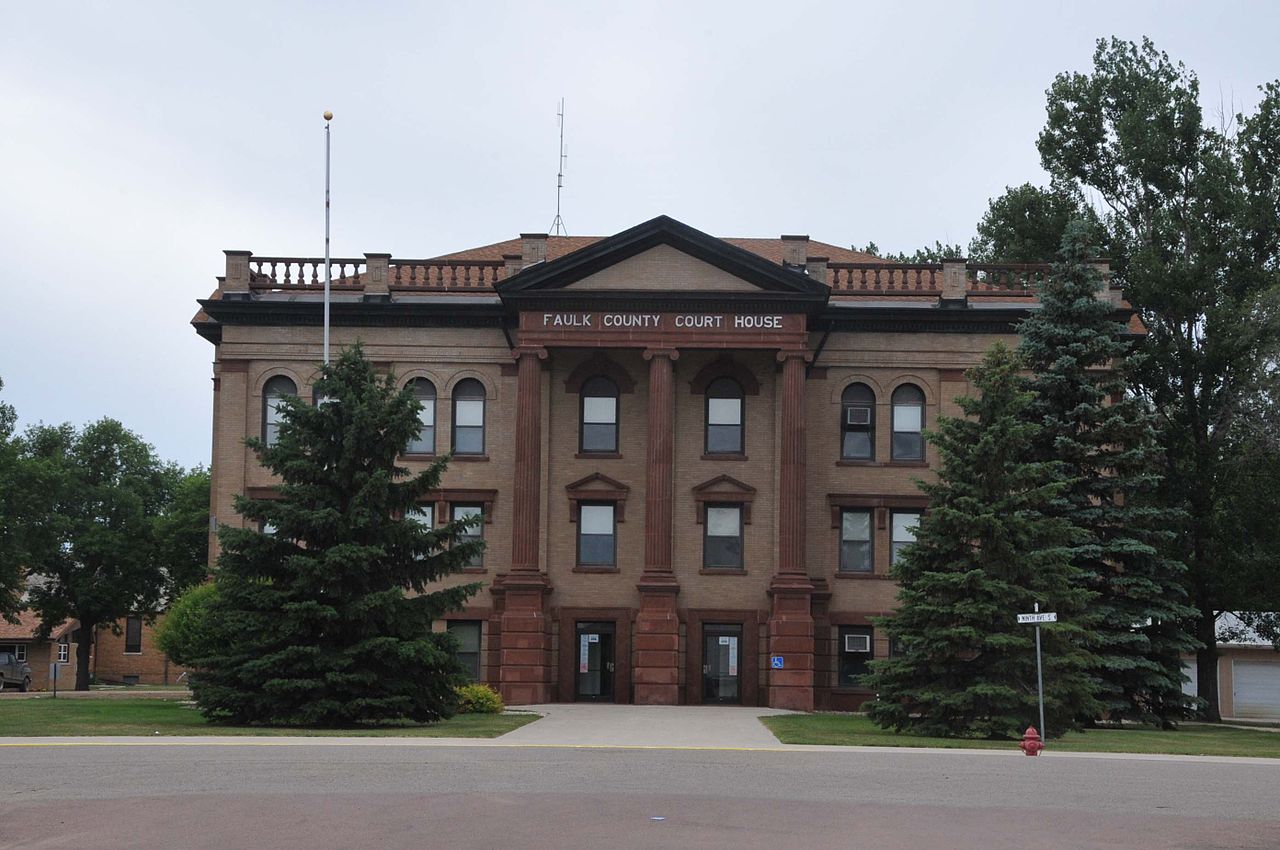
Quick facts
Geography and characteristics
Faulk County lies within the mixed-grass prairie region typical of much of central South Dakota. The landscape supports row crops, hayland and livestock grazing, with a road network linking farms to small market towns. Settlements are small and widely spaced; public services and institutions are concentrated in Faulkton, which hosts county government buildings and local amenities.
History and name
The county was created as part of the administrative divisions of the Dakota Territory in the late 19th century. It is named for Andrew J. Faulk, an early territorial governor, reflecting the common practice of honoring public figures in place names during that era. Settlement and development followed railroad expansion and homesteading patterns common to the northern plains.
Economy, community and significance
Economically the county depends largely on agriculture—grain crops and cattle ranching dominate—supported by local services, schools and community organizations. Like many rural counties, it faces demographic challenges such as population aging and out-migration, while preserving local traditions and community events that sustain civic life. For further administrative or demographic records consult regional resources and the county's official pages, or general state references such as Faulk County, South Dakota.
Notable facts
Faulk County illustrates broader trends of the Great Plains: low population density, an economy tied to agriculture, and small municipal centers that serve wide rural areas. Its county seat, Faulkton, remains the focal point for legal, educational and civic services in the county.
Related articles
Author
AlegsaOnline.com Faulk County, South Dakota Leandro Alegsa
URL: https://en.alegsaonline.com/art/33667