
Fayette County, Iowa
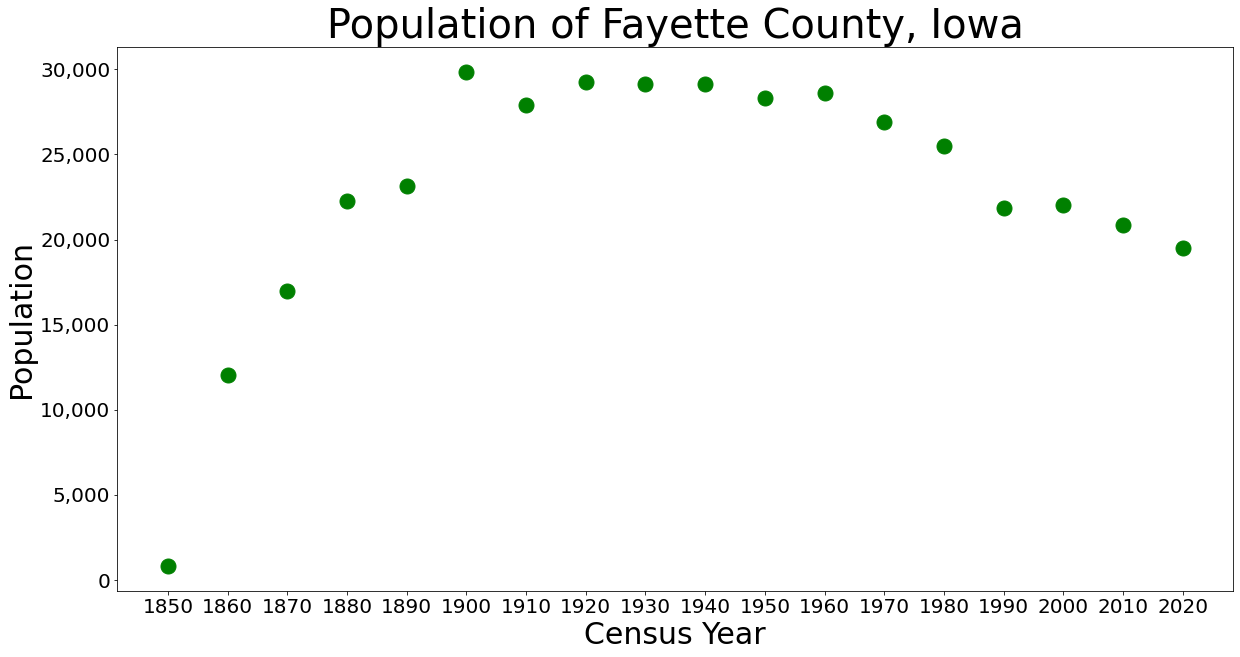
Fayette County is a rural county in northeastern Iowa with small towns, agricultural economy, and the county seat at West Union. The 2010 census recorded a population of 20,880.
Fayette County is a county in the U.S. state Iowa, located in the northeastern portion of the state region. It is primarily rural, with a landscape of farmland, woodlands and small towns. As of the 2010 census the county's population was 20,880; like many rural counties in the Midwest it has experienced slow growth or modest decline in recent decades.
Image gallery
2 Images
Overview and character
The county combines agricultural production with local services, light manufacturing and higher education. Rolling fields, country roads and small municipal centers define daily life for most residents. Public services are organized at the county level, with a courthouse, sheriff's office and county board handling local governance.
History and name
Fayette County dates from the 19th century settlement of the region and takes its name from the Marquis de Lafayette, the French general who supported the American Revolution. Early settlement followed river valleys and transport routes; towns grew where mills, rail stops or crossroads offered economic opportunity.
Communities and institutions
The county seat is the town whose government functions are centered in West Union; the county seat is West Union. Other population centers include small incorporated towns and unincorporated hamlets that provide schools, shops and community services. The county is also home to a private university campus that contributes to local culture and employment.
Economy and land use
Agriculture remains the dominant land use, with corn, soybeans and livestock common on family farms. Manufacturing, construction and education provide additional jobs; local businesses serve residents and surrounding rural areas. Recreational attractions include county parks, trails and seasonal community festivals.
Government and services
Fayette County is administered by elected county officials and a board of supervisors. Local school districts, volunteer fire departments and county-run service offices deliver education, emergency response and social programs. Transportation is focused on state and county roads connecting towns and neighboring counties.
Notable facts
- Named for a Revolutionary War hero, reflecting a common mid-19th-century naming pattern.
- Contains a mix of agricultural land and small-town centers with historic commercial districts.
- Home to higher-education presence that supports cultural and economic activity.
Related articles
Author
AlegsaOnline.com Fayette County, Iowa Leandro Alegsa
URL: https://en.alegsaonline.com/art/33701
Sources
- quickfacts.census.gov : "State & County QuickFacts"
- naco.org : "Find a County" · webcitation.org