
Faulkner County, Arkansas
Central Arkansas county with seat Conway, founded 1873. Population 113,237 at the 2010 census. Home to colleges, Lake Conway, diverse economy and steady suburban growth near Little Rock.
Overview
The county lies in the heart of the U.S. state of Arkansas. It was created on April 12, 1873, and recorded a population of 113,237 at the 2010 census. The administrativ e center and largest city is the city of county seat Conway, which anchors much of the county's civic and cultural life.
Image gallery
4 Images


Geography and communities
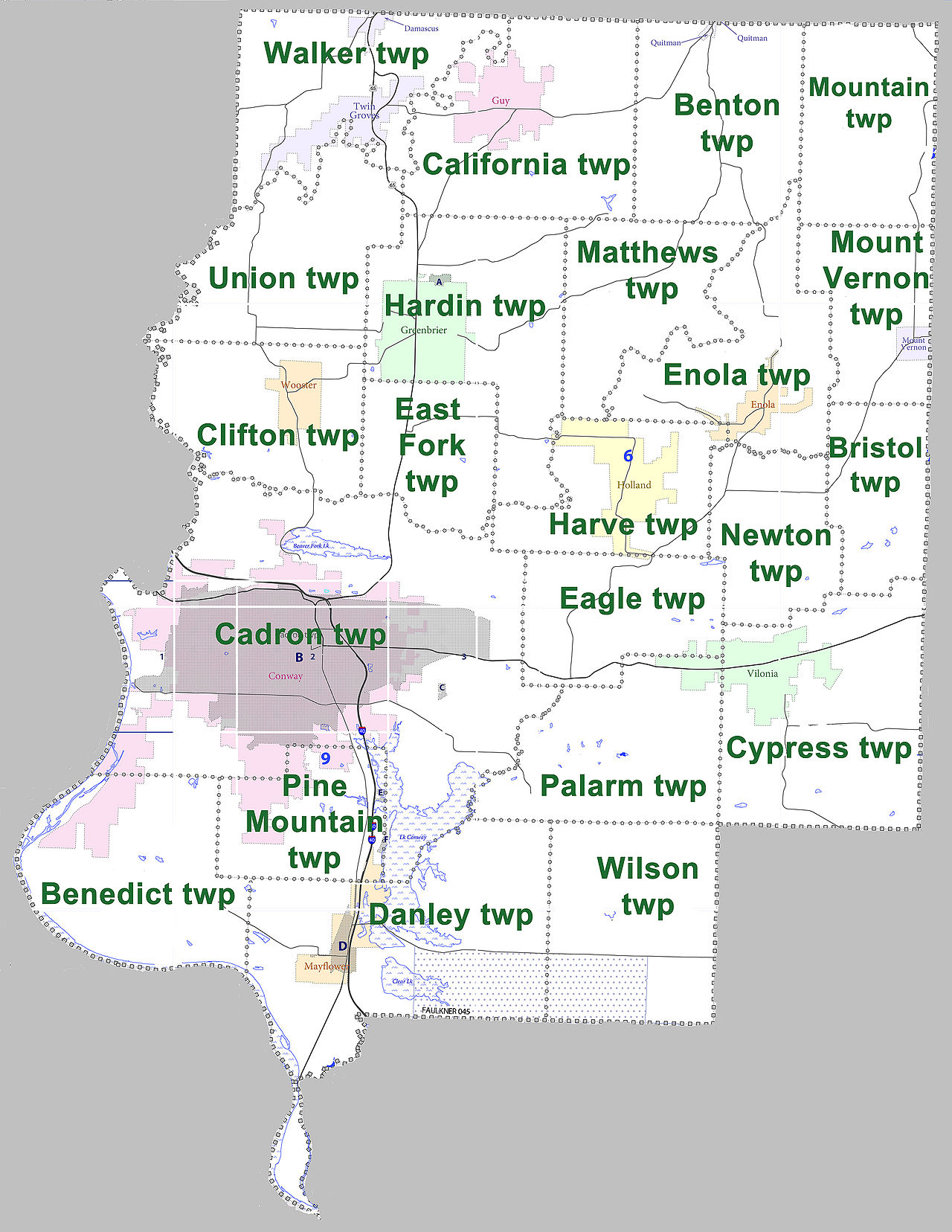
Faulkner County occupies a mix of lowlands and rolling hills typical of central Arkansas. It includes a combination of small towns, suburban neighborhoods and rural areas. In addition to Conway, several incorporated towns and unincorporated communities contribute to the county's character and local services.
History and government
Organized in the late 19th century, the county developed as part of Arkansas's post‑Civil War political and economic reorganization. Local government follows the Arkansas county model with elected officials, a county judge and a quorum court to manage budgets, roads and public services.
Economy and institutions
The county's economy blends higher education, light manufacturing, retail and agriculture. Conway is known for multiple colleges and universities that draw students and staff from the region, supporting cultural institutions, research and local businesses.
Points of interest and growth
- Lake Conway and nearby parks provide outdoor recreation and wildlife habitat.
- Colleges and cultural venues in Conway create educational and arts opportunities.
- Proximity to the Little Rock metropolitan area and major highways has encouraged residential and commercial growth.
Faulkner County is often noted for its blend of small‑town communities and expanding suburban areas, making it an important part of central Arkansas's social and economic landscape.
Related articles
Author
AlegsaOnline.com Faulkner County, Arkansas Leandro Alegsa
URL: https://en.alegsaonline.com/art/33669
Sources
- quickfacts.census.gov : "State & County QuickFacts"
- naco.org : "Find a County" · web.archive.org