
Extracellular fluid: composition, compartments and clinical importance
Extracellular fluid (ECF) surrounds cells and carries substances between organs. It includes plasma, interstitial fluid and transcellular fluid and makes up about one-third of total body water.
Extracellular fluid (ECF) is the term for all body fluid located outside cells. It serves as the medium that bathes cells, delivers nutrients, removes waste, and transmits hormones and immune cells. For a concise primer see related overview. In most adults the ECF accounts for roughly one-third of total body water, though that proportion varies with age, sex and body composition.
Image gallery
3 Images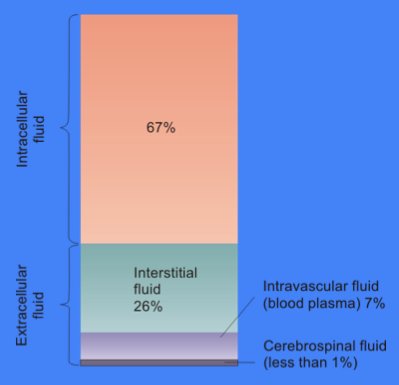


Composition and compartments
ECF is not uniform. It is commonly divided into three main compartments: plasma (the liquid portion of blood), interstitial fluid (fluid between cells), and smaller transcellular spaces (such as cerebrospinal, synovial and gastrointestinal secretions). The chemical composition of ECF differs from intracellular fluid: sodium and chloride are the dominant ions in the ECF, and bicarbonate is an important buffer. Plasma additionally contains proteins such as albumin that contribute to oncotic pressure.
Functions and homeostasis
The ECF performs several essential roles: transporting oxygen, nutrients and hormones to cells; carrying metabolic wastes away for excretion; maintaining acid–base balance and electrolyte concentrations; and serving as a reservoir that buffers short-term changes in volume or composition. Movement of fluid and solutes between plasma and interstitial fluid is governed by capillary hydrostatic and oncotic forces, while exchange between ECF and intracellular fluid occurs across cell membranes by osmosis and active transport.
Homeostatic systems — including the kidneys, cardiovascular reflexes, and endocrine signals such as antidiuretic hormone and aldosterone — tightly regulate ECF volume and electrolyte balance. Disruptions can cause clinically important conditions: excess ECF often manifests as edema, while losses lead to dehydration and hypotension.
Common clinical and practical implications include the use of intravenous fluids to restore ECF volume, electrolyte replacement to correct imbalances, and monitoring of plasma constituents as indicators of ECF status. Understanding ECF composition guides treatment decisions in acute care, nephrology and critical medicine.
Historically, the concept of an internal body fluid compartment evolved as physiologists described the "internal milieu" and the forces controlling fluid exchange. Modern physiology integrates these classical ideas with cellular membrane transport mechanisms and with clinical observations about how disease alters fluid distribution. Notable facts to remember: the ECF is dynamic, exchanges continuously with intracellular fluid, and its relative size and composition change with age, hydration and disease.
Related articles
Author
AlegsaOnline.com Extracellular fluid: composition, compartments and clinical importance Leandro Alegsa
URL: https://en.alegsaonline.com/art/33022