
Exmoor pony
A small, hardy native British pony from Exmoor, noted for primitive markings, durability on moorland, and use in conservation grazing, riding and driving. Conserved by breed societies.
Overview
The Exmoor pony is a native pony breed from the moorlands of southwest England. It is a type of horse adapted to harsh upland conditions and is often cited as one of the United Kingdom's oldest indigenous pony types. Populations both on Exmoor and in managed herds elsewhere illustrate its role as a living remnant of traditional British livestock.
Image gallery
8 Images





Characteristics
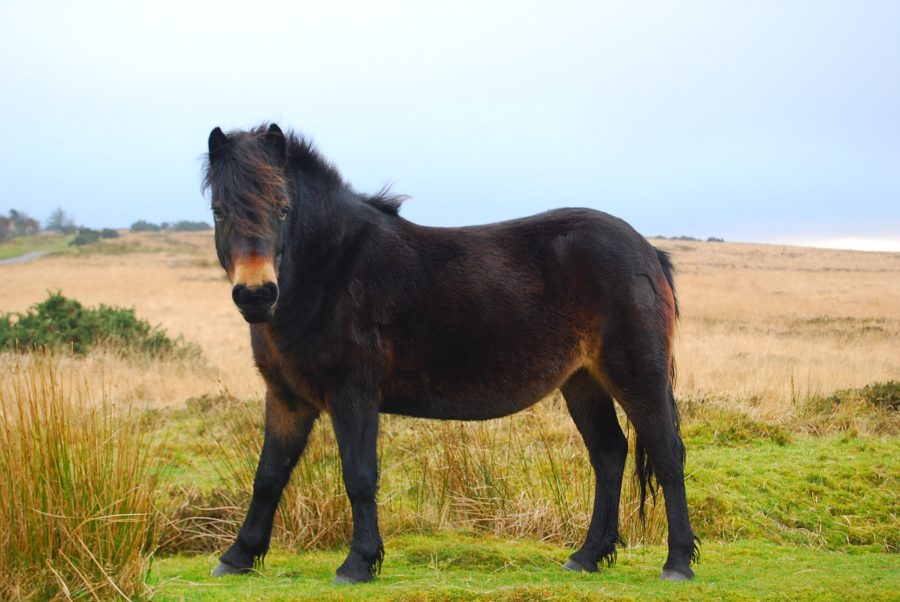
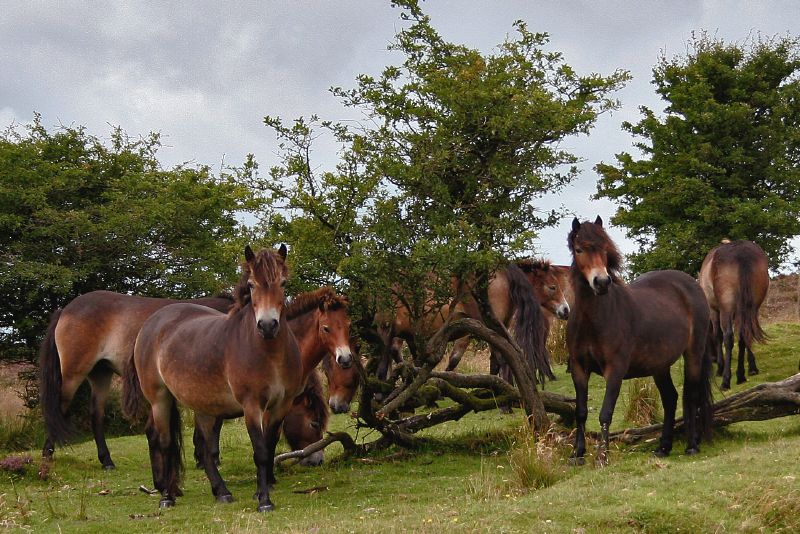
Exmoor ponies are small, sturdy and frugal, built to conserve heat and survive on sparse forage. Typical traits include a compact body, strong legs, a thick winter coat, and a broad, flat forehead. Coat colours tend toward bays, browns and dun-like shades, often accompanied by pale "mealy" markings around the muzzle and eyes and a darker dorsal stripe.
Distinctive features
- Hardy constitution and efficient metabolism suited to moorland grazing.
- Primitive markings such as a dorsal stripe and lighter muzzle area.
- Alert, cautious temperament with good intelligence and sure-footedness.
History and conservation
Ancestors of the Exmoor pony are believed to have inhabited Britain for many centuries, evolving to survive exposed heaths and moorland. The modern breed was increasingly recognized and recorded in the 19th and early 20th centuries, and breed organisations formed to preserve its bloodlines. Today the Exmoor pony is regarded as a native breed of the British Isles and is the subject of conservation efforts to maintain genetic diversity and viable wild and semi-wild populations.
Uses and importance
Historically used for general farm work and transport, Exmoor ponies are now valued for a variety of roles: light riding (especially for children), driving, nature conservation grazing, and as living heritage animals in shows and educational programmes. Their grazing helps maintain open habitats and supports biodiversity on upland moors and reserves.
Notable facts
The Exmoor pony exemplifies how a livestock breed can both reflect cultural history and deliver practical environmental benefits. Conservationists and breed societies continue to monitor populations, encourage responsible breeding and promote the pony’s role in sustaining traditional landscapes.
Related articles
Author
AlegsaOnline.com Exmoor pony Leandro Alegsa
URL: https://en.alegsaonline.com/art/32941
Sources
- zoo-hannover.de : Exmoor Pony