
Ezo salamander (Hynobius retardatus) — northern Japan amphibian
The Ezo salamander (Hynobius retardatus) is a small terrestrial salamander native to northern Japan, typically found in forests, shrubland and wetlands where it breeds in ponds and marshes.
Overview: The Ezo salamander, also called the Hokkaido salamander, is a species of salamander in the family Hynobiidae. It is native to Japan and is most closely associated with the cooler, wetter landscapes of northern islands. The species is commonly discussed in regional field guides and scientific accounts of Japanese amphibians; see a general species page: Ezo salamander.
Image gallery
4 Images


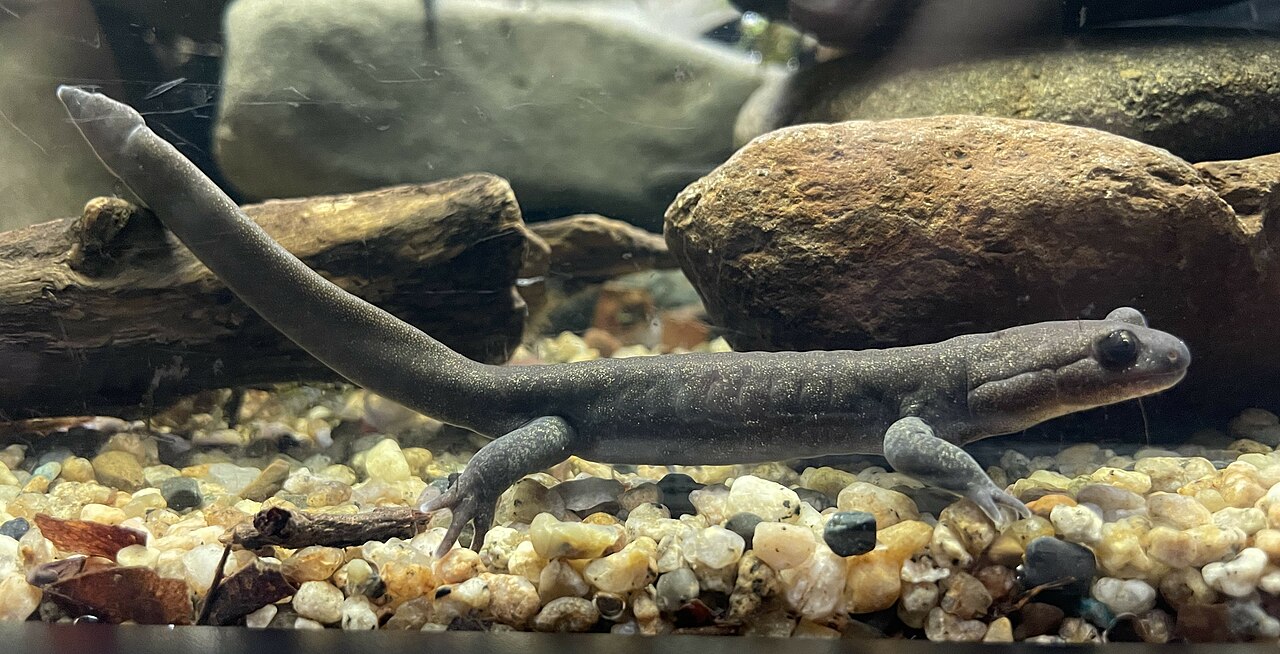
Appearance and characteristics
Adults are relatively small, slender amphibians with a terrestrial habit outside the breeding season. Their coloration tends toward muted browns or grays with patterning that helps conceal them among leaf litter and moss. Like other hynobiids, they spend much of their adult life on land but return to water to breed. Members of the family are notable for reproductive traits that differ from many other salamander families.
Habitat and distribution
The Ezo salamander is restricted to Japan, where it occupies a range of damp habitats. Typical habitats include forests, swamps and marshes, as well as shrubby and riparian zones. Breeding usually takes place in still or slow-moving water such as ponds, vernal pools or flooded depressions where larvae develop.
Life cycle and behavior
Breeding commonly occurs in spring when adults gather at breeding sites. Females deposit eggs in water—often in gelatinous sacs attached to submerged vegetation—and larvae are aquatic until metamorphosis. Diet consists mainly of small invertebrates; adults are largely nocturnal and secretive, foraging in leaf litter and under logs.
Conservation and importance
Populations are influenced by the condition of wetlands and surrounding forests. Loss of breeding ponds, pollution, and habitat modification can reduce local numbers. The species serves as an indicator of wetland health and plays an ecological role as both predator of invertebrates and prey for larger animals. For further regional habitat guidance see regional distribution.
- Typical habitats: forests, marshes, swamps
- Taxonomic context: Hynobiidae family
- General reference: species information and distribution notes
Related articles
Author
AlegsaOnline.com Ezo salamander (Hynobius retardatus) — northern Japan amphibian Leandro Alegsa
URL: https://en.alegsaonline.com/art/33104