
Amber Gurung: Nepali Composer, Singer and Lyricist (1938–2016)
Amber Gurung (1938–2016) was a Nepali composer, singer and lyricist best known for composing the melody of Nepal's national anthem. He influenced modern Nepali music as a performer, teacher and cultural organizer.
Amber Gurung (Nepali: अम्बर गुरुङ; 26 February 1938 – 7 June 2016) was a prominent Nepali composer, singer and lyricist. He is most widely remembered for composing the melody of Nepal's national anthem, "Sayaun Thunga Phool Ka", and for a long career that helped shape modern musical life in Nepal. His work combined elements of Nepali folk music with South Asian classical techniques and contemporary song forms, producing melodies that became widely known across radio, stage and recordings.
Image gallery
1 Image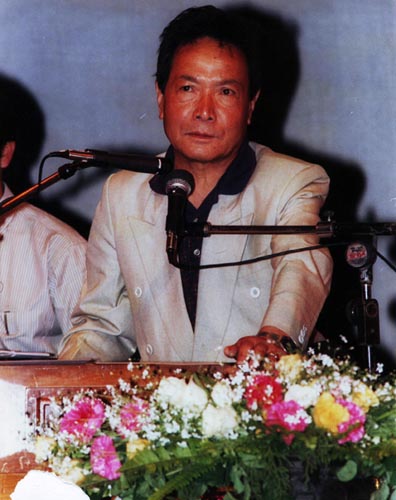
Musical roles and style
Gurung performed and worked in several musical roles: as a composer of songs and patriotic pieces, as a vocalist, and as a lyricist and teacher. His compositional approach emphasized clear, memorable melodies and straightforward settings of text so that songs could be learned and sung by communities. He drew on indigenous folk motifs and classical training to create music that was both rooted in local tradition and suitable for modern concert and broadcast contexts.
Career and contributions
Over many decades Gurung composed music for public events, educational programmes, theatre and radio, and he was involved in efforts to develop institutional music teaching and performance in Nepal. He served as a mentor to younger musicians and participated in cultural organisations and projects that promoted Nepali music inside the country and among Nepali-speaking communities abroad. His output included popular songs, patriotic works, and compositions intended for choirs and stage productions.
Notable work: the national anthem
One of Gurung's most enduring contributions is the melody of Nepal's current national anthem, adopted in the period of major political change in the 2000s. The anthem provided a unifying musical voice at a significant moment in the country's history and remains part of Gurung's public legacy. For background on the anthem and its adoption see information on the national anthem.
Life, education and influence
Born in 1938, Gurung spent his early life within Nepali-speaking communities of the eastern Himalaya and later relocated to live and work in Nepal, where he became a central figure in music education and cultural life. He promoted formal instruction in composition and performance, and his teaching influenced multiple generations of Nepali singers and composers. Students and colleagues recall his emphasis on melodic clarity and the integration of indigenous musical elements into contemporary idioms.
Death and legacy
Amber Gurung died on 7 June 2016 in Kathmandu from esophageal cancer at the age of 78. His death prompted widespread tributes from across Nepal and the global Nepali diaspora, with commentators noting his role as composer, teacher and cultural leader. Recordings, students' performances and institutional archives preserve many of his songs and lessons.
- Biography and career overview
- Discography and notable compositions
- Articles on his musical style and influence
- Information on the national anthem
- Reports on his illness and death
- Tributes and remembrances
Gurung remains a reference point in Nepali music: his anthem continues to be performed at national events, and many of his songs are taught and recorded. His combined roles as composer, performer and educator helped to institutionalize musical training in Nepal and to ensure that indigenous musical ideas continued to be heard within contemporary forms.
Related articles
Author
AlegsaOnline.com Amber Gurung: Nepali Composer, Singer and Lyricist (1938–2016) Leandro Alegsa
URL: https://en.alegsaonline.com/art/3278
Sources
- archives.myrepublica.com : "Music is not entertainment: Amber Gurung"
- thehimalayantimes.com : "Nepal national anthem composer Amber Gurung dies at 79"