
Étienne Tshisekedi — Congolese opposition leader and statesman
Étienne Tshisekedi (1932–2017), founder and long‑time leader of the UDPS, three‑time prime minister during moments of crisis and a central figure of Congolese opposition politics.
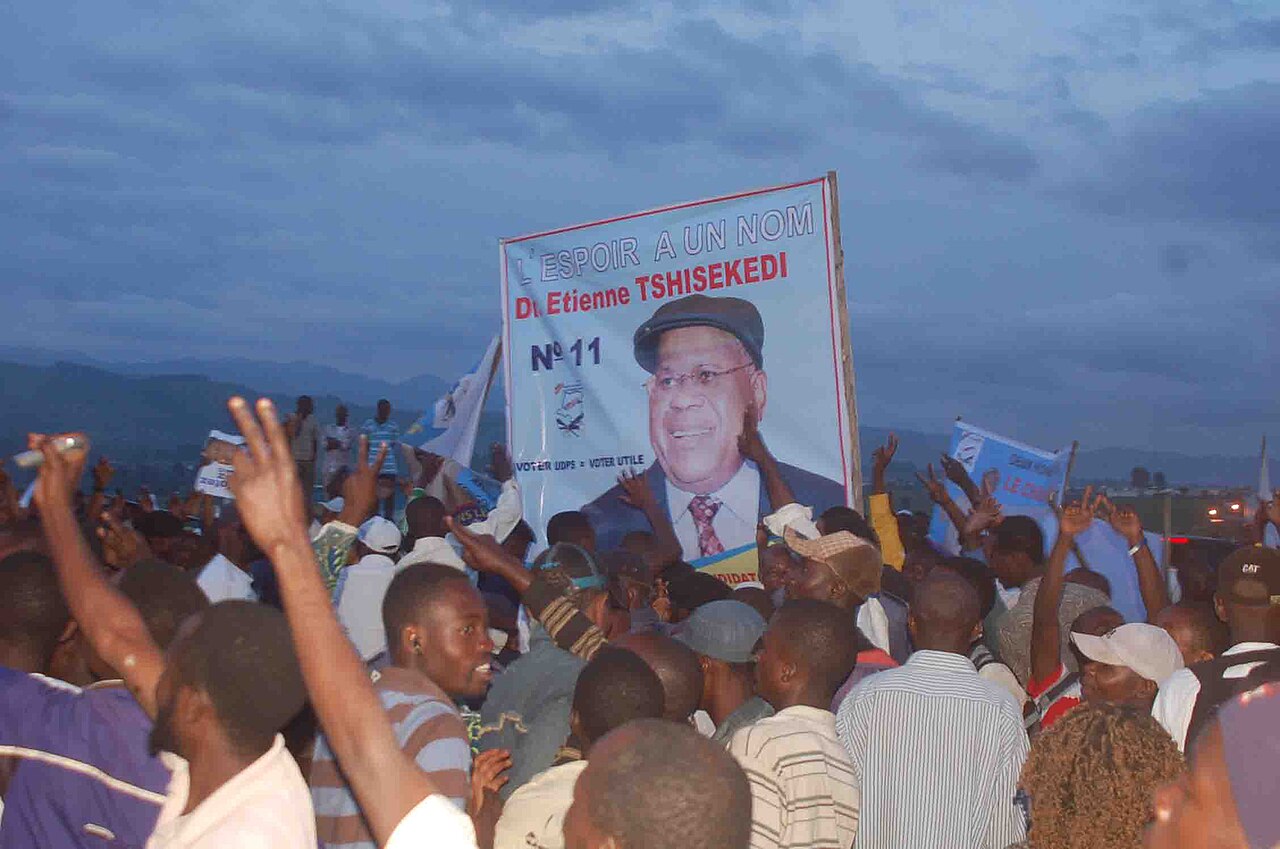
Étienne Tshisekedi wa Mulumba (14 December 1932 – 1 February 2017) was a prominent Congolese politician and the long‑time leader of the Union for Democracy and Social Progress (UDPS), the main organised opposition movement to one‑party rule in his country. Born in Kabeya Kamwanga in the former Belgian Congo, he became known for his persistent public challenges to entrenched authority and for maintaining a distinctive role as an opposition statesman over several decades.
Image gallery
3 Images

Early life and entry into politics
Tshisekedi trained as a lawyer and entered public service in the years after independence. During the 1970s and early 1980s he emerged as a critic of the dominant party system and in the early 1980s helped found the UDPS as a vehicle for political pluralism. His style combined legal argument, appeals to civic morality and frequent public denunciations of corruption and abuse of power.
Founding of the UDPS and opposition activity
The UDPS quickly became the principal organised opposition force. Tshisekedi and his followers faced repeated restrictions, including brief arrests, periods of detention and limits on movement and assembly, as the state sought to contain dissent. Despite these pressures, the party kept a visible presence in urban centres, trade unions and among civic activists, helping to keep demands for multi‑party politics alive.
Prime ministerial terms and political role
- 1991: first appointment during a period of economic crisis and popular unrest;
- 1992–1993: a second, short term amid negotiations over political reform;
- 1997: a brief tenure as the old regime was collapsing prior to a change of government under Laurent‑Désiré Kabila.
Each appointment came in times of acute national crisis and offered Tshisekedi limited room to implement wide reforms, but they underscored his status as a central interlocutor in transitions. He remained a polarising figure: admired by supporters for his consistency and integrity and criticised by opponents for tactical rigidities.
Later years, elections and legacy
In later decades Tshisekedi continued to lead the UDPS and to challenge successive governments. He was a central figure in contested electoral moments, notably in elections where he and his party disputed official results and called for reforms to ensure transparency. His family also continued in politics: his son, Félix Tshisekedi, later rose to national prominence and became president.
Death and reactions
Tshisekedi died on 1 February 2017 in Brussels, Belgium, after suffering a pulmonary embolism. His death prompted reflection at home and abroad on the long struggle for multi‑party democracy and on the role of persistent opposition leaders in shaping the country’s political evolution. He is remembered as a symbolic figure of dissent whose career spanned the colonial era, the long Mobutu period and the turbulent transitions that followed.
Throughout his life Tshisekedi remained a controversial but influential presence in Congolese politics, combining a legalist approach to rights with grassroots mobilisation. His record continues to be studied by those interested in opposition movements, democratic transition and the political history of Zaire and the modern Democratic Republic of the Congo.
Related articles
Author
AlegsaOnline.com Étienne Tshisekedi — Congolese opposition leader and statesman Leandro Alegsa
URL: https://en.alegsaonline.com/art/32404
Sources
- commons.wikimedia.org : Étienne Tshisekedi
- bbc.com : "DR Congo opposition leader Etienne Tshisekedi dies aged 84"