
Eos — Greek goddess of the dawn
Eos is the personification of dawn in ancient Greek religion and literature, sister of Helios and Selene, known for her 'rosy-fingered' epithet and for myths involving the mortal Tithonus and her son Memnon.
Overview
Eos is the ancient Greek goddess who personifies the dawn. Her name appears in several dialectal forms; for example the Ionic and Homeric form, the Aeolic variant, and other regional spellings. Eos is a recurring figure in Greek mythology, invoked by poets to mark the coming of morning and the transition between night and day.
Image gallery
10 Images




Family and appearance
In the traditional genealogies she is a child of the elder gods, counted among the offspring of the Titans Hyperion and Theia. Her siblings include the sun-god Helios and the moon-goddess Selene. Literary descriptions often give Eos radiant, sometimes winged, and frequently described with the epithet usually translated as "rosy-fingered" or "rosy-armed," evoking the colours of dawn as she opens the sky for the day.
Myths and literary tradition
Eos appears throughout early Greek poetry and later mythic storytelling. She is best known for romantic attachments to mortals and immortals alike: one of the most famous tales recounts her love for the Trojan prince Tithonus, whom she carried off and granted immortality but—according to some versions—not everlasting youth, a story used to reflect on the costs of unending life. Another important association is as the mother of Memnon, a warrior who plays a role in the Trojan saga. Classical authors used Eos to mark time and mood in narrative; she is a fixture in Homeric dawn-scenes and in the works of lyric and Hellenistic poets.
Iconography, cult and legacy
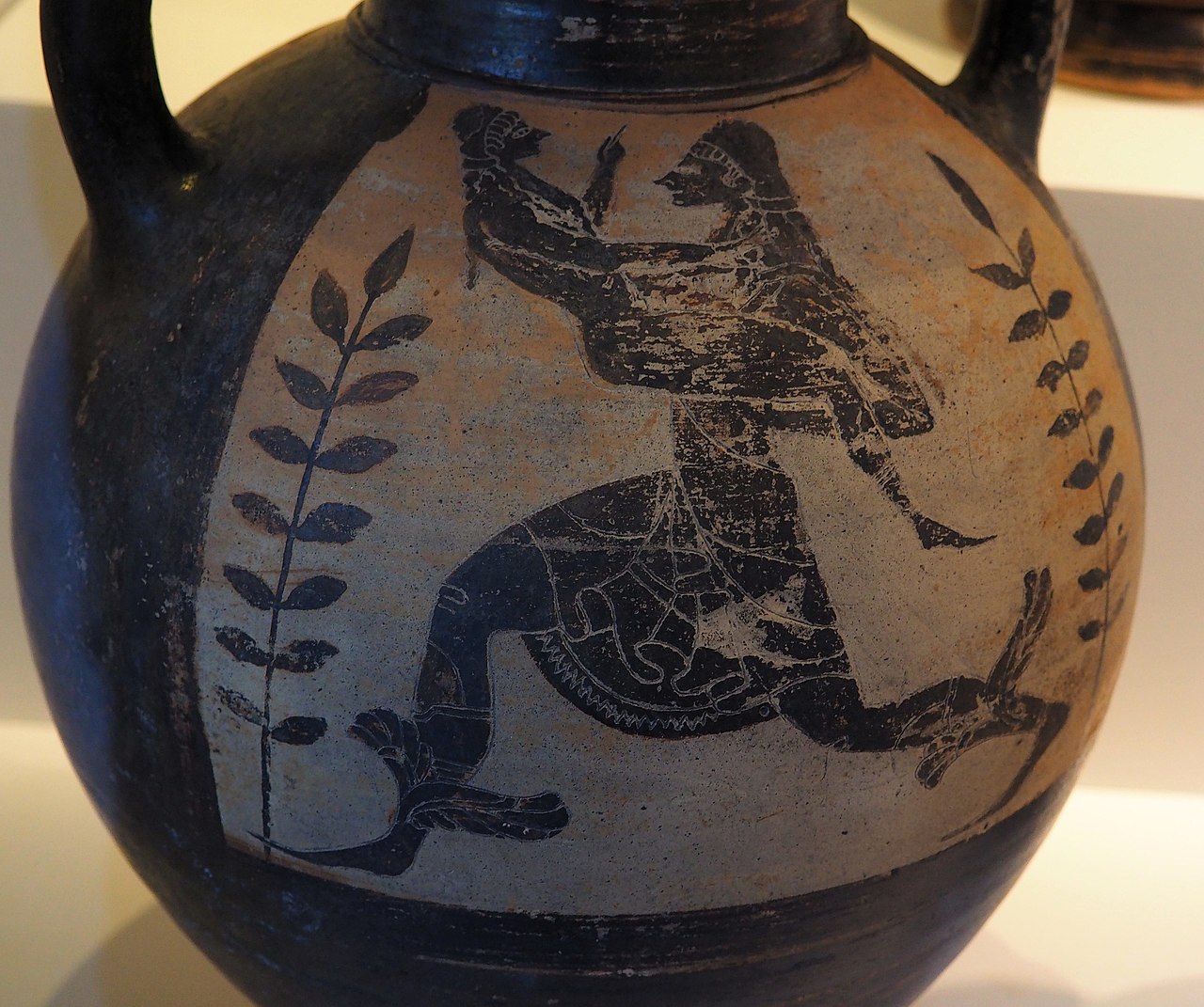
As a personified natural force rather than a major civic deity, Eos appears more often in poetry, vase-painting and sculpture than as the focus of extensive state cult. Artistic representations frequently show her emerging with light or driving a chariot, and later Roman culture assimilated her to Aurora. Her name and image have persisted into modern culture as a symbol of new beginnings, used in literature and the arts to suggest renewal and the daily rebirth of light.
Notable points and distinctions
- Eos functions specifically as dawn; she is distinct from her siblings who personify the sun (Helios) and moon (Selene), though ancient poets often link their movements.
- The epithet "rosy-fingered" is one of the most recognizable Homeric tags and is repeatedly used to introduce scenes that begin at daybreak.
- While not typically the center of large public rites, Eos's presence in poetry and art underscores how Greeks personified natural cycles as divine figures.
- Her Roman counterpart is Aurora; many later authors and artists drew on that continuity to adapt the dawn-goddess theme.
Eos remains an enduring figure in studies of Greek myth because she embodies a universal natural phenomenon while also serving as a narrative device for gods' interactions with mortals and the passage of time.
Related articles
Author
AlegsaOnline.com Eos — Greek goddess of the dawn Leandro Alegsa
URL: https://en.alegsaonline.com/art/31667