
Elder Futhark: the earliest runic alphabet of Germanic peoples
Elder Futhark is the oldest known runic script, used by Germanic-speaking communities c. 2nd–8th centuries. It contains 24 runes in three ætts and served both practical and symbolic roles in inscriptions and objects.
Overview
Elder Futhark is the name given to the oldest historically attested runic system used by Germanic-speaking communities in northern and central Europe. The term itself combines the sounds of the first six runes (f, u, þ, a, r, k) and distinguishes this earliest repertoire from later runic developments. Scholars generally date active use of Elder Futhark from roughly the 2nd century CE until about the 8th century CE, when regional variants began to simplify or change into other runic systems.
Image gallery
4 Images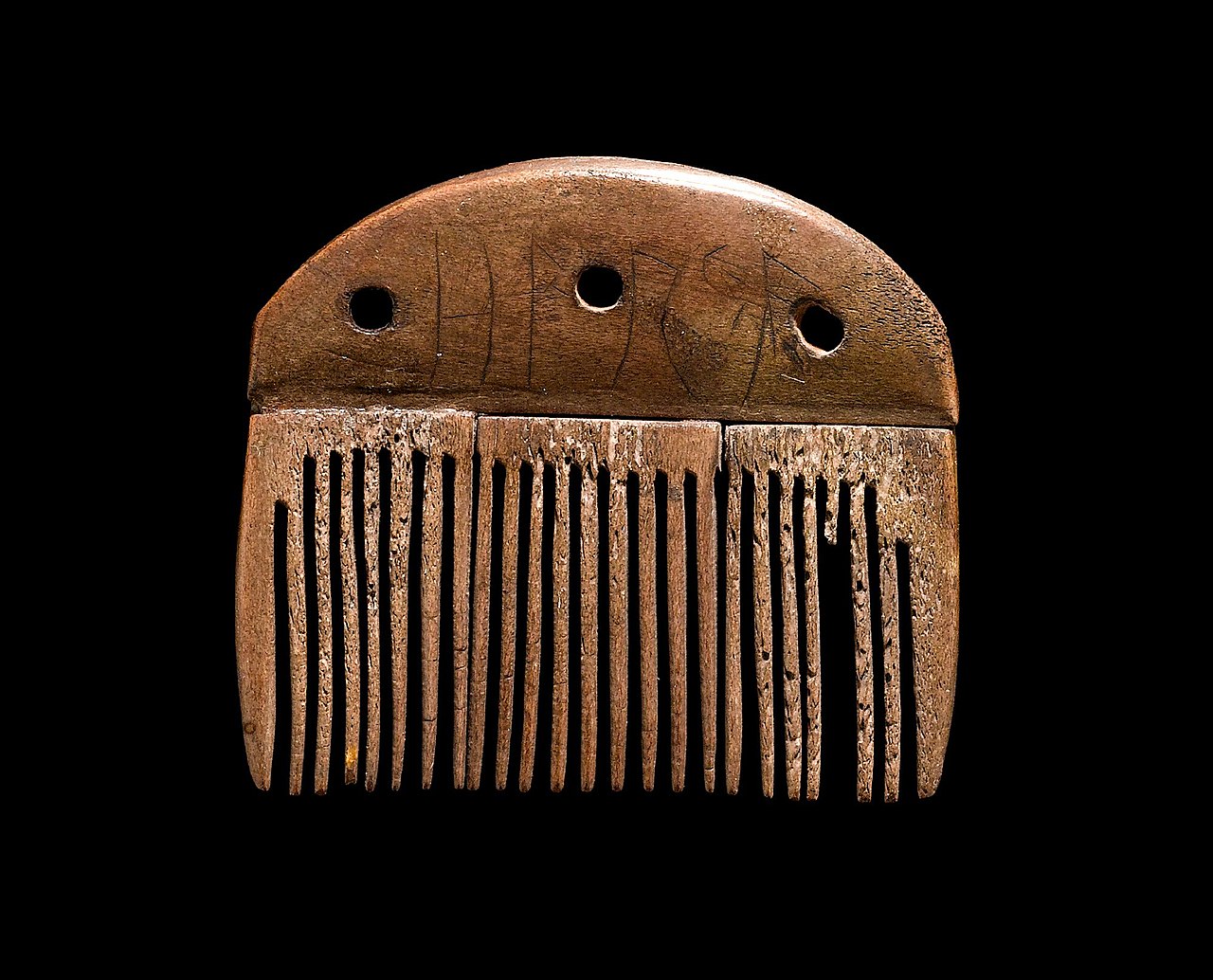


Structure and characteristics
The Elder Futhark comprises 24 distinct signs that functioned like letters. These are typically arranged in three groups of eight called "ættir" (singular: ætt). Each rune represented one or more sounds and could also carry names and symbolic meanings that reflected aspects of everyday life, nature, or cosmology. Compared with later runic alphabets, the Elder Futhark preserves a relatively large set of phonemes, which made it well suited to a range of Germanic dialects.
Typical characteristics of Elder Futhark inscriptions include:
- Short, often formulaic inscriptions on small objects such as combs, weapons, jewelry, and amulets.
- Use on stone monuments and grave goods, sometimes as ownership marks, memorials, or magical formulas.
- Angular shapes well adapted to carving into wood, bone, metal, or stone.
Origins and early evidence
The origin of the runic signs is debated. Most researchers see clear influences from alphabets used in southern and central Europe, especially North Italic and Etruscan scripts, and possibly indirectly from Latin. The precise process—whether direct borrowing, adaptation, or an independent innovation inspired by alphabetic models—remains a topic of scholarly discussion.
Our earliest undisputed examples come from objects dated to the Roman Iron Age. A frequently cited early find is the Vimose comb, an inscribed bone comb from Denmark whose lettering is commonly accepted as runic. A contested but often-mentioned inscription appears on the Meldorf fibula, which some date earlier; its characters resemble runes but have been argued to allow alternate readings in Latin-derived scripts. For readers seeking primary-source summaries and images, see a general discussion of the peoples involved: Germanic tribes, and an overview of alphabetic function: alphabet. The Vimose find is discussed in artifact catalogues and summaries: Vimose comb, and the Meldorf example is noted in debates about the earliest runic uses: Meldorf fibula.
Uses, contexts and examples
Runic writing was versatile in function. Many inscriptions are brief owner marks or makers' signatures on personal items; others occur on weapons or amulets and may invoke protection or status. Some runes were used in memorial inscriptions or on stone slabs to mark graves or commemorate individuals. The physical form of the runes—straight strokes and simple angles—reflects the practical need to incise marks into rigid materials. Longer texts appear less commonly in Elder Futhark than in later runic traditions.
Development, legacy and notable distinctions
From the Elder Futhark evolved several regional forms. In the British Isles the inventory expanded into the Anglo-Saxon Futhorc, while on the Scandinavian mainland the script contracted and restructured into the Younger Futhark around the 8th century. Beyond pure writing, runes acquired cultural and symbolic roles in later folklore and modern interest in historical writing systems. Notable facts include the unique ordering of runes (the futhark sequence) that differs from Greek or Latin alphabets, and the persistence of rune names and meanings in later medieval rune poems and lexical traditions.
Because the surviving corpus of Elder Futhark inscriptions is finite and unevenly distributed in time and space, many interpretations are tentative. Ongoing archaeological finds, careful paleographic study, and comparative linguistic work continue to refine our understanding of how these signs were adapted and used by early Germanic communities.
Related articles
Author
AlegsaOnline.com Elder Futhark: the earliest runic alphabet of Germanic peoples Leandro Alegsa
URL: https://en.alegsaonline.com/art/30630