
Etruscan language: overview, script, history and legacy
A concise encyclopedia article on the Etruscan language: its geographic range, script and inscriptions, classification, major texts, and its cultural and historical legacy in ancient Italy.
The Etruscan language was the tongue of the Etruscan civilization that flourished in central Italy from the late 1st millennium BCE. It was spoken across a region often called Etruria, corresponding in large part to modern Tuscany, western Umbria and northern Latium, and it left inscriptions and place-names in parts of Lombardy, Veneto, Emilia-Romagna and beyond. The people who used the language are commonly called the Etruscans. Although the Etruscan language ceased to be spoken as Latin expanded, its written traces illuminate many aspects of Etruscan society, religion and administration.
Image gallery
10 Images


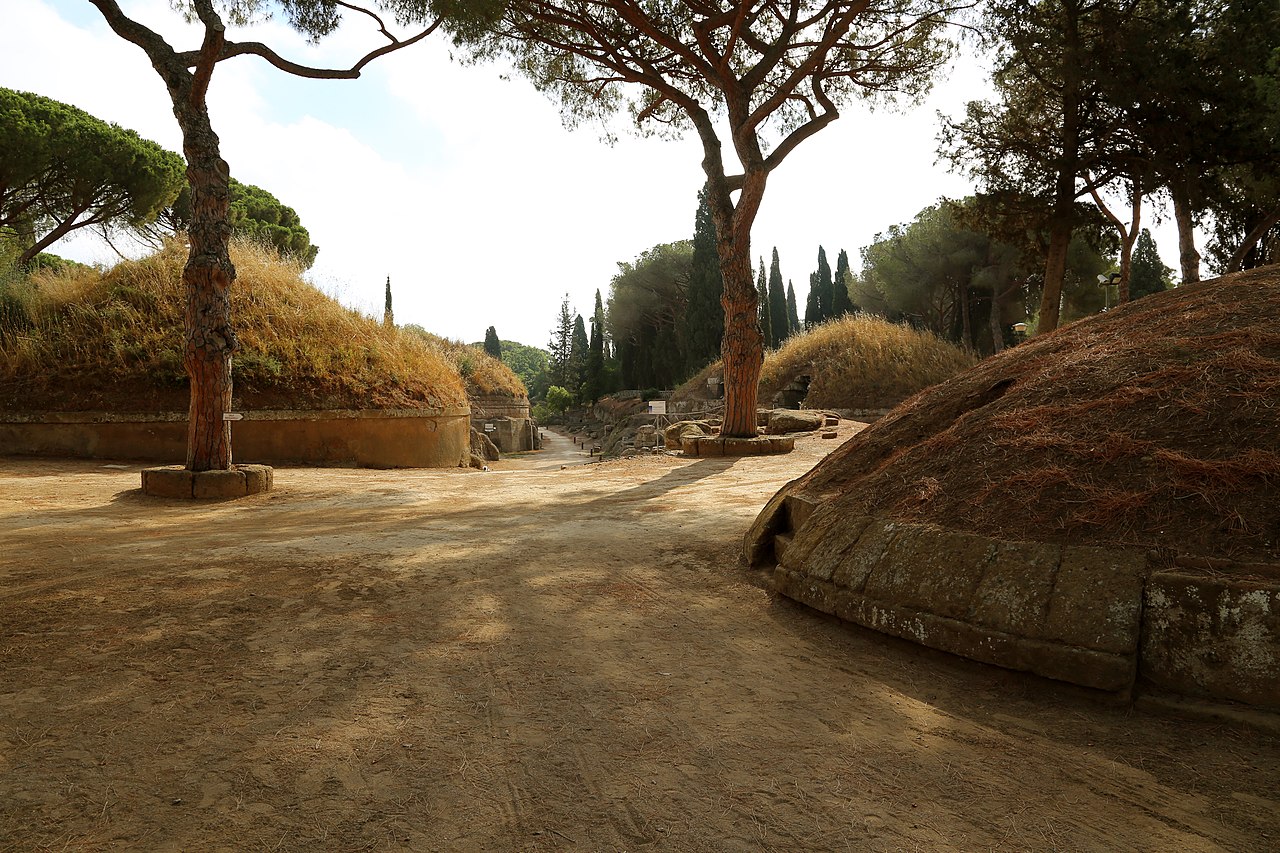

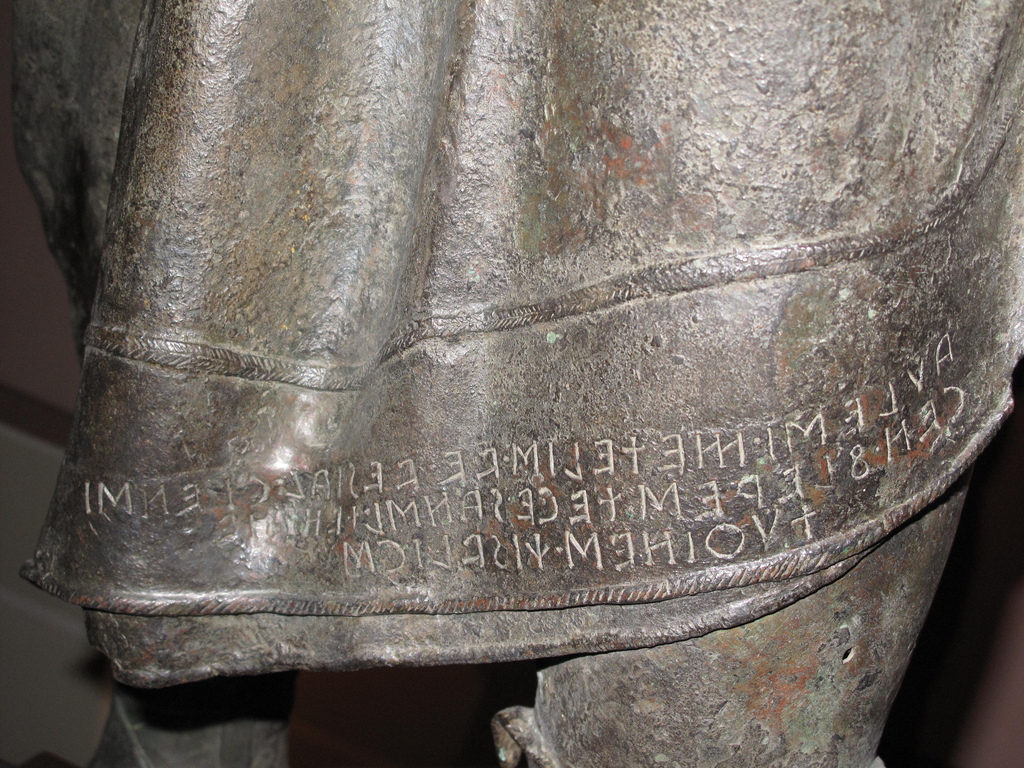

Character and script
Etruscan was written primarily in an alphabet adapted from western Greek varieties. Most Etruscan texts are short inscriptions on funerary monuments, pottery and metalwork; a smaller number are longer texts preserved on tablets or linen. Writing is usually right-to-left, though some early examples show alternate directions. The alphabet records consonants well; vowel values can be inferred but many grammatical details remain debated.
Geographic distribution and corpus
Inscriptions appear across the central Italian peninsula and in some coastal colonies and ports. Key concentrations are in the modern regions of Tuscany, Umbria and Latium, and scattered texts occur near Campania and in the Po valley to the north. Scholars estimate several thousand inscriptions survive, ranging from single-word tomb labels to longer ritual or legal texts. Notable longer texts include the Pyrgi Tablets (a bilingual Etruscan–Phoenician inscription) and the linen book known as the Liber Linteus.
Classification and related languages
Unlike the surrounding Italic languages, Etruscan is not Indo-European. Its closest secure relative is the language attested on the Lemnos island inscriptions, often called Lemnian; a broader "Tyrrhenian" grouping is sometimes proposed to include Raetic, but links remain tentative. Because the language is isolated, its deep origins are debated: some proposals tie it to pre-Indo-European substrata of the Mediterranean, but conclusive evidence is lacking.
Grammar and decipherment
The Etruscan script has been largely deciphered at the letter level, so the sound values of much of the vocabulary are known. However, understanding of grammar and lexicon is partial. The language shows suffixing morphology: case or relational endings, possessive forms and verb-like elements can be recognized, yet many words remain opaque. Philologists rely on bilingual inscriptions, archaeological context and comparative analysis to interpret texts.
Uses, inscriptions and cultural importance
- Most surviving inscriptions are funerary: names, family relationships and short formulae appear on tombstones and urns.
- Religious texts and dedications reveal gods, ritual practice and votive formulae.
- A few administrative or legal texts indicate the language's role in civic life before Latin dominance.
Because the Etruscans had a profound influence on early Rome—transmitting elements of art, religious rites and urban culture—the study of their language helps reconstruct aspects of Italy's pre-Roman past and the processes of cultural exchange in the ancient Mediterranean.
Notable facts and ongoing research
Important inscriptions and finds are studied in museums and by specialists across Italy and beyond. Research continues into dialectal variation, the relationship with Lemnian and Raetic, and the meaning of many ritual and legal terms. Modern projects combine epigraphy, archaeology and computational methods to refine readings and to place Etruscan writings in their social and historical contexts.
For readers who want to explore maps, corpora and museum collections, introductory resources and catalogues can be consulted via regional and scholarly portals associated with the areas where texts are found, for example collections concerned with Tuscany, Umbria, Lombardy, Veneto, Emilia-Romagna, Italy, ancient Rome and Campania. Further academic introductions and corpora are available through specialized bibliographies and digital epigraphy projects.
Questions and answers
Q: Who spoke and wrote the Etruscan language?
A: The Etruscans spoke and wrote the Etruscan language.
Q: In which parts of Italy was the Etruscan language spoken and written?
A: The Etruscan language was spoken and written in the ancient area of Etruria (Tuscany, western Umbria, and northern Latium) and in parts of Lombardy, Veneto, and Emilia-Romagna.
Q: Where have inscriptions of the Etruscan language been found?
A: Inscriptions of the Etruscan language have been found in northwestern and west-central Italy in the region that still has a name that came from the Etruscans, Tuscany, and in Latium, north of Rome, in Umbria west of the Tiber, around Capua in Campania and in the Po Valley to the north of Etruria.
Q: What is Tuscany named after?
A: Tuscany is named after the Etruscans.
Q: Which group took the place of the Etruscans in Lombardy, Veneto, and Emilia-Romagna?
A: The Gauls took the place of the Etruscans in Lombardy, Veneto, and Emilia-Romagna.
Q: What is the probable area in Italy where the Etruscan language was once spoken?
A: The probable area in Italy where the Etruscan language was once spoken is the region that still has a name that came from the Etruscans, Tuscany, and in Latium, north of Rome, in Umbria west of the Tiber, around Capua in Campania and in the Po Valley to the north of Etruria.
Q: In which geographical regions did the Etruscan language have the most influence and impact?
A: The Etruscan language had the most influence and impact in the geographical regions of Tuscany, western Umbria, and northern Latium.
Related articles
Author
AlegsaOnline.com Etruscan language: overview, script, history and legacy Leandro Alegsa
URL: https://en.alegsaonline.com/art/32433
Sources
- multitree.org : Etruscan
- glottolog.org : "Etruscan"