
Egypt–Israel Peace Treaty
A 1979 bilateral treaty that ended the state of war between Egypt and Israel, established withdrawal and security arrangements after the Camp David Accords, and began formal diplomatic relations.
Overview
The Egypt–Israel Peace Treaty is a landmark bilateral agreement that formally ended a state of war between Egypt and Israel. It was signed on March 26, 1979, following the negotiations held under the Camp David Accords. The treaty established mutual recognition, the phased withdrawal of Israeli forces from the Sinai Peninsula, and a framework for normalization of diplomatic and civil relations.
Image gallery
6 Images




Background
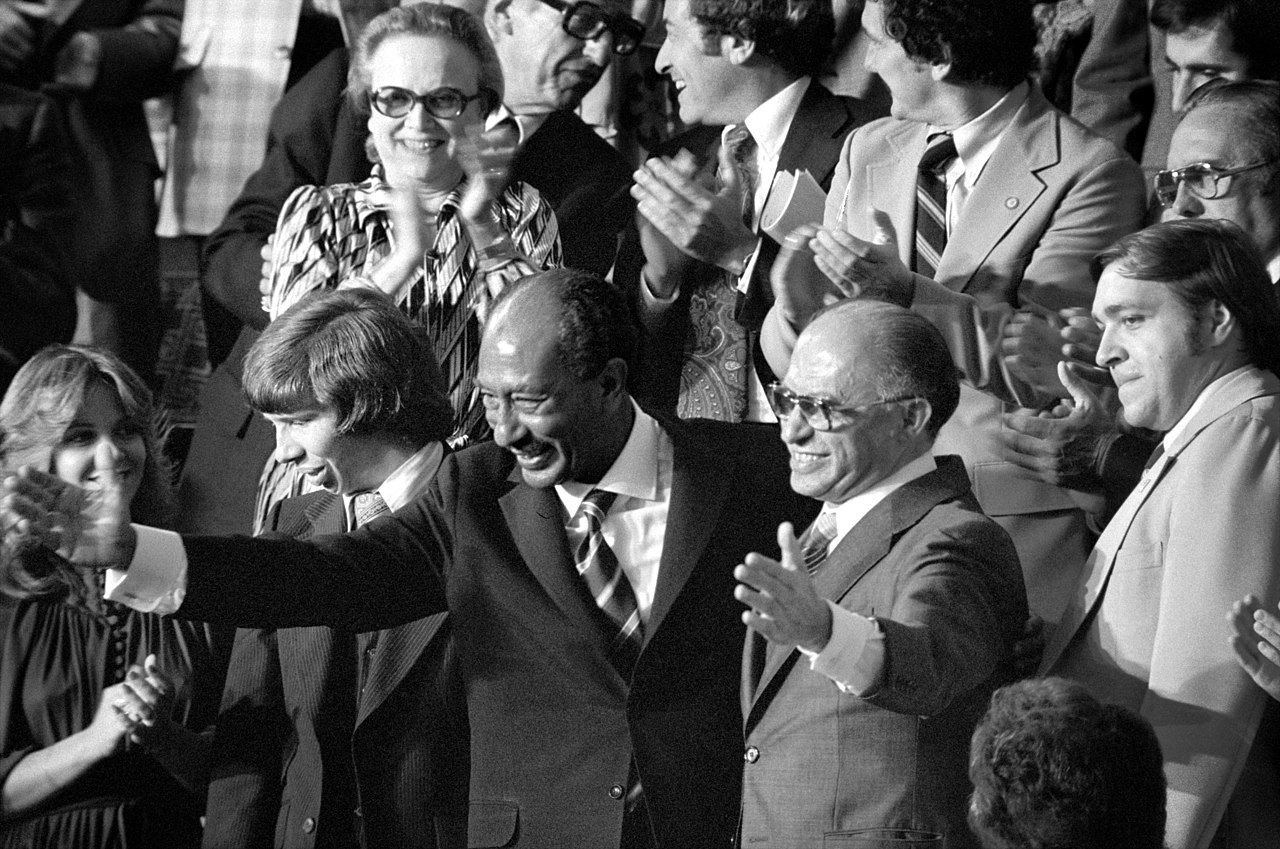
The treaty came after decades of intermittent conflict and negotiations. The 1978 Camp David meetings, mediated by the United States, created the political basis for a formal peace instrument. Egyptian leader Anwar Sadat and Israeli prime minister Menachem Begin negotiated the terms that each later signed in a public ceremony witnessed by U.S. president Jimmy Carter. Other senior leaders and delegations were involved throughout the discussions, and the agreement reflected compromises on security and territorial arrangements.
Main provisions
Key elements included:
- Mutual recognition and the formal end of hostilities, with obligations to resolve future disputes peacefully.
- Complete withdrawal of Israeli military forces from the Sinai Peninsula and the return of that territory to Egyptian administration in stages.
- Creation of security arrangements and zones in Sinai that limited the deployment of forces and provided for monitoring by an international observer presence.
- Normalization measures such as the exchange of ambassadors, facilitation of trade and travel, and the establishment of channels for cooperation on civil matters.
Implementation and monitoring
Implementation required phased actions on both sides. The final Israeli withdrawal from Sinai was completed in the years that followed, while the treaty also led to the establishment of neutral or international monitoring arrangements to verify compliance and reduce the risk of renewed military confrontation. The practical steps taken under the treaty covered border control, demilitarized zones and procedures for handling incidents.
Regional and domestic response
The treaty altered regional diplomacy: Egypt moved to normalize relations with Israel and to strengthen ties with the West, while many Arab states criticized the agreement. Egypt was temporarily suspended from the Arab League in reaction to its decision. Domestically, leaders who supported or opposed the treaty faced strong public debate; President Anwar Sadat remained a polarizing figure and his choice to pursue peace had profound consequences for Egyptian politics.
Legacy
As the first full peace treaty between Israel and an Arab state, the agreement has had long-term significance. It created a durable, though sometimes tense, peace between Egypt and Israel and set a diplomatic precedent for later negotiations in the region. The treaty also highlighted the role of outside mediation and the interplay between security guarantees, territorial settlement and diplomatic normalization. Leaders such as Menachem Begin and others involved in the talks are often cited when discussing the treaty's origins and consequences.
Further reading
For more on the negotiations and detailed provisions, consult primary documents and reputable historical summaries that describe the Camp David process, the text of the treaty, and the subsequent steps taken to implement its security and diplomatic arrangements. Contemporary accounts and later analyses provide context on its regional impact and long-term effects.
Related articles
Author
AlegsaOnline.com Egypt–Israel Peace Treaty Leandro Alegsa
URL: https://en.alegsaonline.com/art/30400